High-Performance Forged Cookware Lines for UK Distribution
Pre-engineered to pass LFGB and UK REACH safety assessments, featuring impact-bonded induction bases for high-frequency induction zones across Greater London kitchens.
Engineering Whitepaper: Metallurgical Dynamics of High-Pressure Forged Aluminum Cookware
In the competitive UK kitchenware sector, product failure rates and return logistics cost importers hundreds of thousands of pounds annually. Commercial buyers in London—from department store chains on Oxford Street to gastro-pub procurement consortiums across Canary Wharf—demand kitchenware that reconciles rapid thermal response with extreme mechanical fatigue resistance. Zhejiang MEIS Kitchenware Co., Ltd. addresses this design matrix through precision die-forging technology.
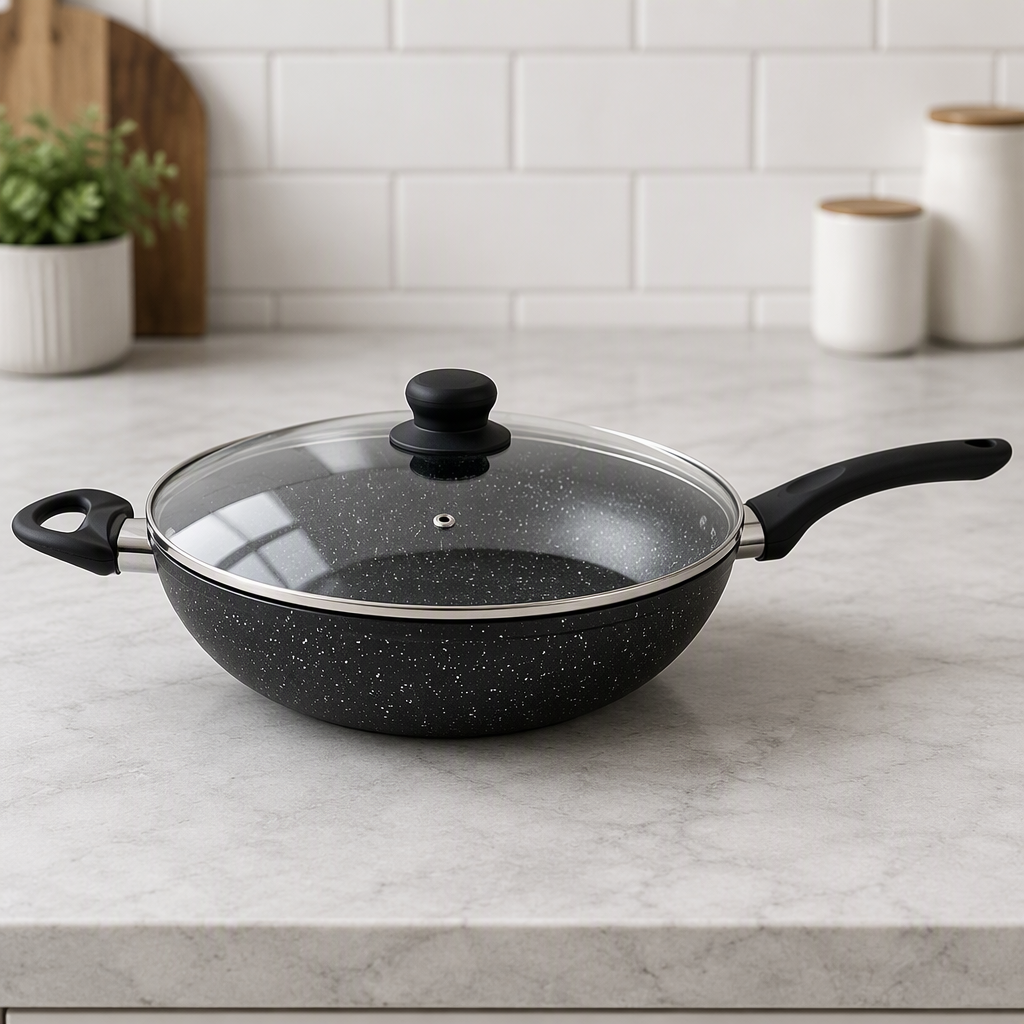
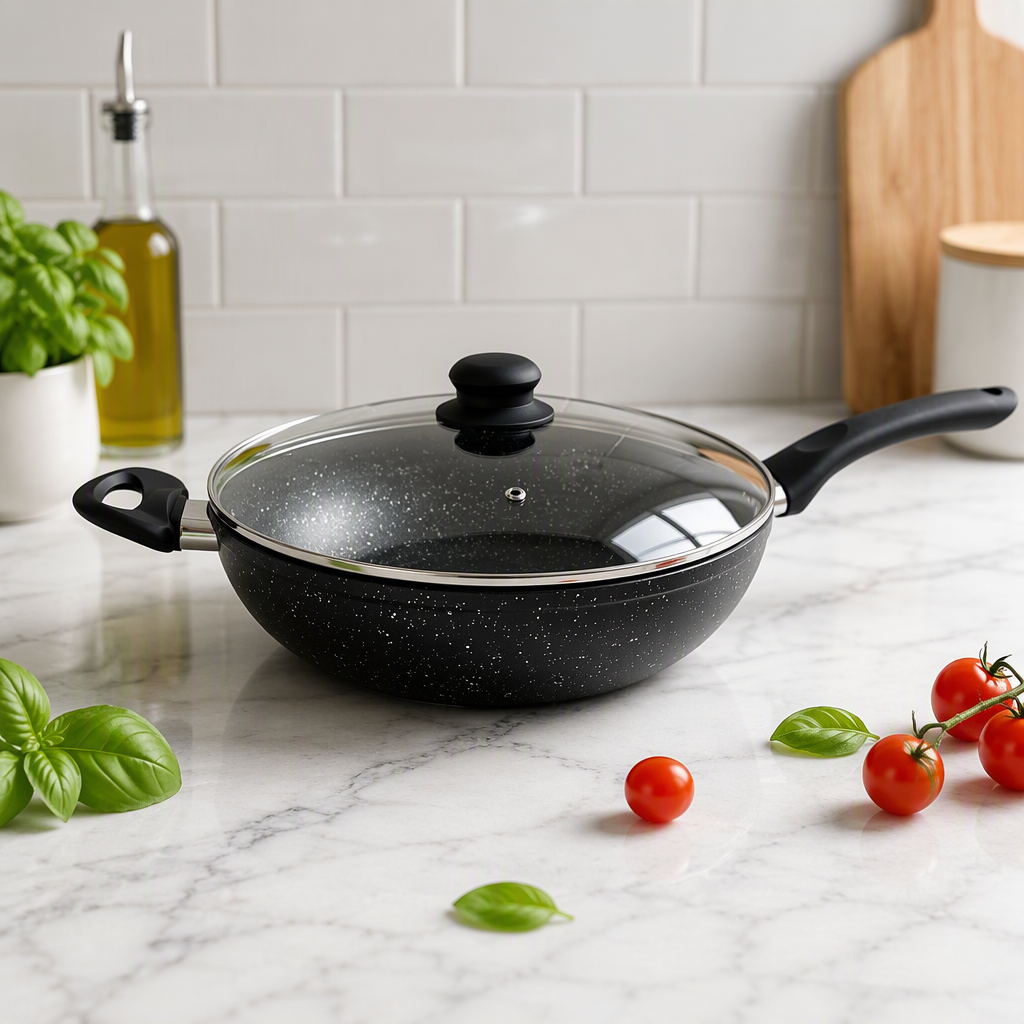
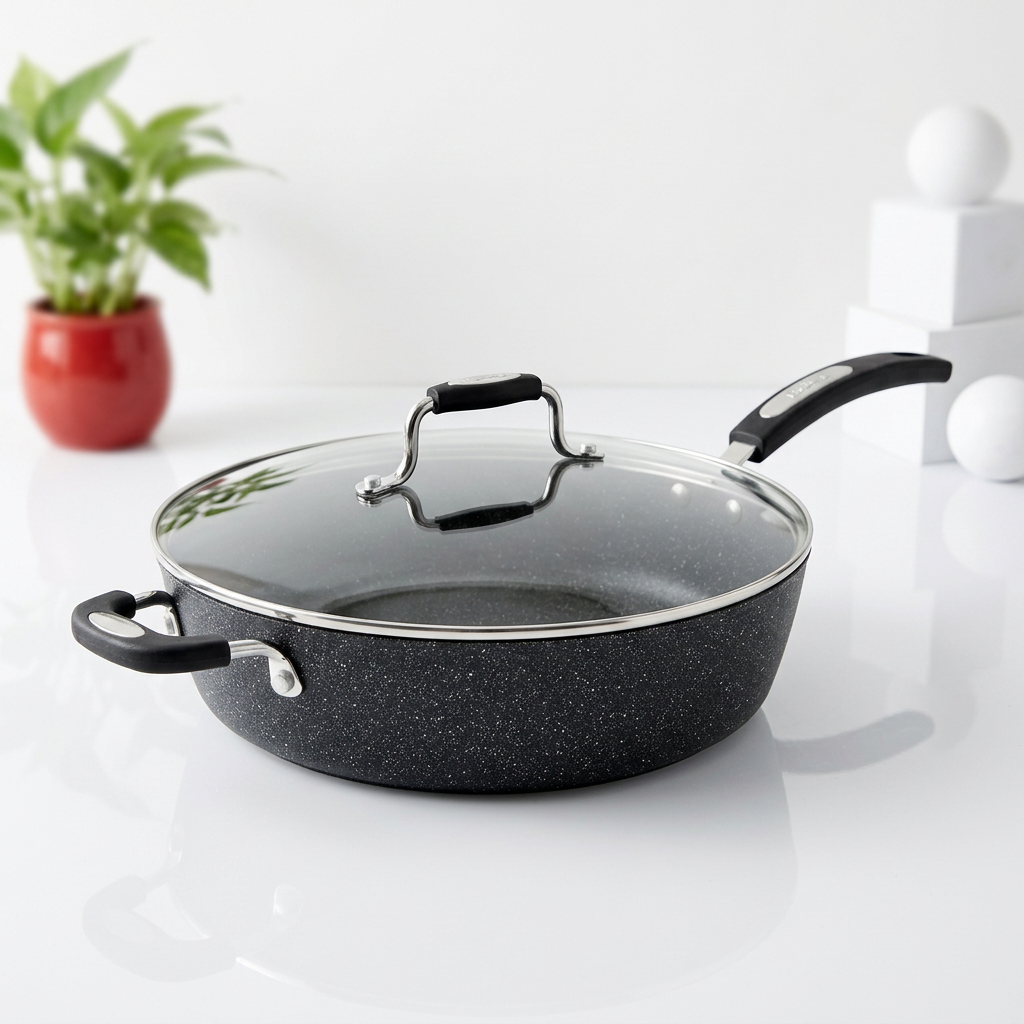
Unlike standard pressed (stamped) aluminum pans that utilize uniform-gauge alloy sheets, our die-forged manufacturing process begins with virgin 3003-grade aluminum billets subjected to hydraulic forging pressures exceeding 4,000 metric tons. This high-pressure plastic deformation compresses the metallurgical crystalline structure, eliminating micro-porosities and aligning the grain boundary along stress concentration axes. The result is a structural body that features an ultra-thick base (typically 4.0mm to 4.8mm) seamlessly tapering to a thinner wall (2.2mm to 2.5mm) and a reinforced, impact-resistant rolled rim (4.0mm).
Furthermore, energy transmission efficiency is paramount for London domestic consumers coping with variable UK energy caps. The 4.5mm base acts as an integrated thermal reservoir. When paired with our high-frequency automated impact-bonding induction disc application, the pan maximizes magnetic flux density on induction cooktops (Siemens, Bosch, Miele, and AEG units standard across modern UK flats). The bonded ferritic stainless steel plate (AISI 430) resists delamination, thermal fatigue, and edge curling, providing planar stability within 0.15mm across lifetime temperature cycles.
Thermal Kinetic Uniformity
3003-grade aluminum delivers a thermal conductivity coefficient of ~205 W/m·K. Hot spots are eliminated within 12 seconds of burner contact, preventing localized coating carbonization.
Impact-Bonded Induction Bases
Cold-forged perforation and 1,200-ton hydraulic compression mechanically interlock the magnetic 430-stainless disc into the aluminum core, guaranteeing zero air gap delamination.
Multi-Tier Sol-Gel & PTFE Coatings
Certified PFOA-free, lead-free, and cadmium-free. We formulate mineral-reinforced granite, hard-anodized primers, and titanium-infused topcoats rated for >25,000 abrasion cycles under BS EN 12983-1.
Localized Application Scenarios Across Greater London
A closer look at how MEIS engineered cookware solves operational, culinary, and regulatory demands in commercial dining rooms and residential flats throughout the UK capital.
1. London Urban Apartments & Induction Living
Modern high-density residential developments in Nine Elms, Stratford, Canary Wharf, and Hackney feature compact kitchens equipped almost exclusively with induction cooktops. Space is at a premium, requiring pans that heat instantly, clean with minimal water usage, and stack without scratching.
Our detachable handle systems and 20cm/24cm forged fry pans deliver rapid sear temperatures on 1.8kW induction loops while occupying 40% less cabinet volume.
2. High-Turnover Commercial Gastro-Pubs & Bistros
From historic pub kitchens in Westminster to trendy brunch bistros in Shoreditch and Soho, pan wear is relentless. Commercial dishwashing chemicals, metal spatula abrasion, and constant shifting between gas burners and combi-ovens degrade inferior cookware within weeks.
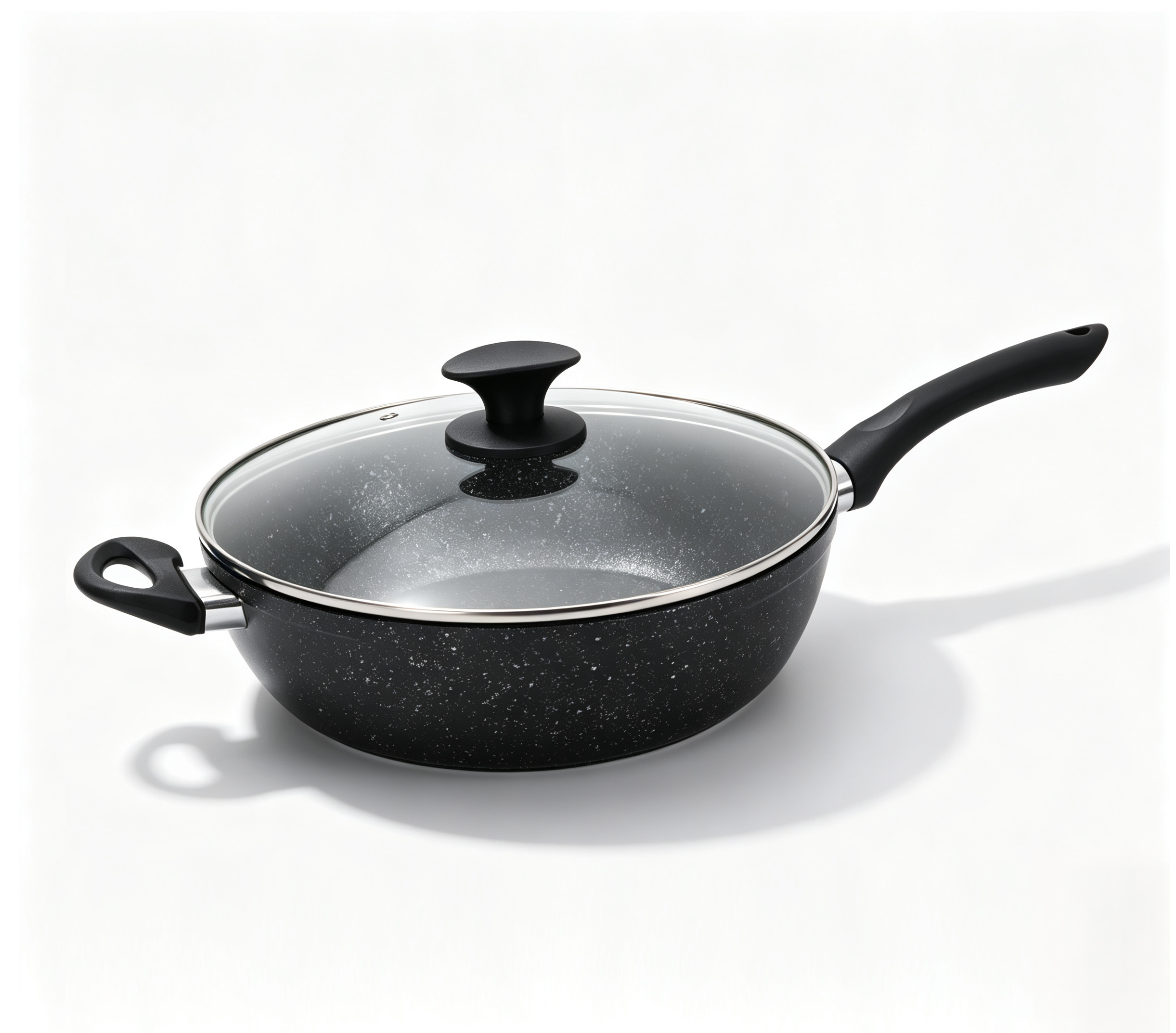
Our forged pans feature cast stainless steel handles secured with solid aircraft rivets, oven-safe up to 260°C, and reinforced marble coatings resisting heavy commercial use.
3. High Street Department Stores & Retail Brands
UK retailers (including John Lewis, Marks & Spencer, and independent cookshops across Richmond and Wimbledon) target discerning consumers who prioritize aesthetics, ergonomic tactile feedback, and health credentials.
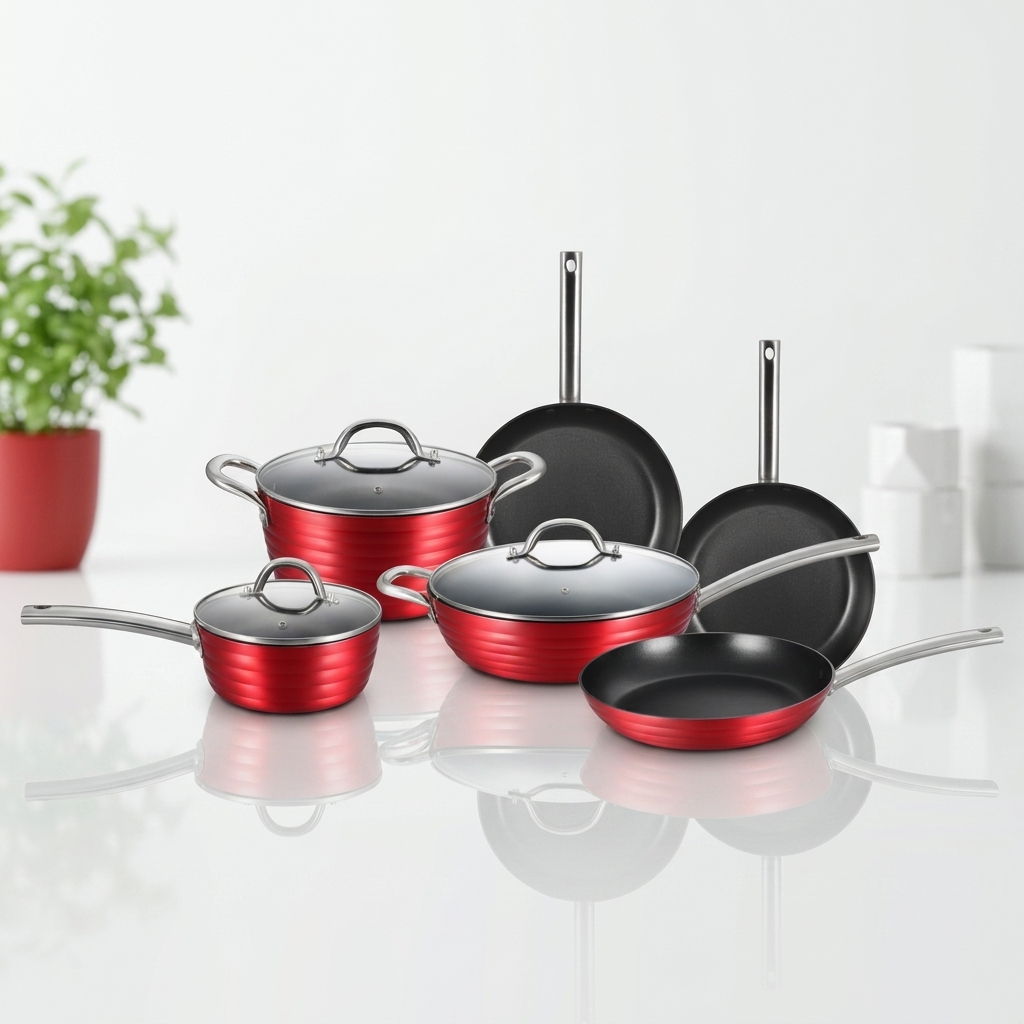
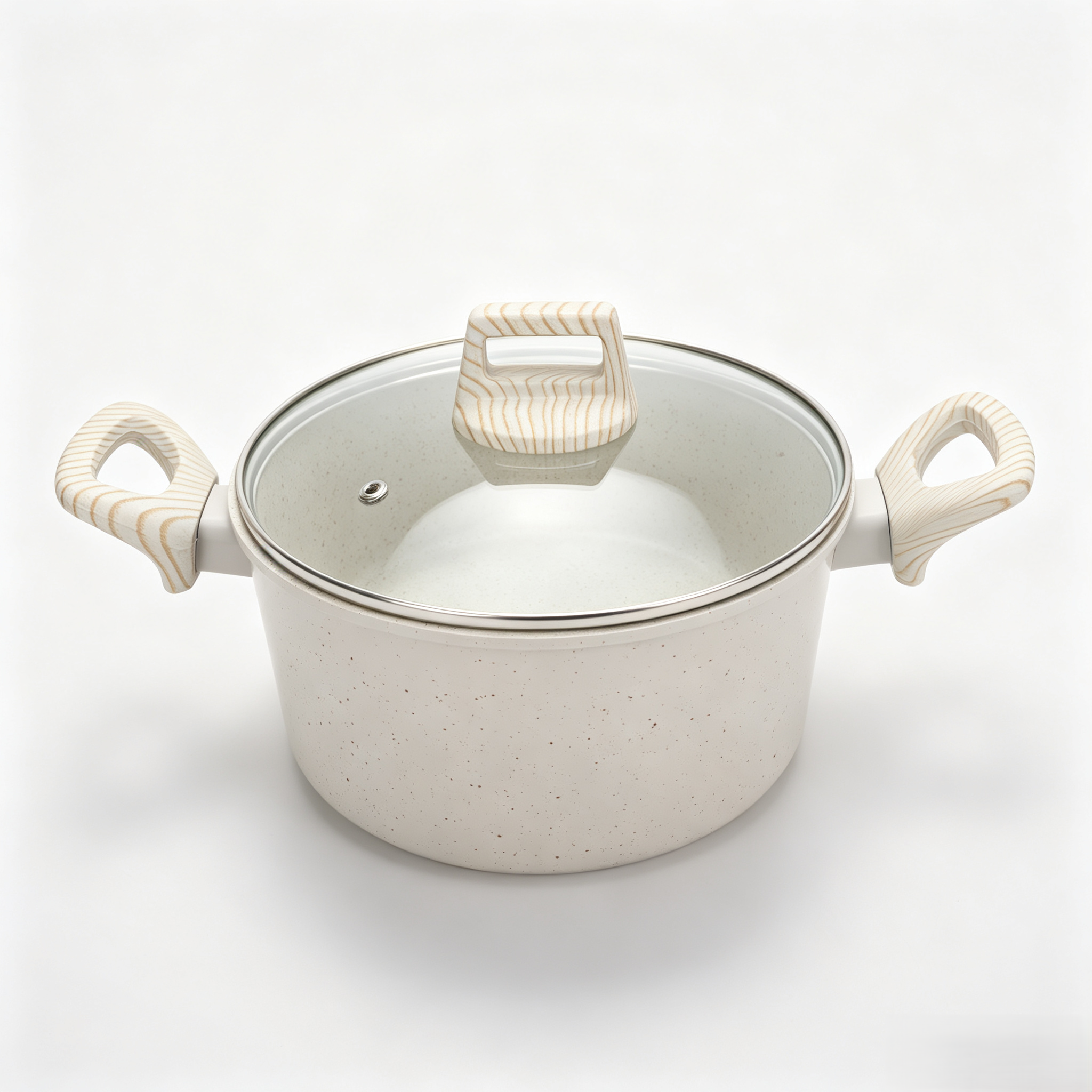
We supply private-label programs with soft-touch wood-effect ergonomic handles, elegant metallic exterior spray finishes, custom embossed base stamps, and plastic-free recyclable FSC gift boxes.
Cookware Material Performance Comparison for UK Retail & Foodservice
Selecting the optimal substrate dictates retail positioning, warranty exposure, and consumer satisfaction. Here is how our engineering division contrasts cold die-forged aluminum against legacy cookware materials:
| Performance Variable | MEIS Die-Forged Aluminum | Standard Stamped (Pressed) | Cast Iron Cookware | Tri-Ply Clad Stainless |
|---|---|---|---|---|
| Thermal Ramp Speed (0-180°C) | Rapid (28 seconds) | Very Fast (18 seconds) | Slow (110 seconds) | Moderate (55 seconds) |
| Heat Retention & Evenness | Excellent (4.5mm base core) | Poor (Prone to hot spots) | Superior (High thermal mass) | Very Good (Multi-layer core) |
| Warp Resistance Under Quenching | Extremely High (Aligned grain) | Low (Subject to bowing) | Brittle (Can crack under shock) | High (Rigid structure) |
| Weight Ergonomics (28cm Pan) | Optimal (~980g balanced) | Lightweight (~620g flimsy) | Heavy (~2,400g fatigue prone) | Medium-Heavy (~1,350g) |
| Induction Efficiency Index | 94% (Bonded 430 disc) | 78% (Spray-on or mesh base) | 99% (Naturally magnetic) | 92% (Ferritic outer ply) |
| UK Landed Unit Cost (FOB Base) | Highly Competitive B2B Tier | Lowest Tier (Budget retail) | High Freight / Heavy Surcharge | Premium High-Cost Tier |
Navigating Market Trends & Standards in the UK Capital
Critical compliance intelligence for procurement directors managing cookware imports into the United Kingdom post-Brexit.
1. The Transition to PFAS-Free, Sol-Gel Ceramic Systems
With the UK Health and Safety Executive (HSE) collaborating on stricter UK REACH limits for per- and polyfluoroalkyl substances (PFAS), major London retailers are establishing aggressive timelines to phase out fluoropolymer-based surface chemistries. MEIS has invested heavily in inorganic sol-gel ceramic non-stick formulations. Derived from natural silica quartz, our ceramic systems are entirely free from PTFE, PFOA, PFOS, GenX, lead, and cadmium. They resist thermal degradation up to 450°C without emitting hazardous fumes, catering to the health-conscious London consumer demographic.
2. Energy Conservation via Kinetic Heat Transfer
British household and commercial energy tariffs have caused consumer shifts toward hyper-efficient induction-compatible kitchen tools. Die-forged aluminum offers three times the thermal conductivity of carbon steel and nearly ten times that of cast iron. By engineering induction discs with 82% coverage of the bottom surface, our pans ensure maximum electromagnetic field coupling. Londoners save measurable kilowatt-hours over the course of daily family cooking, creating a powerful marketing hook for retail packaging.
3. Extended Producer Responsibility (EPR) & Sustainable Logistics
The UK's updated packaging waste regulations place rigorous financial obligations on brand owners and importers for single-use plastic waste. MEIS supports London brand partners with 100% recyclable, plastic-free packaging architectures. We eliminate PVC shrink films and expanded polystyrene, utilizing molded pulp corner guards, kraft sleeves, and non-toxic soy-based printing inks. This minimizes your EPR liabilities while maximizing shelf appeal for sustainability-minded shoppers.
Why Direct Sourcing from Zhejiang MEIS Eliminates Supply Chain Risk
Operating a dedicated 105-person manufacturing plant in Jinhua, Zhejiang, verified on-site by TÜV Rheinland. We control every critical tolerance from raw disc blanking to finished export packing.
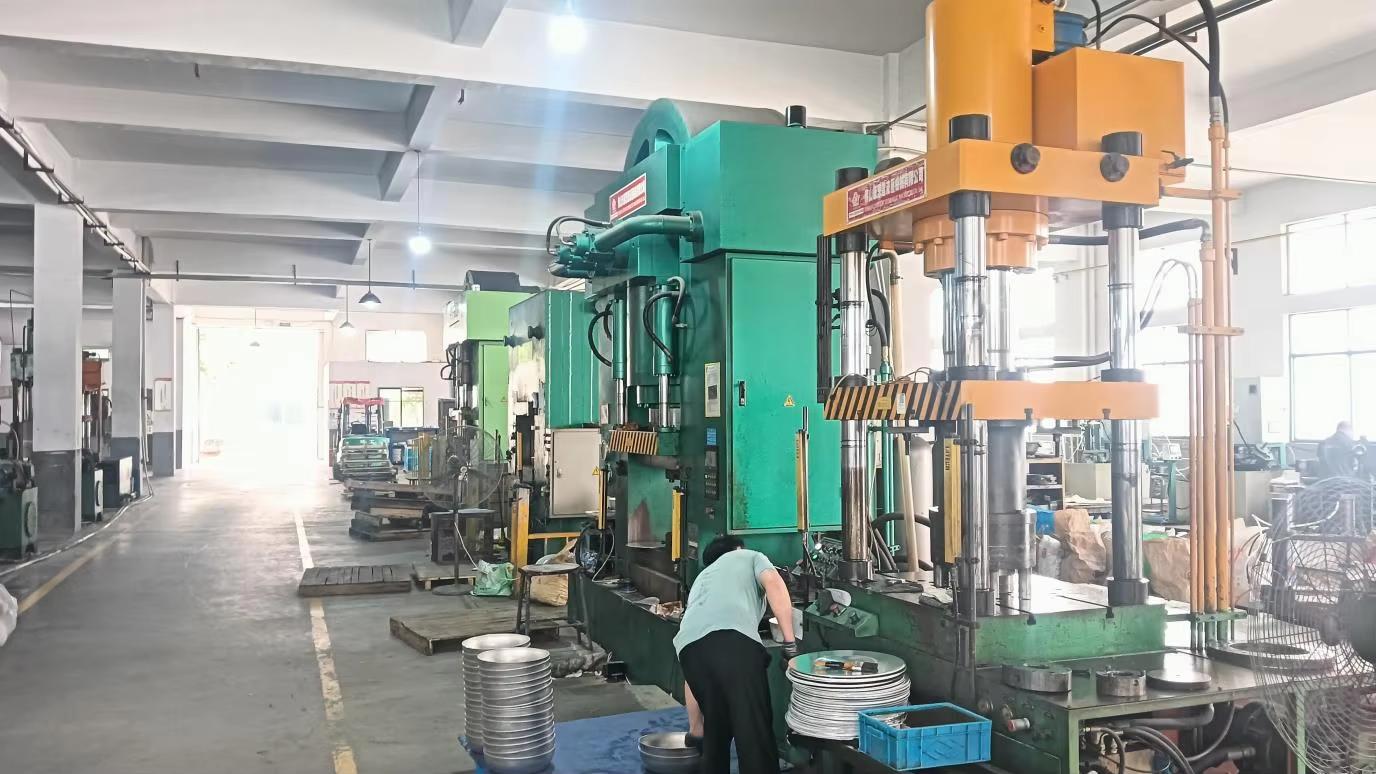
Precision Forging Lines
High-tonnage presses stamp and forge alloy discs into structural cookware forms with zero wall variance.
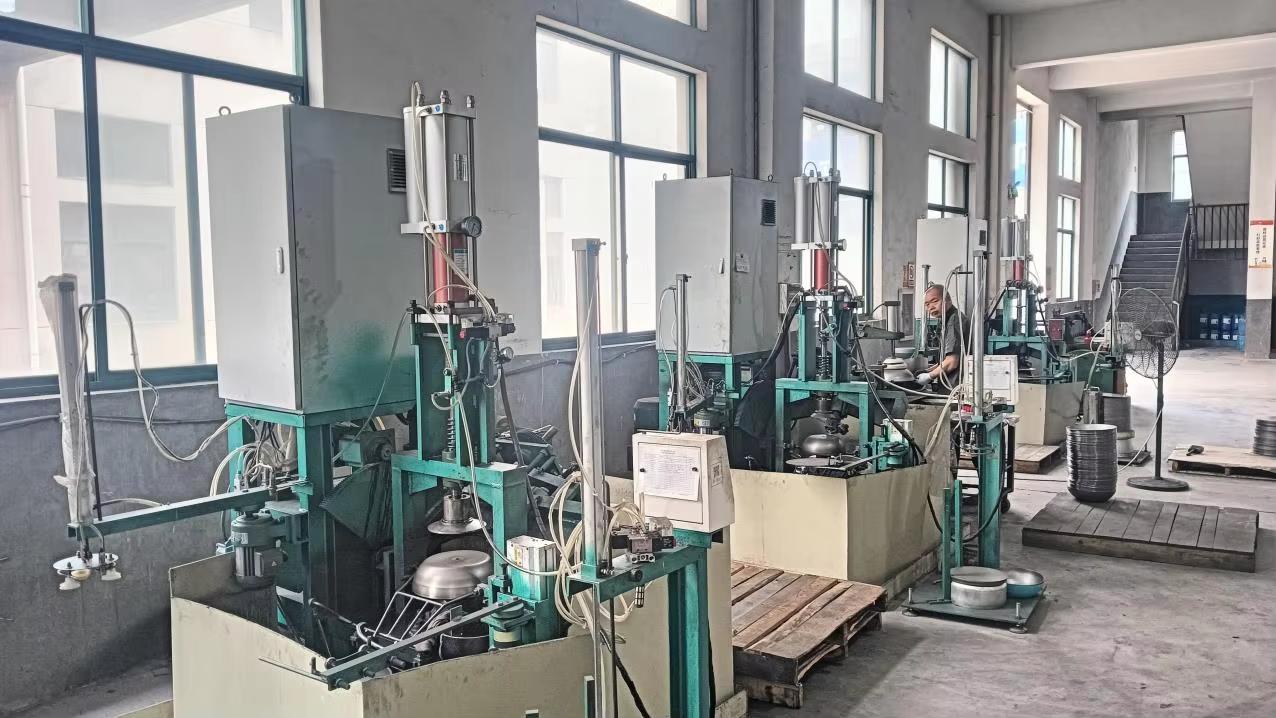
CNC Precision Base Lathes
Micro-grooved and diamond-turned bases provide flat, stable heat transfer surfaces for induction glass.
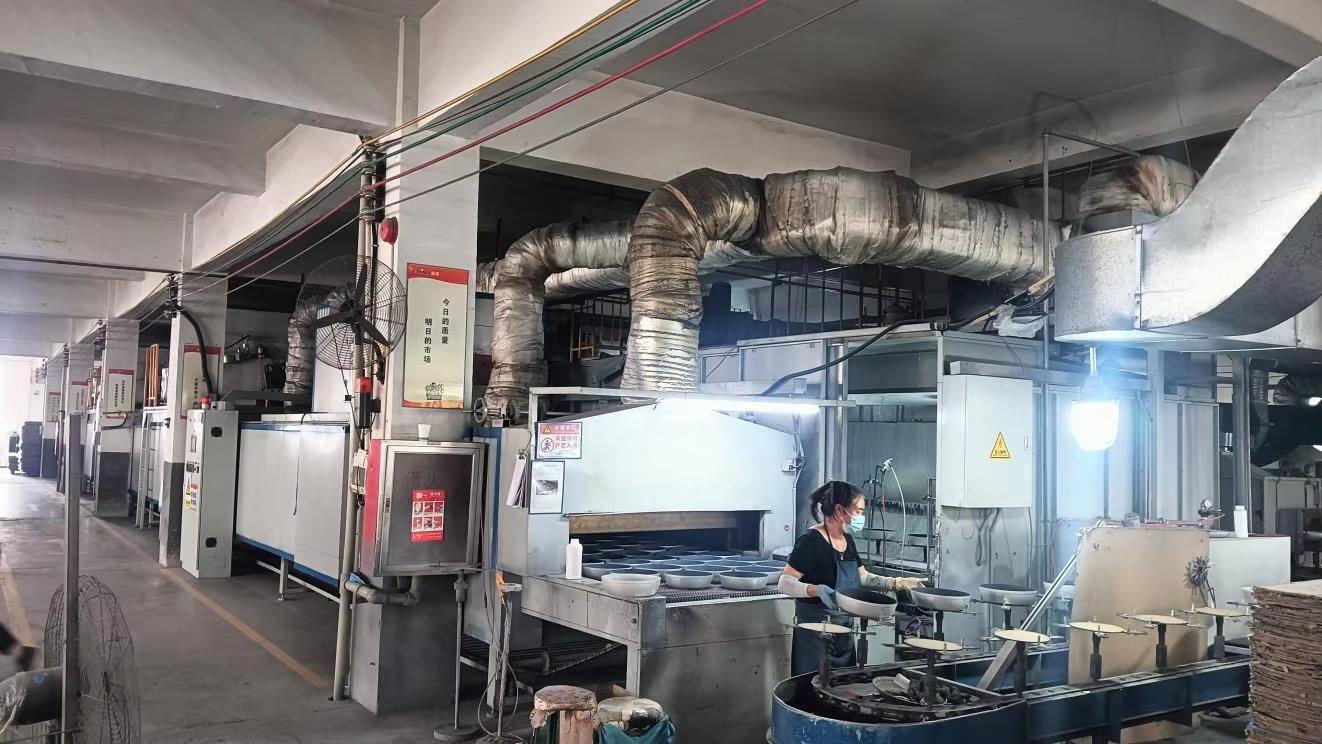
Multi-Coat Automated Spraying
Robotic reciprocators apply uniform basecoats, marble speckling, and topcoats under cleanroom air filtration.
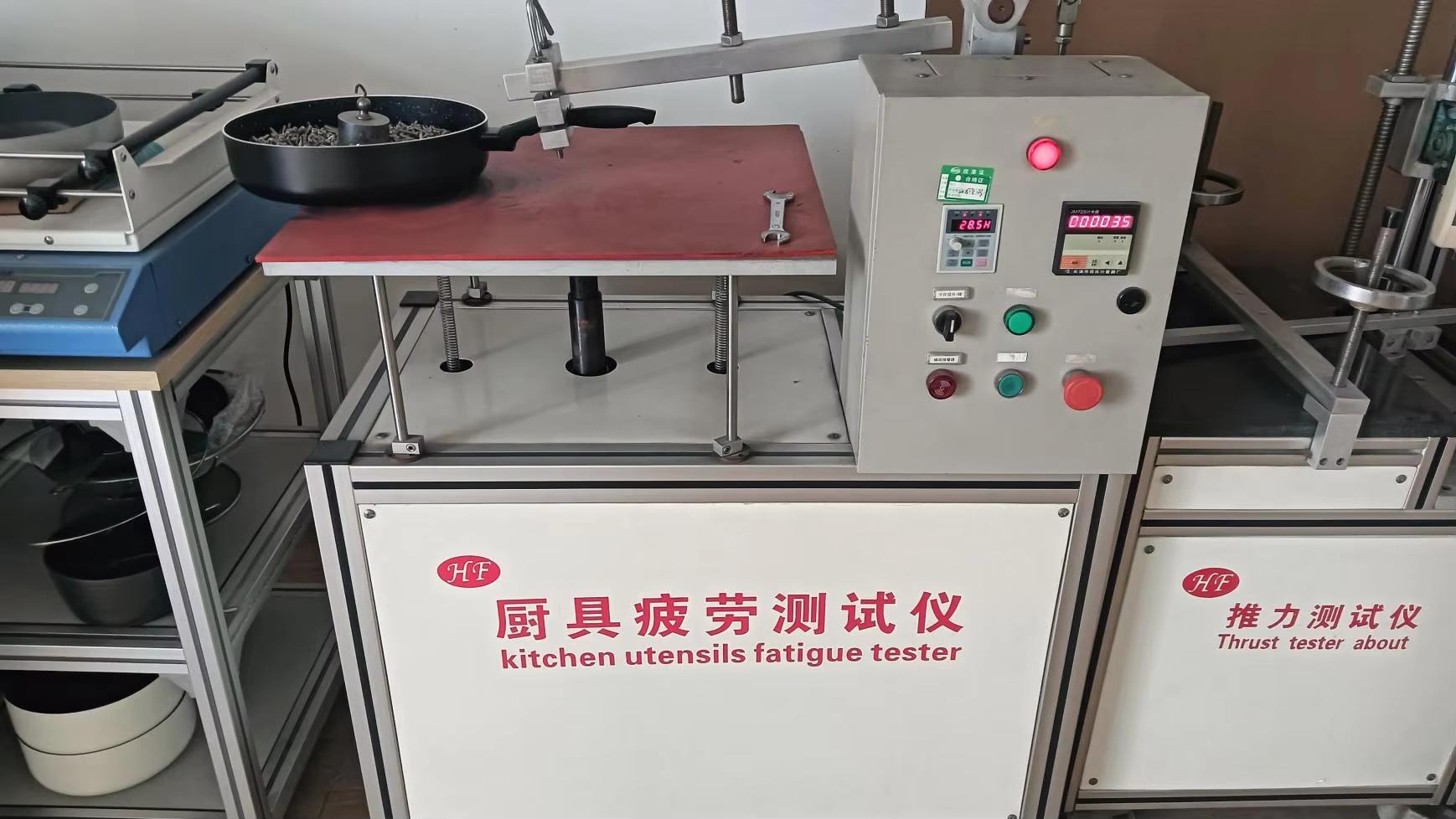
In-House Testing Laboratory
Equipped with handle torque testers, salt-spray corrosion chambers, and cross-hatch coating adhesion analyzers.
Frequently Asked Questions by UK Importers & Wholesalers
Key information regarding landed logistics, minimum order thresholds, product testing, and custom branding.
What is the standard lead time and shipping route to Greater London ports? +
Our production lead time for customized OEM/ODM forged cookware orders is typically 35 to 45 days following final golden sample approval and deposit confirmation. For trial orders with standard tooling, timelines can be compressed to 25 days.
Shipments depart from Ningbo or Shanghai ports, sailing directly to major UK container gateways such as the Port of Felixstowe, London Gateway (Thurrock), or Southampton. Average ocean transit time to UK ports is approximately 28 to 34 days, allowing London distributors to accurately plan seasonal catalogue inventory.
How do your pans comply with UK food safety and chemical migration standards? +
Following the UK's exit from the European Union, all kitchenware entering the UK market must comply with retained EU regulations (EC) No 1935/2004 as well as the Materials and Articles in Contact with Food (England) Regulations. In addition, surface coatings must adhere to UK REACH chemical restrictions.
Every coating applied in our Jinhua facility is certified food-contact compliant by international test houses (SGS, TÜV, Intertek). We provide complete migration test reports confirming non-detectable levels of heavy metals (lead, cadmium, arsenic), PFOA, PFOS, and volatile organic compounds.
Can MEIS develop custom tooling, shapes, and handles for UK private label brands? +
Yes. Zhejiang MEIS Kitchenware operates an in-house mold and tooling workshop staffed by veteran toolmakers. Equipped with precision CNC milling centers, wire EDM, and lathes, we develop proprietary pan silhouettes, custom-profile helper handles, silicone-rim glass lids, and distinctive bottom stamping plates.
Rapid 3D CAD modeling and CNC prototype sampling can be completed within 10 to 14 days, drastically shortening your brand’s product launch lifecycle compared to traditional trading intermediaries.
What is your MOQ (Minimum Order Quantity) for bespoke London retail programs? +
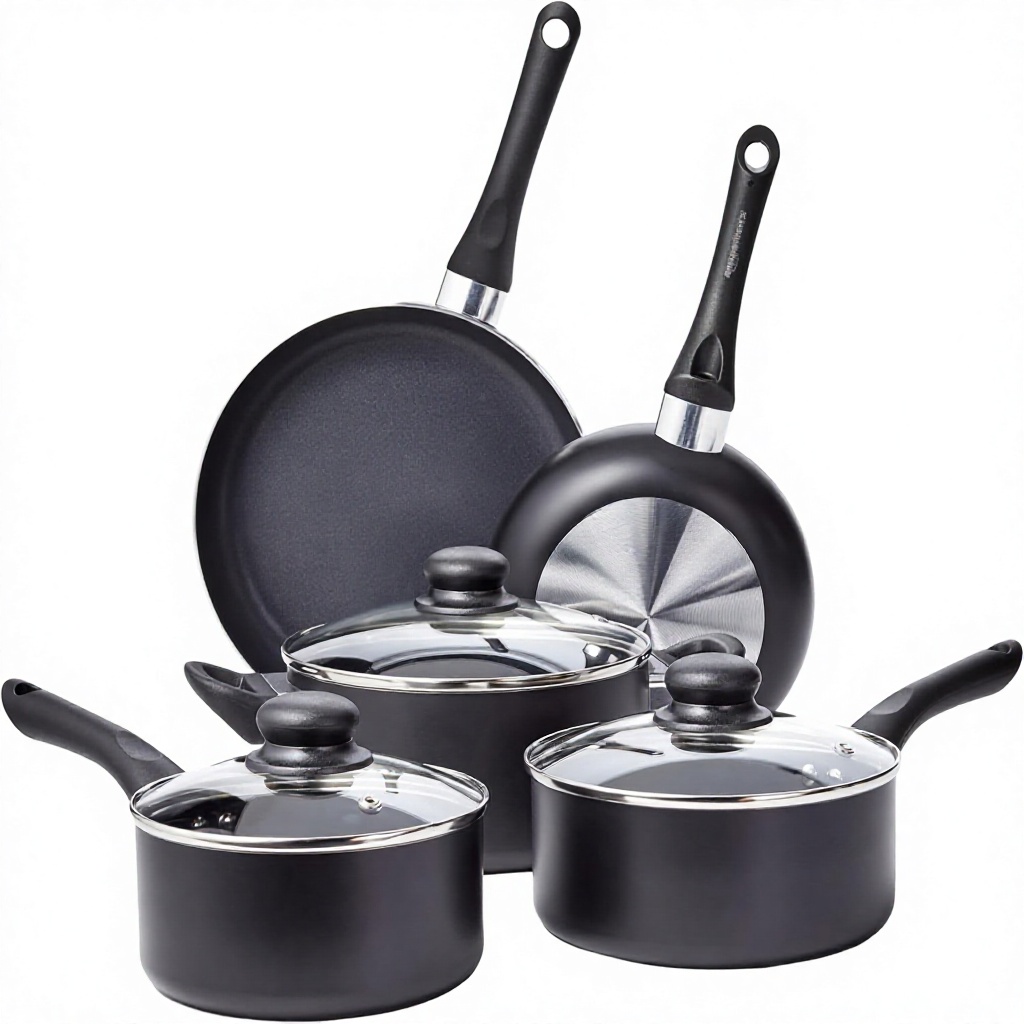
For standard forged aluminum frying pans utilizing existing body molds with custom color coatings, laser-engraved logos, and retail packaging, our standard MOQ is 1,000 to 1,500 pieces per size. For multi-piece cookware sets, the MOQ is 1,000 sets.
We also accommodate blended container loads (mixing 20cm, 24cm, 28cm fry pans, woks, and casseroles within a single 40ft HQ container) to help UK distributors manage working capital and inventory turn rates.
How do your forged aluminum pans satisfy BS EN 12983-1 mechanical safety requirements? +
BS EN 12983-1 is the definitive British and European safety standard for domestic cookware handles. Our factory conducts three obligatory quality control assessments on every batch prior to container sealing:
- Torque & Torsion Resistance: Verifying the handle does not twist or loosen when subjected to torsional stress.
- Fatigue Endurance: Simulating 15,000 continuous lifting and setting cycles with 1.5x max water fill weight.
- Thermal Safety & Flammability: Ensuring flame guards prevent handle heat transfer on gas hobs and materials self-extinguish under direct flame contact.
Can you accommodate drop-test certified packaging for UK e-commerce channels (Amazon FBA, Wayfair UK)? +
Yes. E-commerce returns resulting from transit damage significantly harm digital merchant margins across the UK. We design drop-tested packaging certified to ISTA 3A and Amazon SIOC (Ships in Own Container) Type A standards.
Our solutions incorporate heavy-wall double-corrugated outer cartons (minimum 250 lbs burst test rating), custom-molded pulp pulp trays to immobilize the pan body, and protective foam collars for glass lids and handle joints, ensuring zero glass breakage or bent rim defects upon customer arrival.
Connect with our Cookware Engineering Team
Whether you are designing a high-volume retail cookware program for the British high street, sourcing commercial-grade induction pans for London catering groups, or developing an eco-friendly private label line, MEIS delivers direct factory prices, certified compliance, and reliable lead times.