High-Performance Nonstick & Anodized Products
Direct OEM/ODM commercial kitchenware manufacturing tested under international standards (TÜV Rheinland verified)

12 Inch 30cm Heavy Gauge Carbon Steel Chinese Wok Wooden Handle Nitrogen Coating Flat Base Gas Induction Ready No Coating
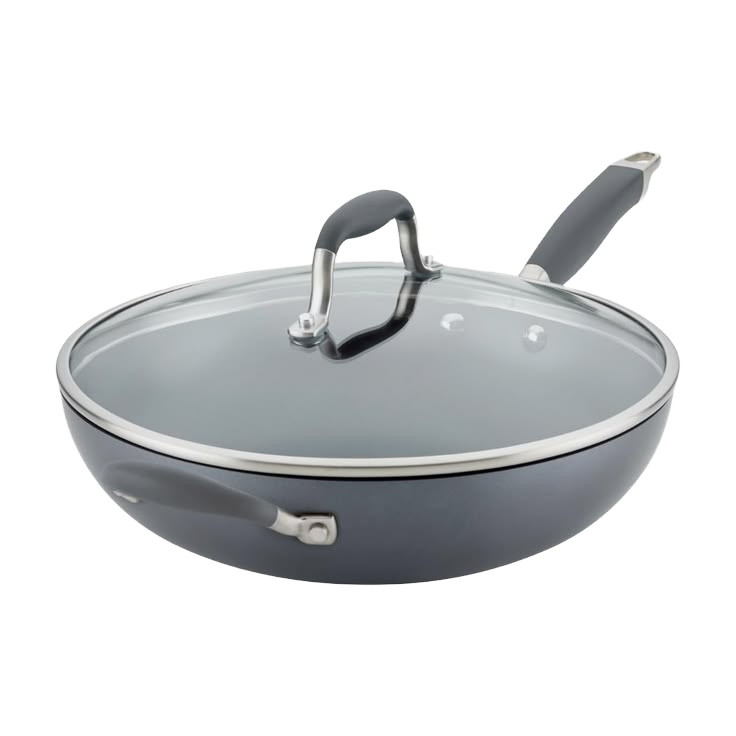
European-Style Frying Pan 26/28/30cm Pressed Aluminum Alloy Non-stick Ceramic Coating Induction Bottom Glass Cover Oven Safe
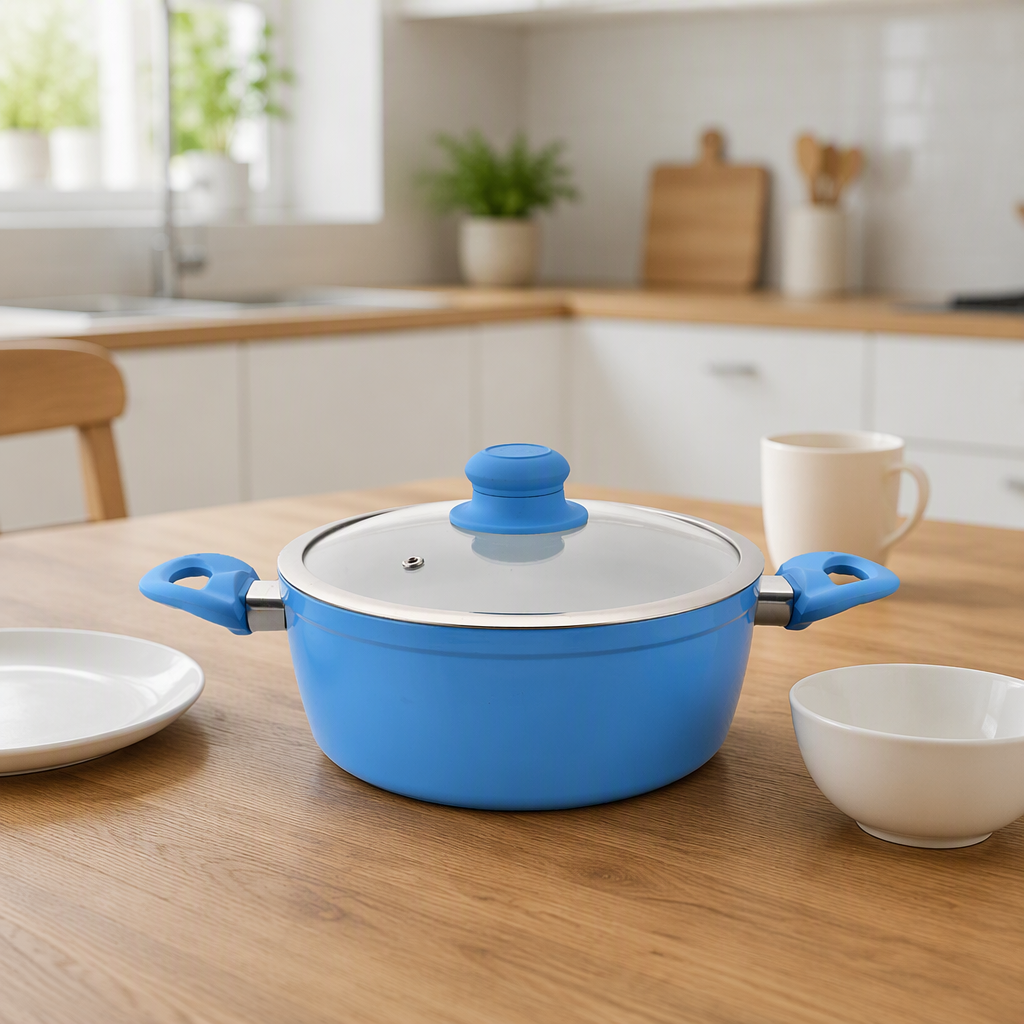
24 cm Durable and Lightweight Forged Non Stick Casserole Soup Pot with Bakelite Handle and Glass Lid for All Heat Sources
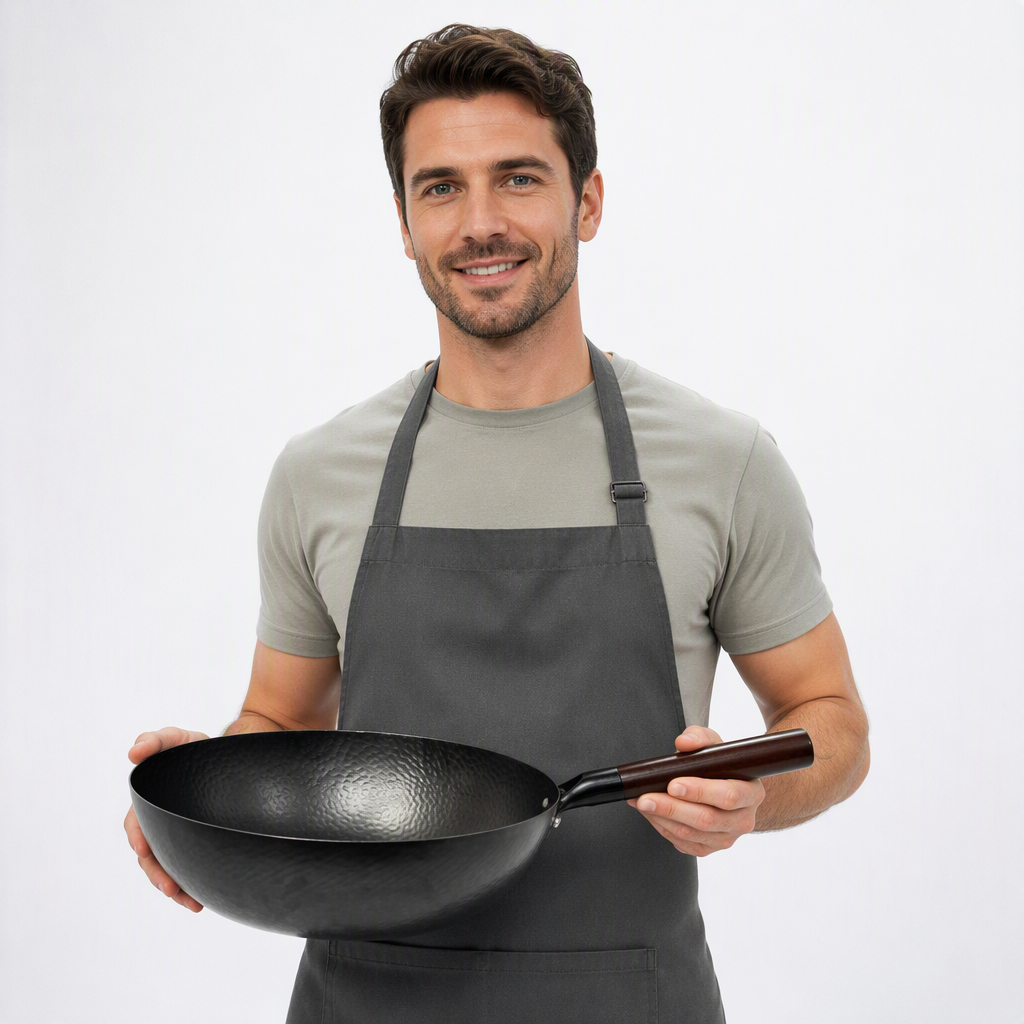
30cm Carbon Steel Round Wok Nitrided Surface Wood Handle Non Stick Stir Fry Pan for Gas and Induction Cookers
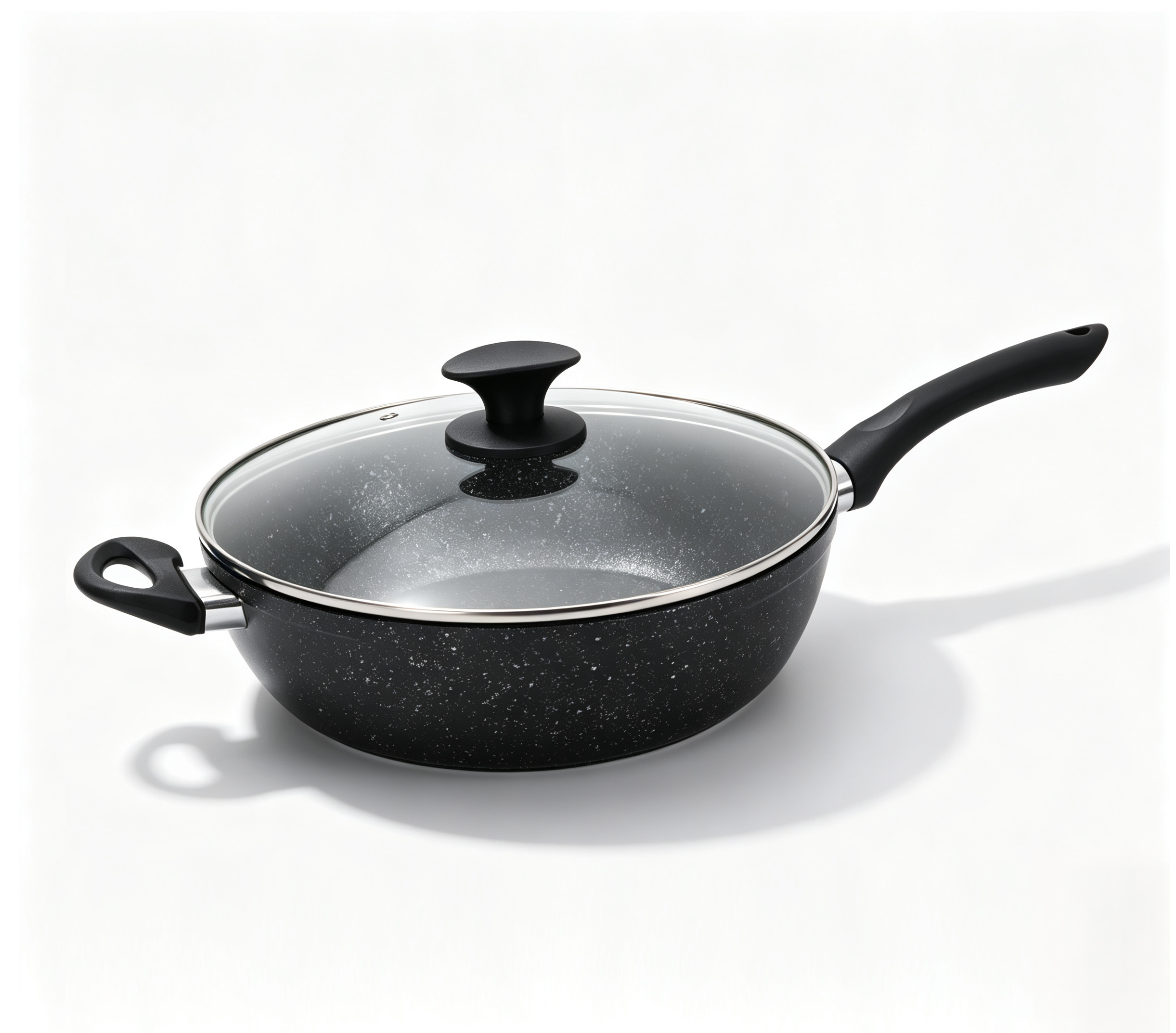
Easy Cleaning Modern Granit Nonstick Aluminum Cookware Pot Multi-function Deep Fry Pan Glass Lid Induction Ready Bakelite Handle
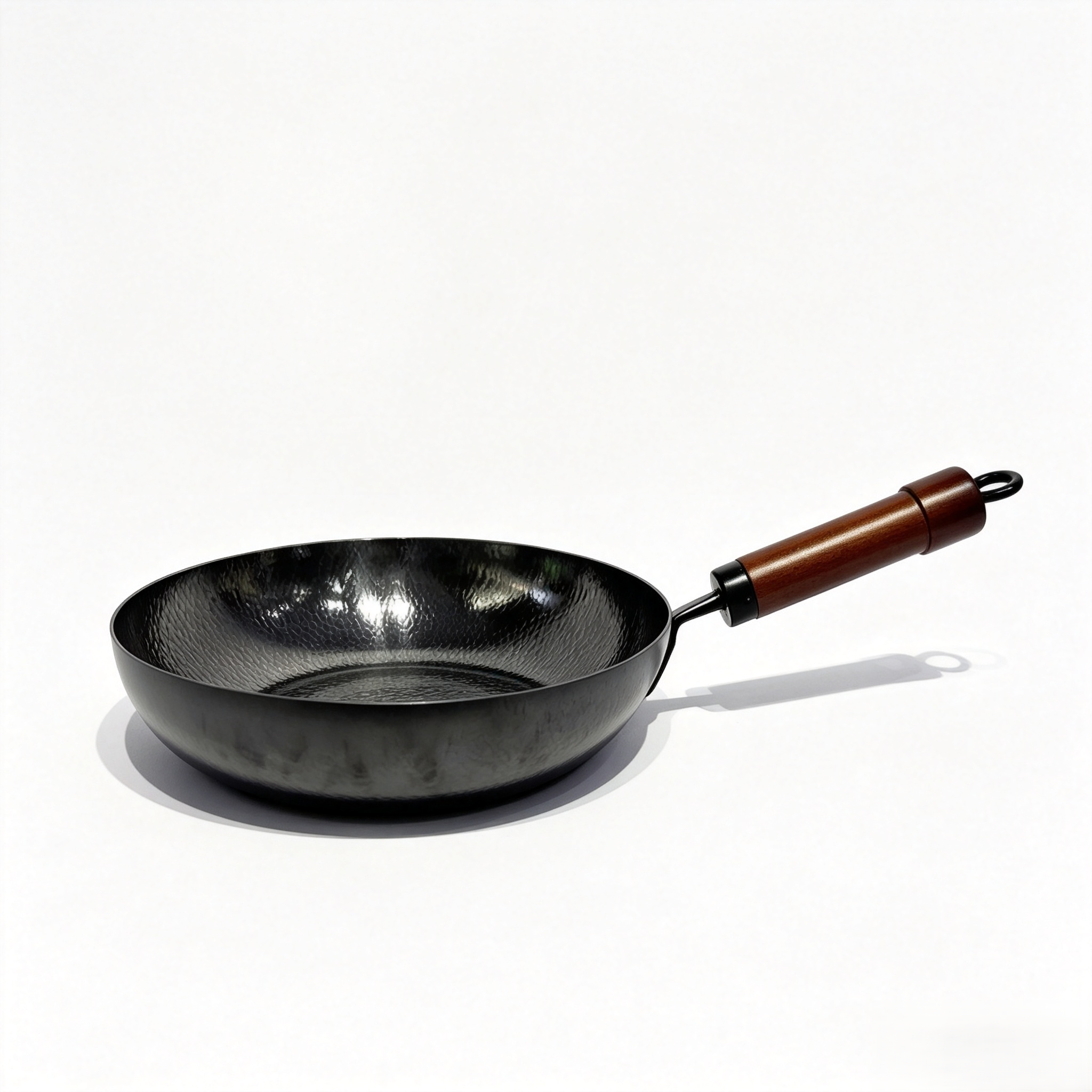
Modern CAMRY Eco-friendly No Coating Nitrided Hammered Carbon Steel Wok Cookware Wooden Handle 2-3L Capacity Gas Induction
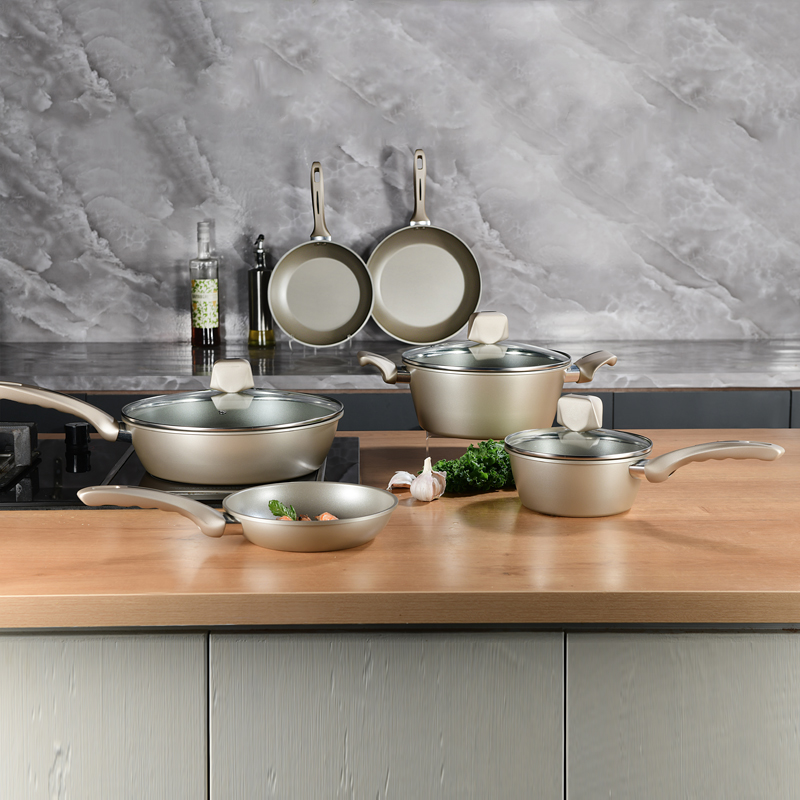
9 Piece Modern Design Titanium Non-Stick Coating Cookware Set Heavy Gauge Carbon Steel Pots Pans Soft Touch Handle Customizable
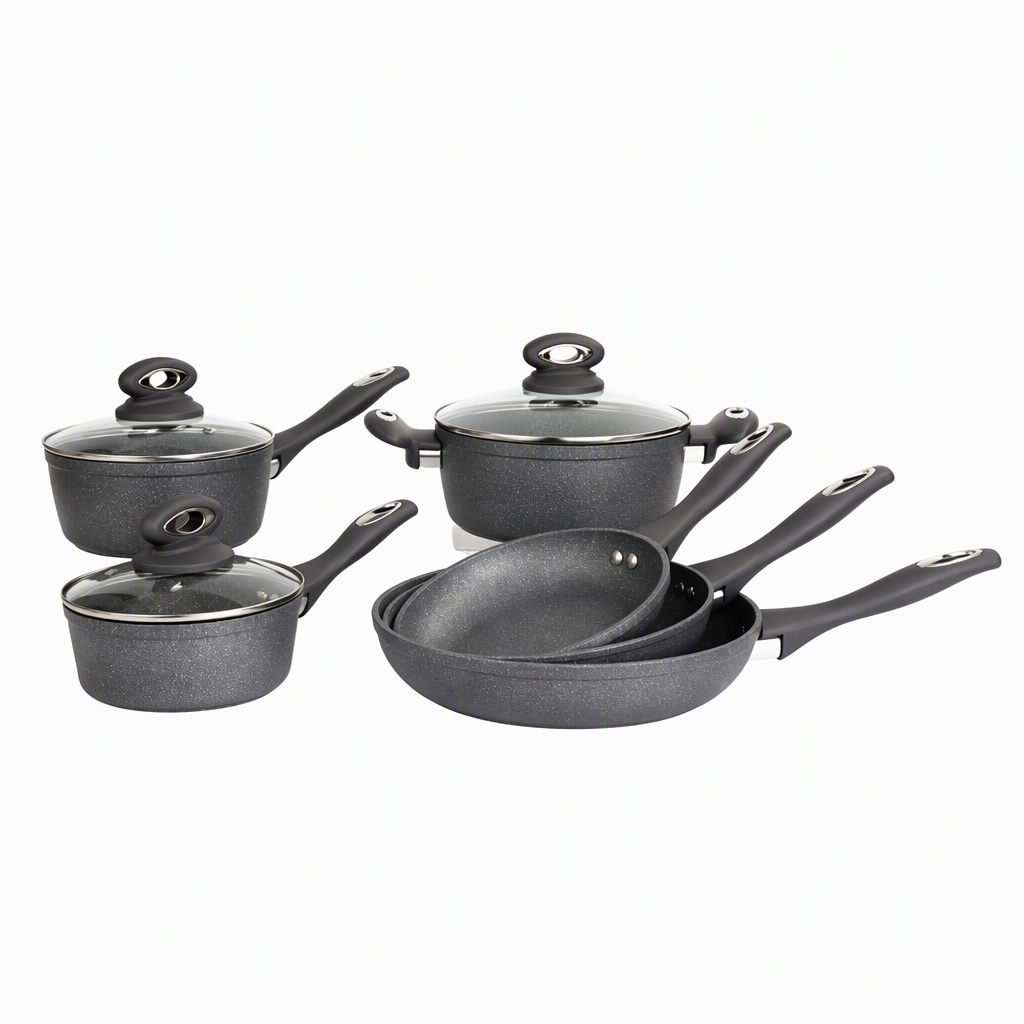
9 Piece Forged Aluminum Cookware Set Marble Coating Induction Base Glass Lids Oven and Dishwasher Safe
Electrochemical Hard Anodization Engineering for Professional Kitchens
Understanding the microstructural advantages of electro-chemically transformed aluminum in commercial marine & high-saline coastal applications
Information Gain Summary for Portsmouth Buyers: Standard cookware materials frequently fail under the thermal shock and atmospheric salinity of maritime commercial kitchens. Hard-anodized aluminum undergoes a specialized Type III sulfuric acid electrochemical anodizing process, converting the ductile base metal surface into an integral, sapphire-hard aluminum oxide layer (Al₂O₃) exceeding 60 to 70 HRC on the Rockwell C hardness scale.
For procurement directors, hotel groups, and catering equipment suppliers across Portsmouth, this metallurgical structure provides twice the structural surface density of stainless steel while retaining aluminum's native thermal conductivity of 225 W/m·K—preventing localized hotspots, warping, and premature coating degradation during peak service hours.
Hard anodization is not a simple nonstick coating or superficial spray application; it is an electro-chemical conversion process. Aluminum pans are submerged into a temperature-controlled acid bath while being subjected to precise electric current densities. Oxygen ions react chemically with aluminum atoms on the metal's outer boundary, forming a dense, non-porous ceramic layer that is atomically bonded to the alloy matrix.
Because the anodic layer grows both inward into the metal substrate and outward from its original boundary, hard-anodized cookware exhibits zero risk of peeling, flaking, or delamination—a critical compliance metric for UK commercial food hygiene audits under Food Standards Agency (FSA) regulations and BS EN 12983-1 mechanical safety benchmarks.
Material Performance Matrix: Hard Anodized vs. Alternative Cookware Substrates
When evaluating inventory for high-turnover hospitality environments or private-label distribution in Hampshire, structural integrity and thermal response govern total cost of ownership (TCO).
| Performance Metric | Hard Anodized Aluminum (Type III) | 304 Commercial Stainless Steel | Cast Iron / Carbon Steel | Standard Pressed Aluminum |
|---|---|---|---|---|
| Vickers / Rockwell Hardness | 400-600 HV (60-70 HRC) | 150-200 HV (15-25 HRC) | 180-250 HV | 40-60 HV |
| Thermal Conductivity (W/m·K) | 205 – 225 (Ultra-Fast) | 15 – 16 (Slow & Uneven) | 50 – 55 (Moderate) | 210 – 230 (Fast) |
| Marine Salinity Resistance | Superior (Passes ISO 9227 Salt Spray) | High (Susceptible to Pitting) | Low (Rapid Oxidation/Rust) | Moderate (Prone to Acid Attack) |
| Thermal Warp Resistance | Extreme (Resists up to 450°C) | Moderate (Prone to Base Bowing) | High | Low (Warps easily under shock) |
| Base Bonding Capability | Friction-Stir / Stainless Plate Compatible | Native Induction Ready | Native Induction Ready | Stamped Plate Insert Required |
Type III Hard Anodizing
Electro-chemical bath treatment creates a sapphire-hard Al₂O₃ oxide layer integrated into the metallic core, offering complete anti-scratch protection and acid-resistant durability.
Rapid Heat Distribution
Boasting thermal transfer speeds 14x faster than stainless steel, reducing prep times, lowering energy overheads, and eliminating hot-spots in commercial kitchens.
Saline & Coastal Durability
Specifically engineered to withstand salty marine air and intensive high-sodium commercial cooking without pitting, rusting, or surface discoloration.
Engineering Solutions for Portsmouth’s Culinary & Maritime Sectors
Custom-tailored cookware specifications for Hampshire's unique coastal environment and bustling commercial hub
As the UK’s primary naval base and a major historic coastal city, Portsmouth demands specialized cookware capabilities tailored to its specific geographical and industrial environment. Standard retail cookware often suffers premature degradation in Portsmouth due to unique regional conditions:
1. Naval & Commercial Maritime Catering
Galley kitchens operating on commercial ferries, naval supply vessels, and luxury yachts departing from Portsmouth International Port encounter constant marine air exposure and high-frequency usage. Hard-anodized pans provide an essential non-corrosive barrier against atmospheric salt spray while maintaining flat bases on heavy-duty induction stovetops during sea travel.
2. Gunwharf Quays & Waterfront Hospitality
Portsmouth’s dense waterfront dining districts—including Gunwharf Quays, Southsea Promenade, and Old Portsmouth—host high-turnover seafood restaurants and gastro-pubs. Chefs frying shellfish, searing finfish, and reducing acidic wine sauces rely on hard-anodized nonstick sauté pans to prevent metallic chemical reactions and withstand non-stop pot-washing cycles.
3. Retail & Private-Label Brands in Hampshire
Wholesalers and department store suppliers serving the Hampshire region require premium non-stick cookware lines that meet strict UK food contact standards (PFOA-free, PFOS-free, heavy-metal-free). OEM customized anodized pan sets offer high perceived retail value with luxury matte-dark oxide aesthetics.
Portsmouth & UK Market Trends Driving Cookware Procurement
Navigating environmental compliance, energy saving directives, and evolving consumer preferences
B2B cookware buyers, importers, and procurement personnel operating in Portsmouth and the broader UK market face changing regulatory landscapes and operational shifts:
- Transition to Green Energy & Induction Hobs: Commercial kitchens in Portsmouth are rapidly modernizing to reduce carbon footprints, shifting from gas burners to high-efficiency induction units. All Zhejiang MEIS hard-anodized aluminum cookware can be integrated with heavy-gauge, friction-stir welded induction bases (18/0 magnetic stainless steel plates), ensuring complete heat-transfer fidelity across commercial induction hobs.
- Strict PFAS/PFOA Chemical Compliance: With the UK Environment Agency and European REACH framework tightening chemical restrictions, our multi-layer nonstick spray coating systems utilize advanced Sol-Gel ceramic coatings and eco-friendly PFOA-free PTFE fluoropolymer matrices, guaranteeing safety compliance for UK retail distribution.
- Commercial Kitchen Sustainability & TCO Focus: Rather than replacing damaged lightweight pans annually, Portsmouth hospitality operators are prioritizing long-lifecycle hard-anodized pans that resist physical deformation and surface scratching, lowering long-term replacement costs.
Why Partner with Zhejiang MEIS Kitchenware Co., Ltd.?
TÜV Rheinland verified manufacturer with end-to-end production control in Jinhua, Zhejiang
Zhejiang MEIS Kitchenware Co., Ltd. (located in Dongnan Industrial Zone, Shuxi Street, Jinhua) brings over 20 years of manufacturing excellence and 18 years of B2B export leadership to global partners. Operating full pressing, CNC machining, automated surface cleaning, precision spray coating, curing ovens, and rigorous assembly lines under one roof, we guarantee unmatched quality control for Portsmouth buyers.
TÜV Rheinland Verified
Our facility has passed rigorous on-site audits by TÜV Rheinland, validating production capacity, employee welfare, quality management systems, and technical testing capabilities.
In-House Mold & Tooling
Equipped with high-precision lathes and CNC mold machines, we accelerate OEM/ODM prototyping, customized pan dimensions, custom handle designs, and private-label embossing.
Full In-House QA Lab
Every batch undergoes stringent internal testing: Salt Spray Testing (corrosion resistance), Handle Fatigue & Torsion Testing, Thermal Shock Resistance, and Coating Cross-Hatch Adhesion Checks.
Frequently Asked Questions for Portsmouth Buyers
Direct answers regarding shipping, compliance, MOQs, and technical customization
How do you manage freight shipping to the Port of Portsmouth or Southampton?
We work directly with major international freight forwarders to provide seamless FOB, CIF, or DDP (Delivered Duty Paid) shipping to the Port of Portsmouth (Commercial Port) or nearby Port of Southampton. Our export logistics team prepares all UK customs documentation, bills of lading, and packing lists to ensure fast clearance without customs delays.
What is your Minimum Order Quantity (MOQ) for custom hard-anodized cookware?
For custom hard-anodized pan production (custom sizing, special handles, or bespoke non-stick coating formulations), our standard MOQ typically ranges between 1,000 and 1,500 pieces per item size. Selected stock designs or trial orders can be arranged starting from lower quantities upon inquiry.
Are your non-stick coatings compliant with UK Food Contact Materials (FCM) regulations?
Yes. All cookware manufactured by Zhejiang MEIS Kitchenware Co., Ltd. satisfies UK and EU food safety standards, including EU Regulation (EC) No 1935/2004 and UK LFGB guidelines. Coatings are 100% PFOA-free, lead-free, and cadmium-free.
Can hard-anodized cookware be used on induction hobs in Portsmouth commercial kitchens?
While bare aluminum is non-magnetic, we fit our hard-anodized pans with high-grade magnetic stainless steel induction disks attached via high-pressure friction bonding or punch-indentation. This ensures complete multi-hob versatility across gas, electric, ceramic, and high-wattage induction stoves.
How does your factory protect shipments from marine humidity during ocean transport?
Every piece is individual wrapped in protective eco-friendly anti-scratch polybags, cushioned with custom corrugated inserts, and packed into heavy-duty 5-ply export master cartons. Desiccant packs are inserted into sealed master cartons to prevent moisture buildup during ocean transit.
Do you offer OEM private-label branding for UK supermarket and retail brands?
Yes. We provide comprehensive OEM/ODM services including laser-engraved bottom logos, branded flame guards, custom-designed color box packaging, barcode labeling, and custom handle silicone grips tailored to your corporate branding.
Partner with a Verified Hard Anodized Pan Manufacturer
Elevate your product catalog or outfit your Portsmouth commercial kitchen network with factory-direct anodized & nonstick cookware solutions.
Get a Quote