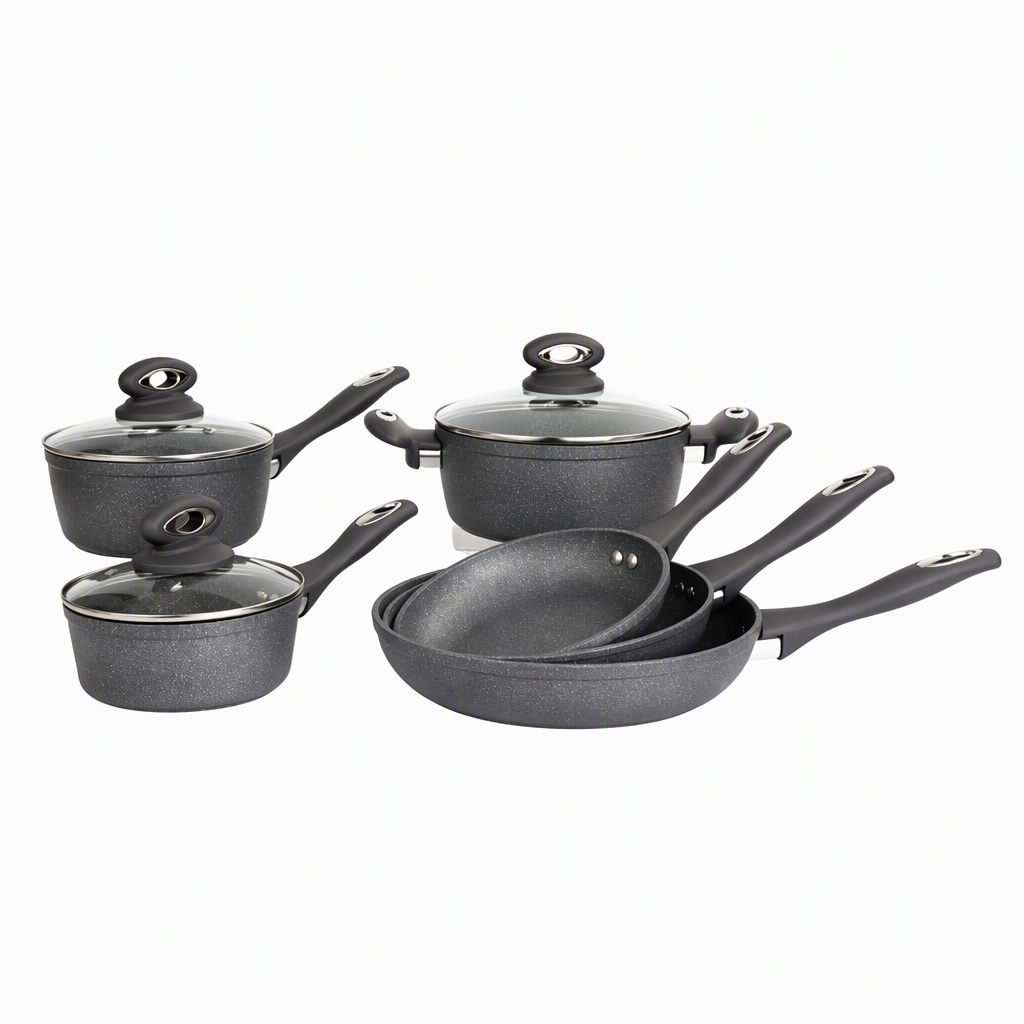
Featured Hard Anodized & Non-Stick Cookware Catalog
Explore our factory-direct OEM/ODM kitchenware portfolio, engineered with high-density forged aluminum, hard-anodized surfaces, and multi-layer non-stick coatings compliant with European Union safety standards.
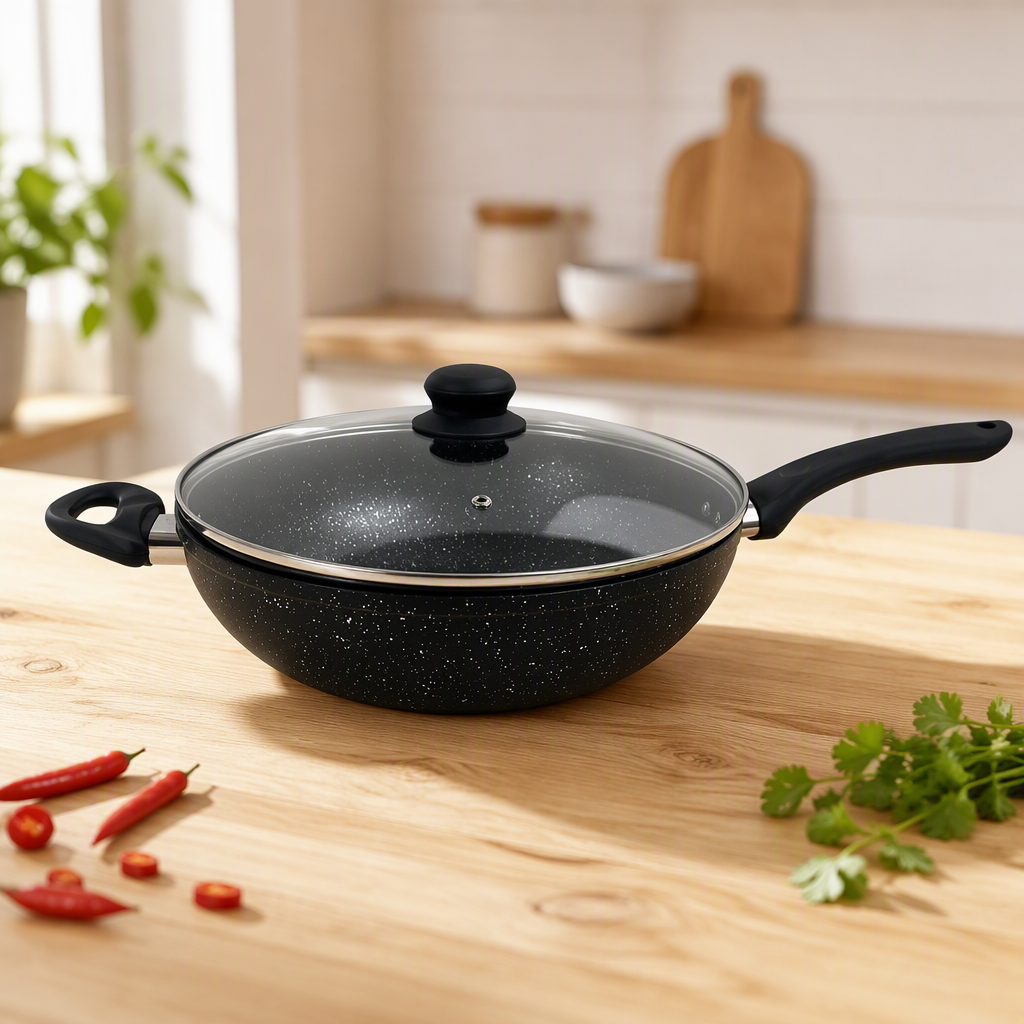
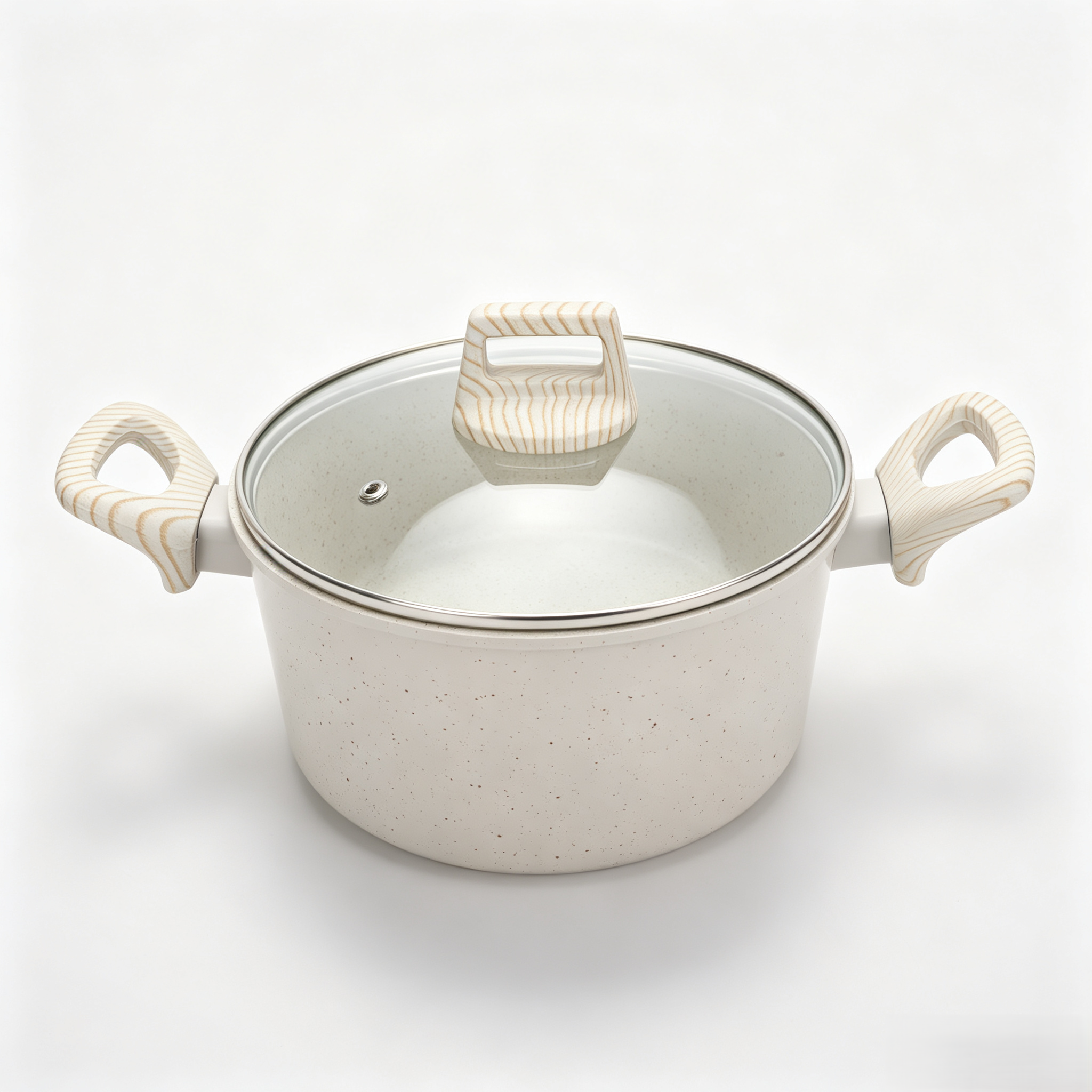
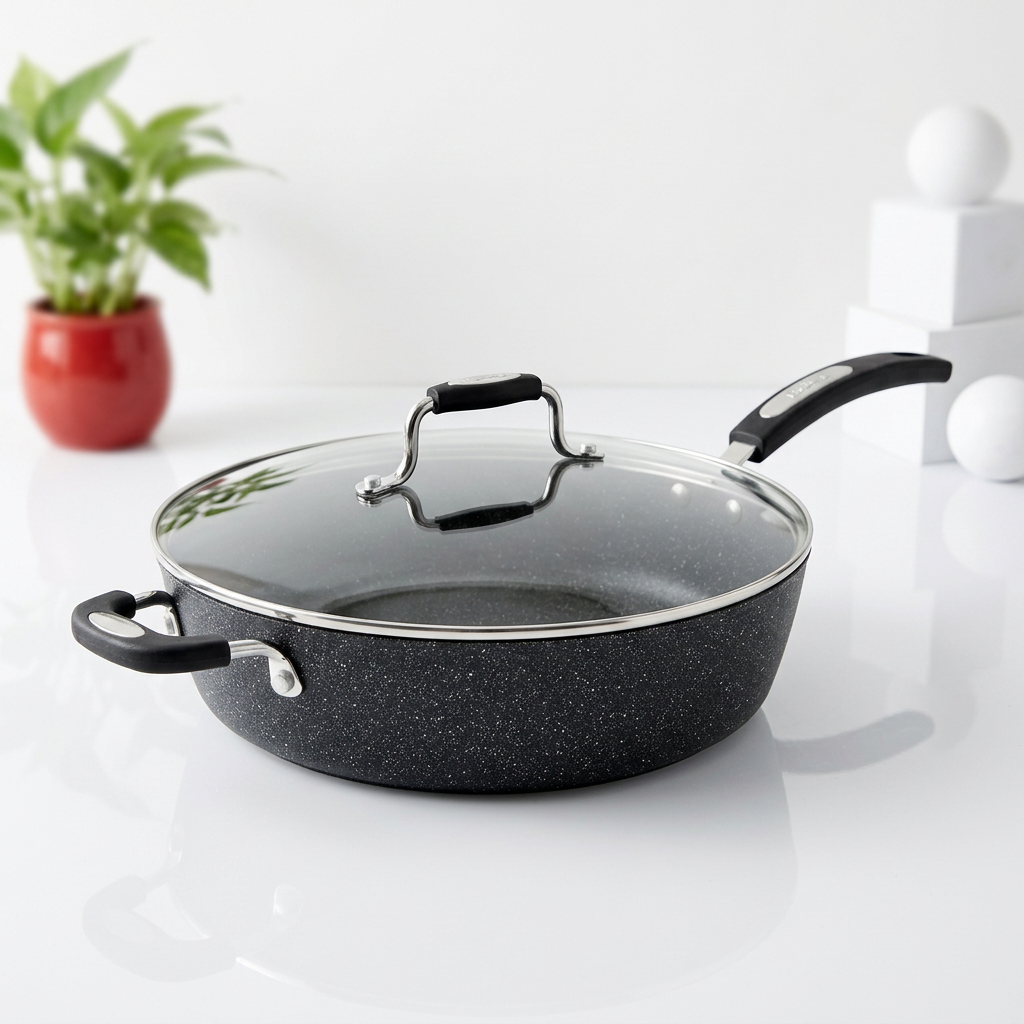
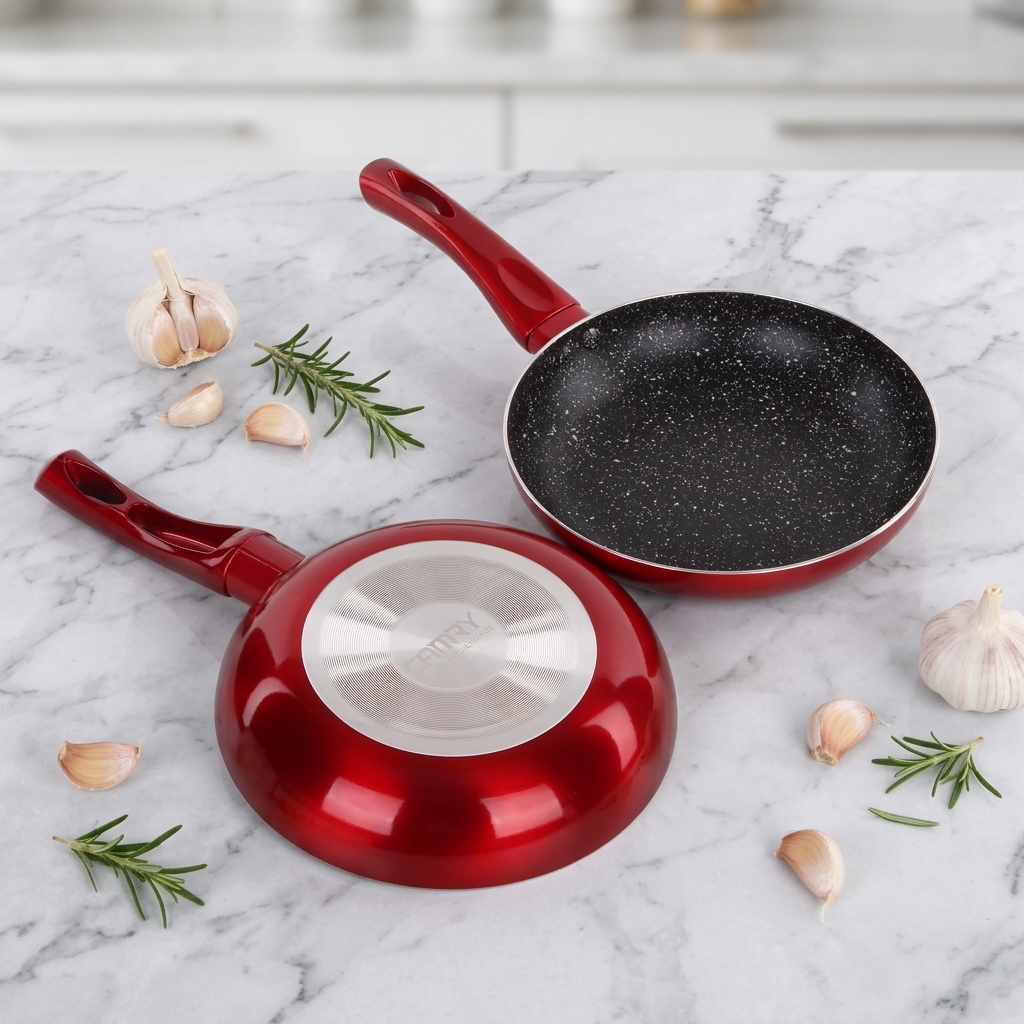
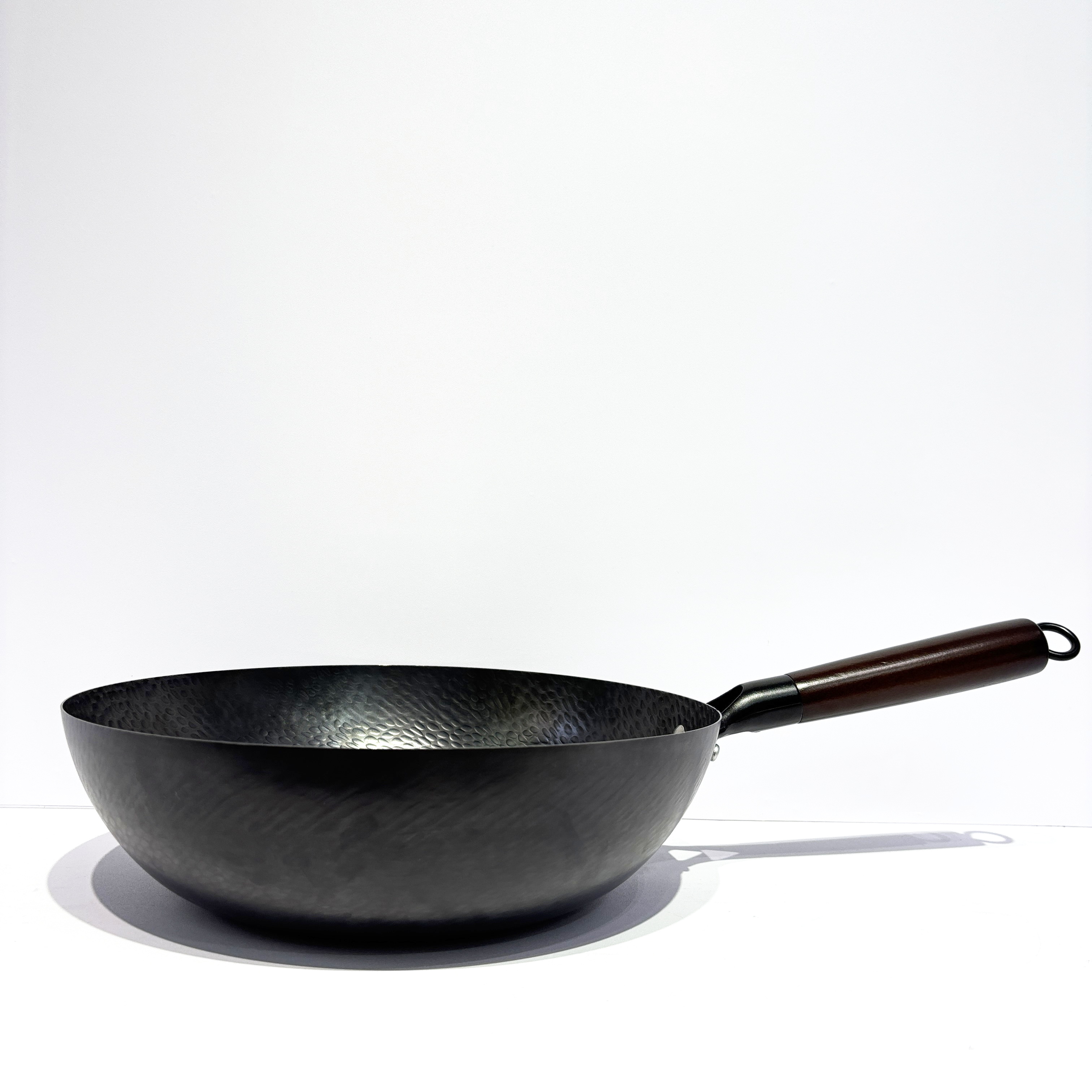
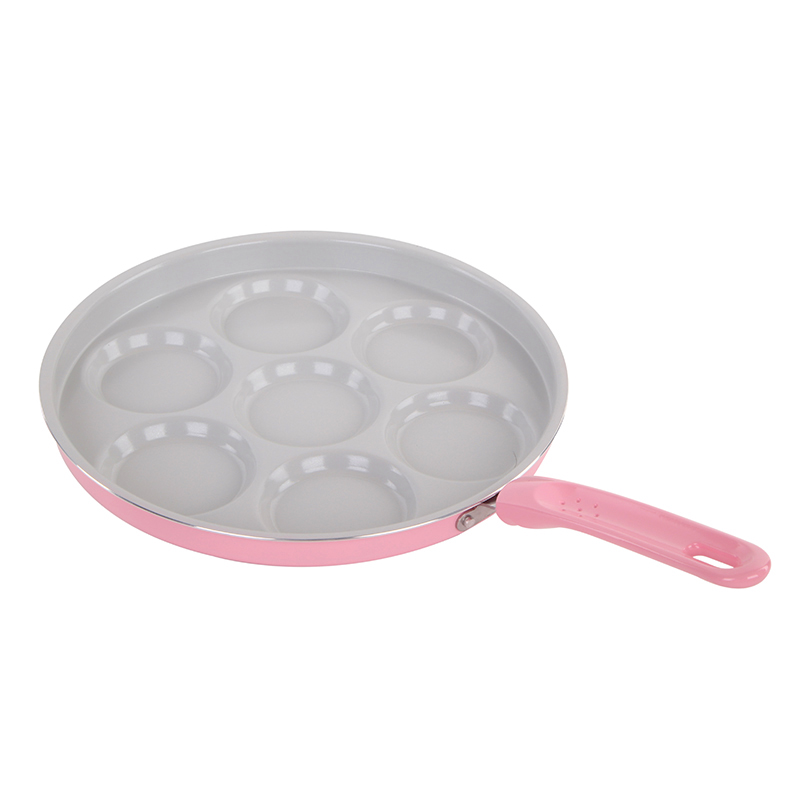
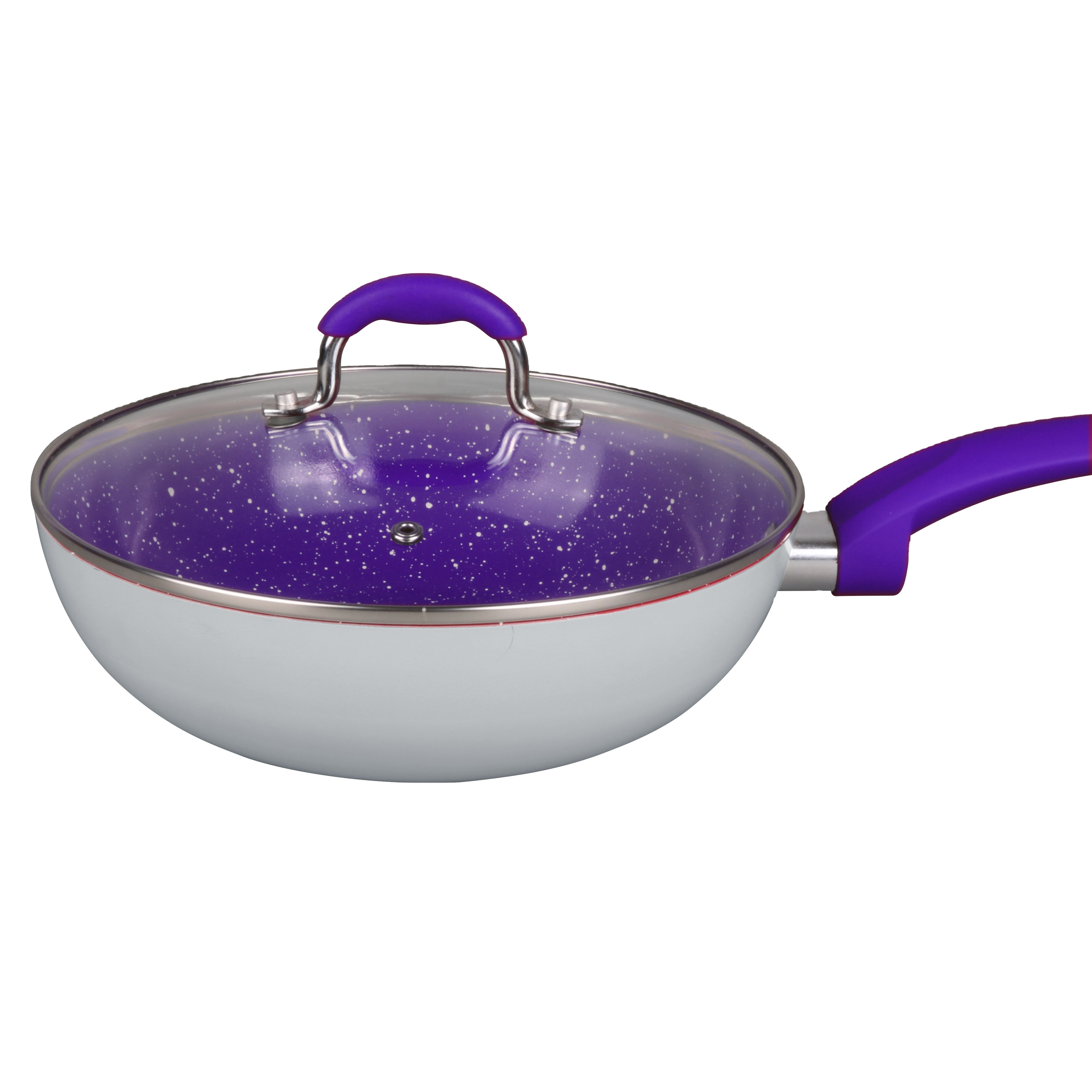
Technical Metallurgy of Hard Anodized Cookware: The B2B Specification Guide for Vilnius Buyers
For commercial kitchenware buyers, department store sourcing directors, and culinary brand managers in Vilnius, selecting high-performance cookware demands an understanding of metallurgical transformation. Hard anodization is not merely a topical spray or temporary coating; it is an electro-chemical passivation process that transforms the molecular structure of raw aluminum into a ultra-durable aluminum oxide layer.
At Zhejiang MEIS Kitchenware Co., Ltd., located in the Dongnan Industrial Zone of Jinhua, Zhejiang, our production engineering utilizes advanced Type III hard anodizing baths. By submersing precision-pressed or die-forged aluminum pan bodies into an ice-chilled sulfuric acid electrolyte solution while applying high-density electrical currents, we force the aluminum substrate to oxidize controlledly. The result is an integrated aluminum oxide surface layer measuring between 35 to 50 microns in thickness—twice as hard as stainless steel (rated at over HV 350 on the Vickers hardness scale).
Electrochemical Passivation
Sub-zero electrolyte bath processing creates an oxide lattice that is non-porous, corrosion-resistant, and chemically inert—preventing acidic food reactions (such as traditional Lithuanian beetroot or sauerkraut dishes) from leaching metallic ions.
Superior Heat Distribution
Aluminum exhibits a thermal conductivity rating of ~237 W/m·K, vastly outperforming stainless steel (~15 W/m·K). Hard anodization retains this thermal agility while eliminating hot spots, drastically reducing commercial energy consumption.
Advanced Bond Reinforcement
The microscopic pores of the hard-anodized oxide layer serve as an ideal mechanical anchor for subsequent fluoropolymer or ceramic non-stick topcoats (PFAS/PFOA-free), preventing peeling, flaking, or thermal delamination under heavy service.
Information Gain: Hard Anodized vs. Standard Coated Cookware
Unlike standard soft-coated cookware that relies solely on surface adhesion, hard-anodized cookware from MEIS provides structural reinforcement. Should a surface non-stick layer degrade after years of aggressive dishwashing or metal utensil contact, the underlying hard-anodized shell remains completely non-reactive, non-toxic, and resistant to mechanical deformation. This double-barrier design makes our export lines highly prized across Baltic retail networks emphasizing sustainable product lifecycles.
Comparative Analysis: Cookware Materials for the Baltic Market
To assist commercial procurement officers serving Vilnius and broader Eastern European distribution channels, our engineering team has summarized key technical benchmarks across our main OEM production lines:
| Specification Metric | MEIS Hard Anodized Forged Aluminum | Pressed Aluminum Non-Stick | Nitrided Carbon Steel | Standard Stainless Steel 304 |
|---|---|---|---|---|
| Vickers Hardness (HV) | HV 350 - HV 450 (Ultra-Hard) | HV 60 - HV 80 (Standard) | HV 250 - HV 300 (High) | HV 180 - HV 200 (Medium) |
| Thermal Conductivity | 205 - 225 W/m·K (Rapid) | 220 - 235 W/m·K (Instant) | 50 - 60 W/m·K (Moderate) | 14 - 16 W/m·K (Slow/Uneven) |
| Induction Efficiency | High (Encapsulated AISI 430 Base) | Medium-High (Stamped Base) | 100% Native Magnetic | Requires 430 Sandwich Base |
| Warp Resistance | Exceptional (Die-Forged Rim) | Moderate (Economy Line) | High (Heavy Gauge) | High |
| Target Market Fit | HORECA, Premium Retail Vilnius | Mass Supermarket Promotions | Ethnic & Professional Wok Cooking | Institutional Catering |
Localized Application Scenarios in Vilnius & Lithuania
Understanding user intent in Vilnius requires tailoring product designs to match local culinary traditions, kitchen equipment setups, and consumer lifestyle changes across Lithuania.
1. Old Town (Senamiestis) & Modern Bistro HORECA Outlets
Vilnius boasts a thriving culinary scene, from classic Lithuanian taverns in Senamiestis serving hearty dishes like Kepta Duona, Cepelinai, and pan-fried pork cutlets, to modern European fusion bistros along Gediminas Avenue. High-density commercial kitchens require cookware that can withstand continuous 14-hour daily thermal cycles without warping or delaminating. Our hard-anodized frying pans and deep casserole pots with riveted stainless steel or heavy-duty bakelite handles deliver the structural durability required by professional chefs who demand fast thermal recovery when frying during peak rush hours.
2. Energy-Efficient Residential Kitchens in Paupys & Naujamiestis
With electricity and heating costs prioritized in Baltic residential design, urban apartment owners in modern developments like Paupys and Naujamiestis overwhelmingly favor induction stovetops (Bosch, Electrolux, AEG). Hard-anodized pans equipped with our high-impact bonded magnetic stainless steel bases ensure rapid energy transfer. The seamless thermal conductivity of aluminum minimizes preheating time, directly lowering household energy consumption while providing even searing for fish, poultry, and vegetables.
3. Modern Baltic Household Culinary Habits: Eco-Conscious & Health-Driven
Lithuanian consumers are increasingly vigilant about food safety and chemical safety, demanding 100% PFOA-free, Lead-free, and Cadmium-free certification. MEIS non-stick hard anodized cookware uses multi-layer water-based fluoropolymer coatings and organic ceramic-granite speckle finishes. These non-porous surfaces require minimal cooking oils, enabling healthy, low-fat cooking that satisfies eco-conscious consumers across major Lithuanian retail chains such as Maxima, Rimi, and IKI.
Localized Market & Sourcing Trends in the Baltic Region
Importers and private-label distributors in Vilnius face evolving retail demands driven by regional economic shifts and strict European Union environmental mandates. Success in the Baltic market relies on aligning factory production with three core sourcing trends:
1. EU Chemical Compliance & The Green Transition
European chemical regulations (REACH, EU 1935/2004, and upcoming PFAS restrictions) require complete transparency from Asian manufacturers. Vilnius buyers prefer factories with verified testing documentation proving zero chemical migration under acidic and high-heat conditions.
2. Space-Saving Modular & Detachable Handles
Compact living spaces in modern Baltic apartments have driven demand for space-saving kitchen cookware. Detachable handle cookware sets allow seamless transitions from induction hob to oven, then straight to the dining table and dishwasher, saving valuable cabinet space.
3. Agility in Supply Chain Logistics (Klaipėda Port Access)
Vilnius importers need agile lead times and direct ocean freight routes to Klaipėda Port. B2B buyers favor direct-factory partners offering mixed-container consolidation (combining pressed pans, forged anodized sets, and carbon steel woks in a single shipment) to minimize inventory holding risks.
Enterprise Superiority: Why Vilnius Importers Choose MEIS Kitchenware
Zhejiang MEIS Kitchenware Co., Ltd. stands as a premier direct manufacturer in Jinhua, Zhejiang, operating verified pressing, CNC machining, automated non-stick coating, and multi-stage assembly lines. We are not a broker or trading intermediary; we control every step of production under one roof.
TÜV Rheinland On-Site Verified
Our manufacturing facility, production capacity, worker welfare standards, and quality management systems are independently audited on-site by TÜV Rheinland, giving Baltic buyers complete purchasing confidence.
In-House Tooling & Custom Mold Division
Equipped with modern CNC lathes, hydraulic drawing presses, and automated mold workshops, we support full custom OEM/ODM development—from initial 3D drawing to finished physical sample in under 15 days.
Rigorous Quality Assurance Protocol
Every production run undergoes strict quality control checks: salt spray corrosion testing, cross-hatch coating adhesion testing, handle torque & fatigue testing, and base flatness laser inspection before shipment.
Our 105-person workforce operates dedicated manufacturing lines capable of handling large-volume retailer contracts while remaining flexible enough to support emerging private-label brands across Lithuania, Latvia, and Estonia.
Frequently Asked Questions for Vilnius & Baltic B2B Buyers
Q1: How does MEIS handle shipping and customs logistics to Vilnius, Lithuania?
We offer complete FOB Ningbo/Shanghai terms as well as DDP/CIF arrangements directly to Klaipėda Port or inland container depots in Vilnius. Our export documentation team manages full EU customs invoicing, packing lists, Certificate of Origin (Form A/CO), and TARIC code classifications to streamline clearing procedures.
Q2: Are your hard-anodized cookware lines fully compliant with EU food contact standards?
Yes. All raw aluminum alloys, hard-anodized oxide layers, ceramic topcoats, and fluoropolymer coatings undergo comprehensive laboratory testing. Our products comply fully with Regulation (EC) No 1935/2004, German LFGB standards, and French DGCCRF requirements, certifying zero chemical leaching, PFOA, PFOS, Lead, or Cadmium.
Q3: What are the Minimum Order Quantities (MOQs) for custom private-label orders?
For standard pressed or forged aluminum pans with custom silicone color finishes and private-label packaging, our MOQ generally ranges between 1,000 to 1,500 pieces per size or set. For trial orders or select inventory items, smaller starter quantities can be negotiated to support new market entries in the Baltic region.
Q4: Can MEIS supply custom induction base patterns tailored to European stovetops?
Absolutly. We supply full-bound induction bottom plates, hole-punched magnetic discs, and customized laser-etched stainless steel base designs. These configurations ensure 100% compatibility with modern European induction hobs, including induction zone detection systems.
Q5: What is the average manufacturing and sample delivery lead time?
Custom OEM prototypes are prepared within 7 to 14 days using our in-house mold division. Once production artwork and samples are approved, full mass manufacturing runs take between 30 to 45 days, with direct sea shipping to Klaipėda Port taking approximately 32 to 40 days.
Q6: What customization options are available for branding and retail presentation?
We provide comprehensive branding customization: laser-engraved bottom logos, custom molded handle logos, branded flame guards, customized color sleeve wraps, 5-layer corrugated retail gift boxes, and eco-friendly plastic-free packaging options tailored for European retail displays.
Partner with a Verified Hard Anodized Cookware Manufacturer
Elevate your product line with commercial-grade, hard-anodized aluminum and non-stick cookware engineered to meet European quality standards. Contact our international trade team today for technical catalogs, instant FOB quotes, and custom sample requests.