Engineered Cookware Portfolios for Parisian Importers & Brands
Precision die-forged geometries, thick heat-retaining thermal bases, and food-grade multi-layer coatings developed to meet the performance criteria of French professional and home gastronomy.
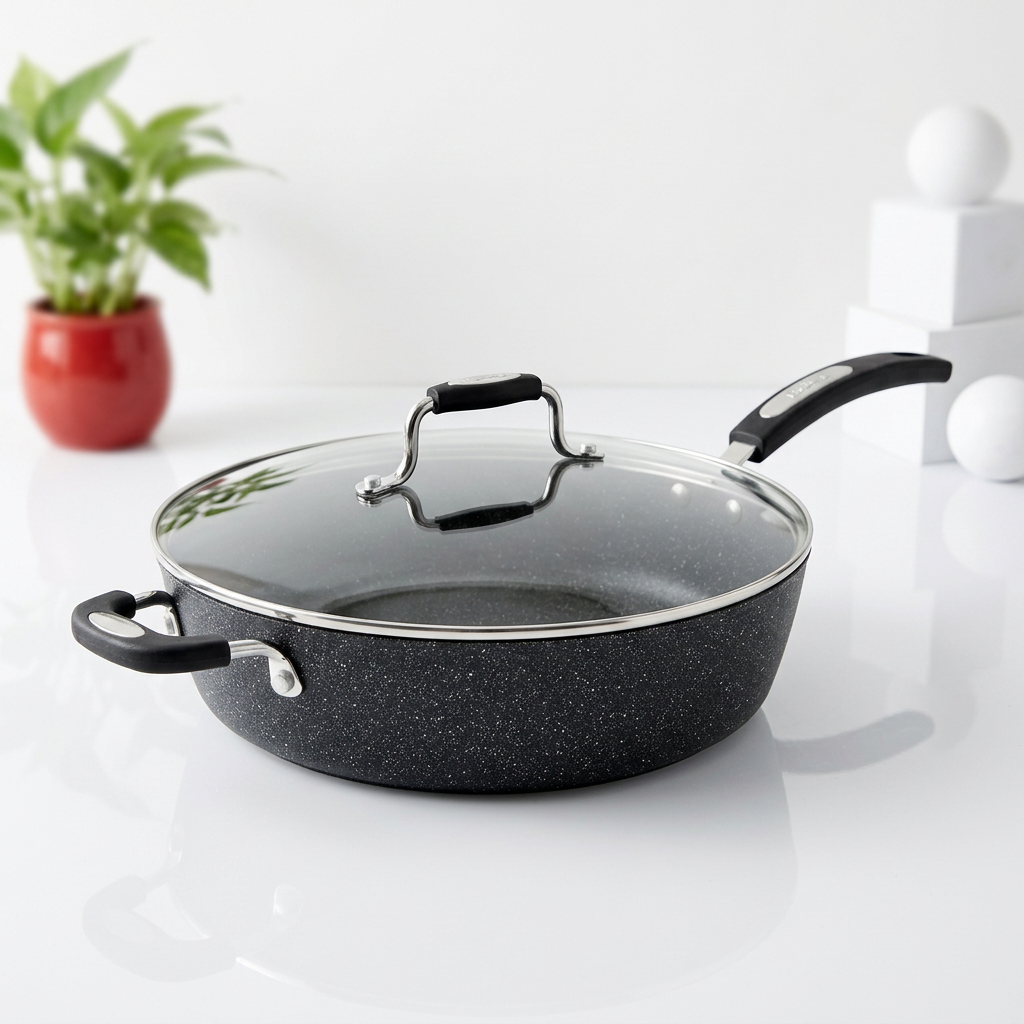
Classic 11 Inch (28cm) Non-Stick Cookware Set Deep Fry Pan Helper Handle Durable Forged Aluminum 4 Quarts Glass Cover Induction
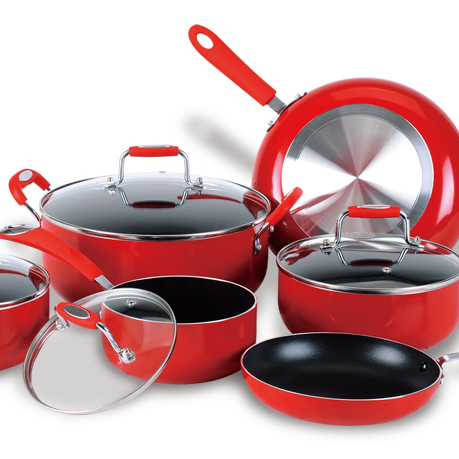
Fashion Kitchen Set of Nonstick Cookware
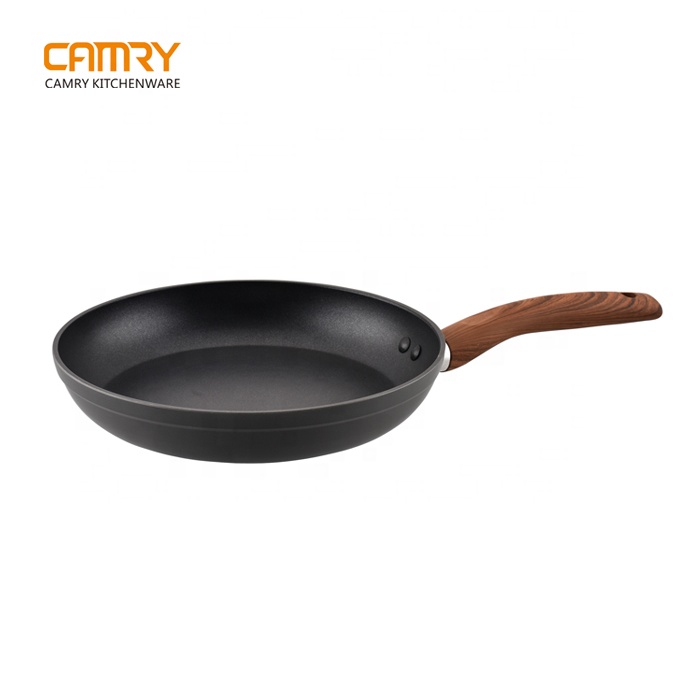
7PCS Dark Grey Forged Aluminum Megaware Cookware With Wooden Soft-touched Handle
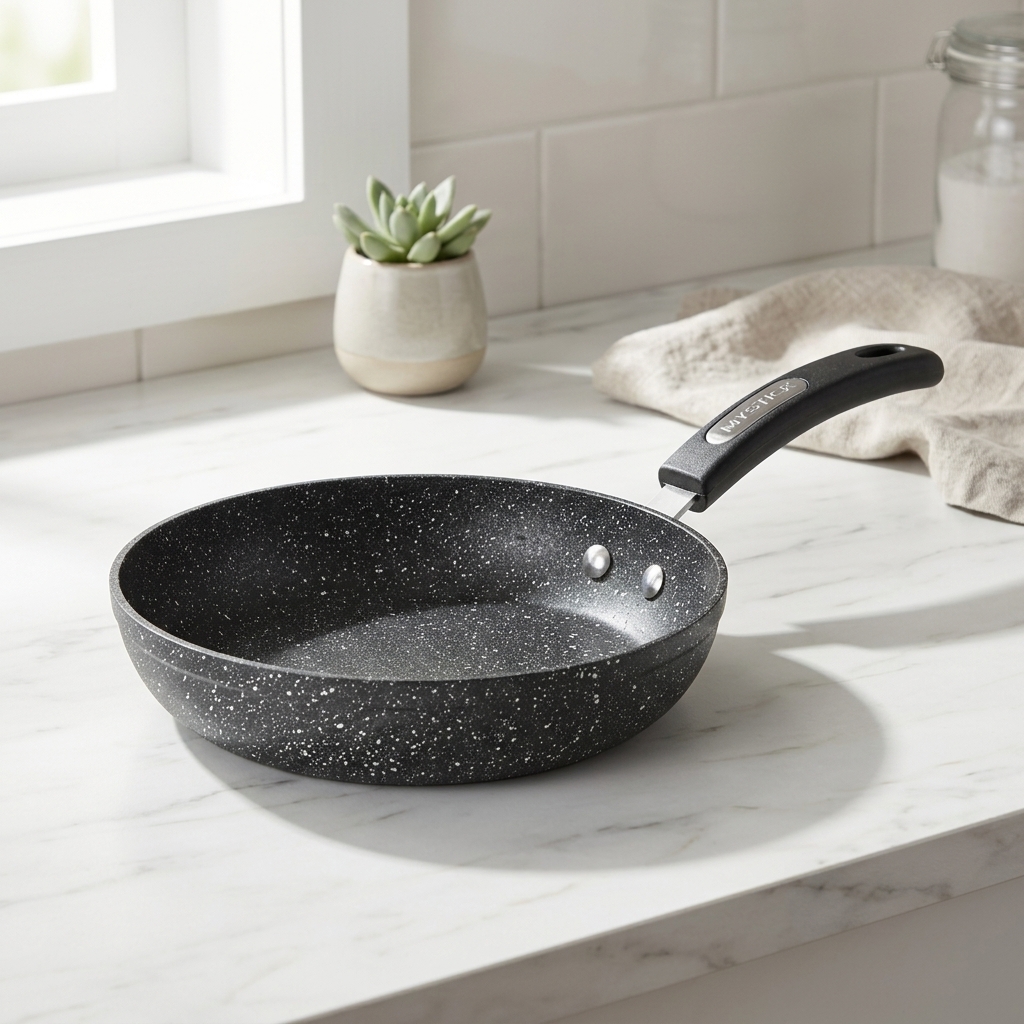
20cm Aluminium Shot Blast Frying Pan & Cooking Pot 1-2L Capacity Non-Stick for Gas/Electric/Induction Hobs Dishwasher Safe
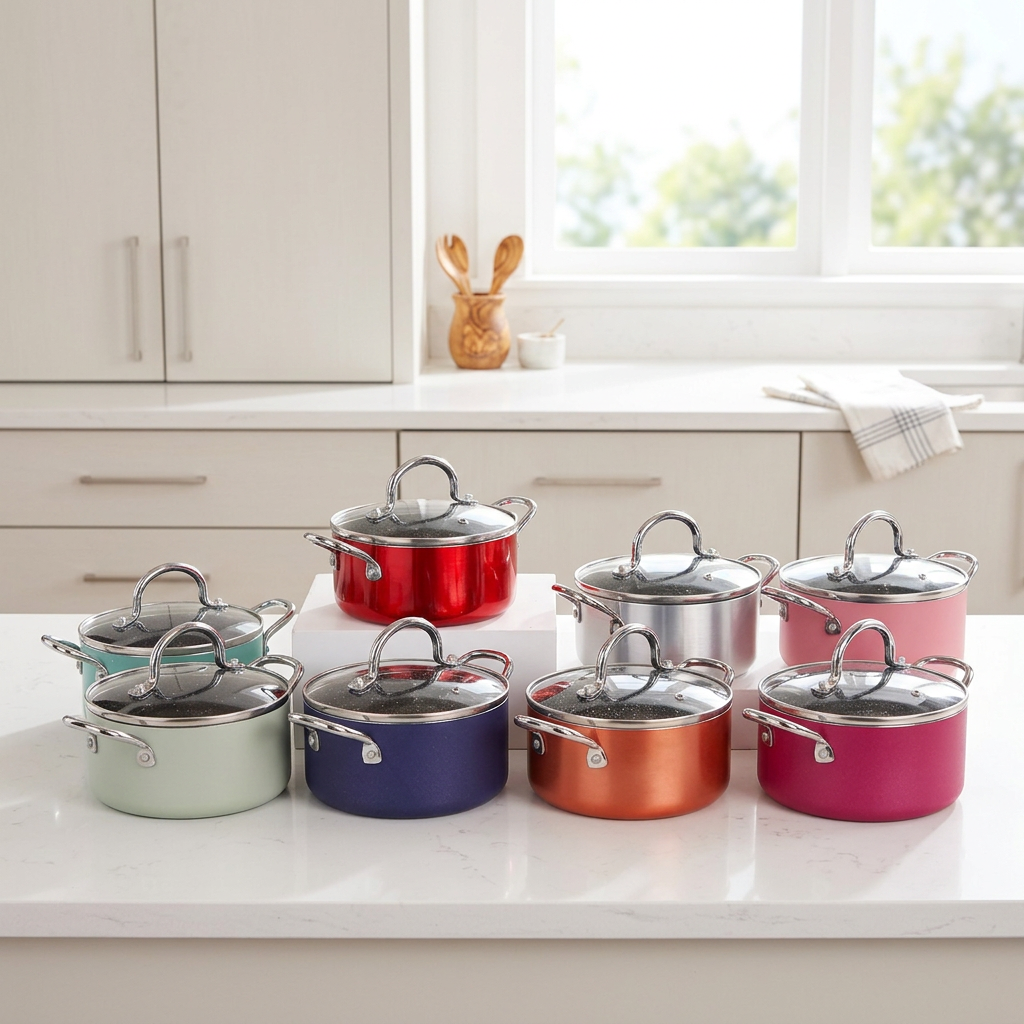
14cm Mini Sauce Pan with Glass Lid Colorful Non Stick Cookware for Induction and Gas Stoves Home Kitchen Use
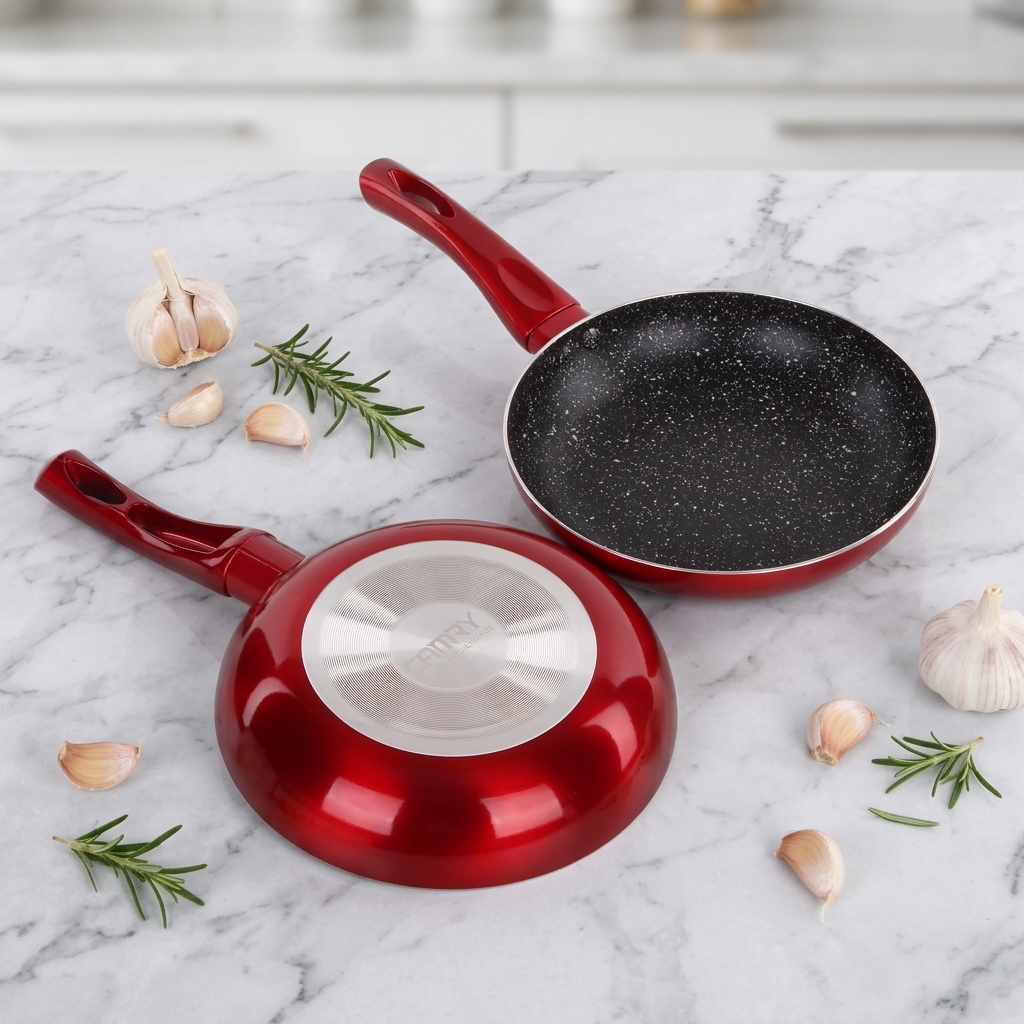
Hot Sale Durable 30 cm PFOA-free Non-Stick Pressed Frying Pan Glass Cover Heat-Resistant Handle for Household Restaurant Cooking
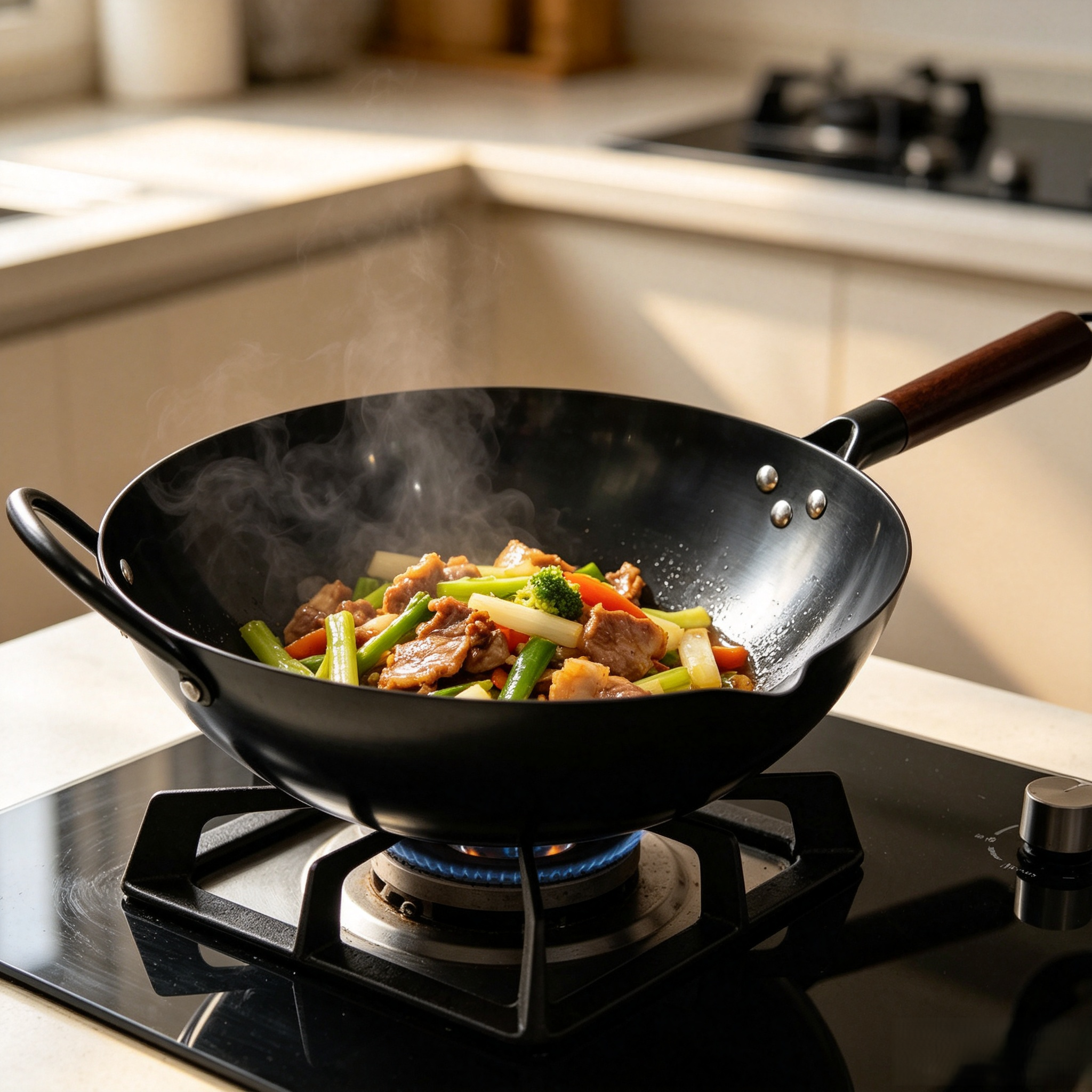
OEM/ODM 28/30/32/34cm Healthy Nitrided No Coating Carbon Steel Wok Gas & Induction Ready Tempered Glass Lid Wooden Handle
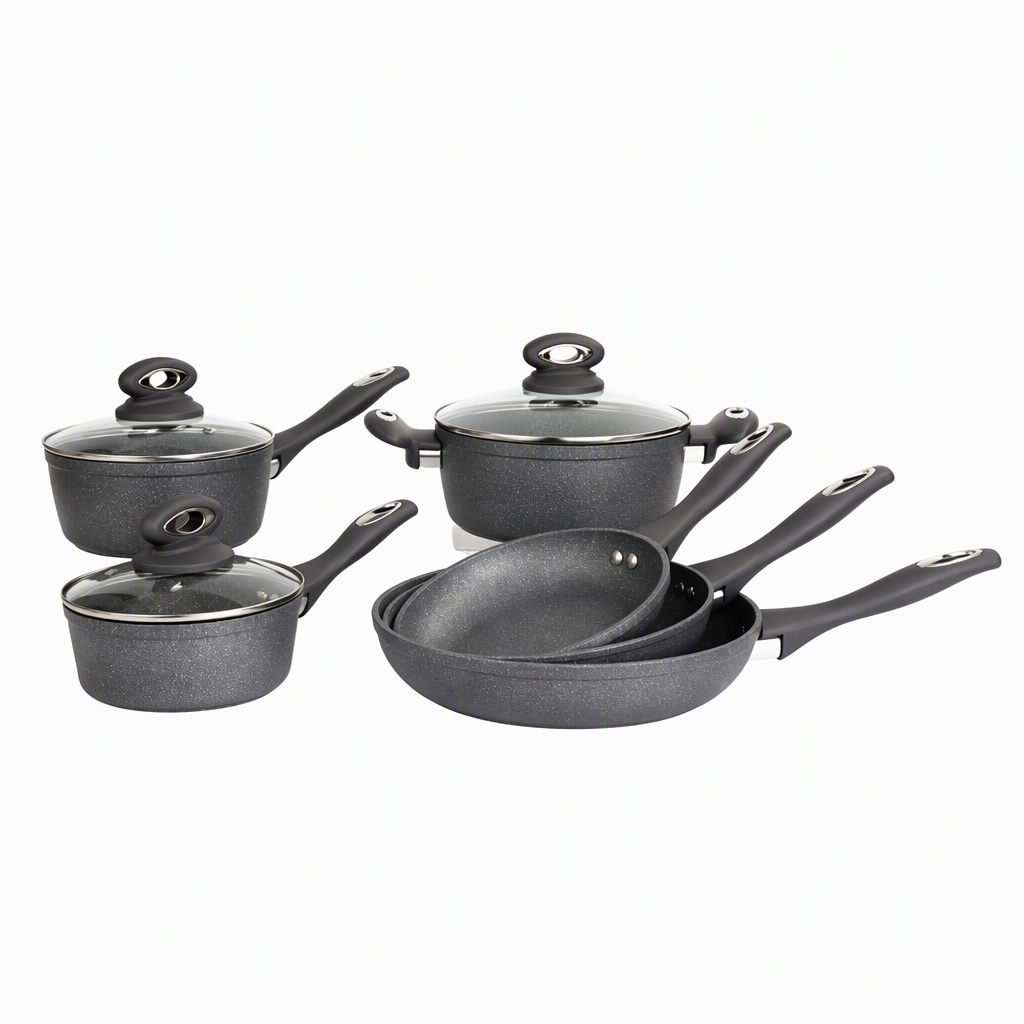
9 Piece Forged Aluminum Cookware Set Marble Coating Induction Base Glass Lids Oven and Dishwasher Safe
Engineering the Nonstick Cocotte for the Parisian Market
Strategic analysis of consumer shift from traditional heavy enameled cast iron toward modern nonstick forged aluminum cookware in the Île-de-France region.
In French culinary heritage, the cocotte (Dutch oven) occupies a revered status. From classic bœuf bourguignon and slow-simmered blanquette de veau to artisanal sourdough bread baking, continuous low-temperature thermal conduction and tight vapor condensation are mandatory. Historically, Parisian households relied predominantly on heavy enameled cast iron cookware. However, extensive retail point-of-sale data across Paris and the wider European Union indicates a structural transition: modern Parisian consumers, confronted with urban apartment living, compact storage footprints, and the ubiquity of high-frequency induction hobs, increasingly demand lightweight alternatives that reproduce classic braising dynamics without physical strain or difficult maintenance.
As a specialized nonstick Dutch oven manufacturer and supplier, Zhejiang MEIS Kitchenware Co., Ltd. resolves this tension through precise metallurgical and coating engineering. By utilizing die-forged A3003 aluminum alloy with base thicknesses spanning 4.0mm to 5.0mm, our cookware replicates the high thermal mass and balanced heat distribution of traditional cast iron while reducing total vessel weight by up to 65%. Combined with advanced food-contact nonstick matrices that eliminate food adhesion during delicate fond deglazing, our cookware provides turnkey private label solutions tailored specifically to the buying preferences of Parisian gourmet retailers, hypermarket procurement desks, and lifestyle e-commerce brands.
Localized Application Scenarios across the Parisian Gastronomic Landscape
Tailored physical configurations designed to excel under distinct urban and professional cooking conditions.
Urban Parisian Apartments (Haussmannian Kitchens)
Haussmann-era apartments across central arrondissements feature compact kitchen designs with limited storage and high reliance on induction cooktops. Our forged aluminum Dutch ovens with removable stay-cool handle systems, nesting profiles, and magnetic induction bases maximize utility where spatial efficiency is paramount.
Contemporary Parisian Neo-Bistros & Cafés
Paris's vibrant neo-bistro movement emphasizes fast braising, delicate fish reductions, and stove-to-table presentation. Our durable marble and ceramic nonstick cocottes allow rapid caramelization without sticking, smooth deglazing with regional wines, and direct table-service elegance.
The Healthy French Home Cooking Evolution
French culinary consumers are increasingly conscious of dietetic balance, prioritizing reductions in butter and cooking fats without sacrificing richness. Our advanced fluoropolymer-free ceramic coatings provide hydrophobic slip performance, facilitating full dietary compliance and effortless hand cleaning.
Engineering Comparison: Forged Aluminum vs. Traditional Cast Iron
Key performance metrics calculated for high-volume retail buyers balancing shipping freight, consumer ergonomics, and thermal efficiency.
| Performance Benchmark | MEIS Forged Aluminum Cocotte | Traditional Enameled Cast Iron | Commercial Advantage for Paris Brands |
|---|---|---|---|
| Net Weight (28cm / 4L Cocotte) | 1.85 kg – 2.15 kg | 5.40 kg – 6.20 kg | 65% reduction in maritime freight; superior ergonomic handling for senior and everyday domestic cooks. |
| Thermal Responsiveness | High (Aluminum conductivity ~205 W/m·K) | Low (Iron conductivity ~50 W/m·K) | Heats 3.5x faster, minimizing induction electricity consumption under European eco-design guidelines. |
| Surface Release & Maintenance | High-Slip Nonstick (Contact Angle > 105°) | Enamel Glass Coating (Requires oil/fat) | Prevents protein scorch; instantaneous sponge cleaning without overnight soaking requirements. |
| Lid Vapor Recirculation | Self-basting condensating spikes / dots | Flat heavy lid condensation | Retains internal moisture loops identical to traditional French slow-braising braisières. |
| Induction Base Construction | Perforated/Full-Cover Spray Friction Bond | Direct magnetic body | Warp-resistant base plate engineered to prevent glass induction scratch damage common in older Paris apartments. |
Macro Trends Shaping Cookware Procurement in the Paris Market
How stringent French consumer regulations and sustainability priorities are dictating supply chain criteria.
1. French Anti-PFAS Legislation
With the French National Assembly advancing rigorous legislative bans on long-chain per- and polyfluoroalkyl substances (PFAS) in domestic goods, French retail buyers require verified PFOA-free, PFOS-free, and Sol-Gel ceramic nonstick alternatives tested by notified laboratories.
2. Energy Efficiency & Eco-Cooking
Escalating household energy tariffs across Europe prioritize vessels that achieve boil and braise temperatures rapidly on induction hobs, favoring high-conductivity aluminum alloys over sluggish ferrous materials.
3. Aesthetic Stove-to-Table Dining
Casual dining culture in Paris blends kitchen preparation with direct dining table presentation. Premium exterior finishes—matte charcoal, deep slate, terracotta, and soft sage—are essential for modern retail sell-through.
4. Circularity & Recyclability
French consumer protection groups (such as UFC-Que Choisir) actively scrutinize cookware longevity. Sourcing products with high cycle abrasion resistance (>20,000 cycles) and fully recyclable aluminum alloys is non-negotiable for brand equity.
Enterprise Advantages: Why European Brands Partner with MEIS Kitchenware
Full manufacturing ownership, in-house tooling, and rigorous verification audited on-site by TÜV Rheinland.
Operating from our state-of-the-art facility in Dongnan Industrial Zone, Shuxi Street, Jinhua, Zhejiang, China, Zhejiang MEIS Kitchenware Co., Ltd. represents 20 years of manufacturing mastery. Unlike sourcing agents or trading intermediaries, MEIS executes every stage of cookware fabrication under one roof. Our verified manufacturing team of 105 technicians manages continuous production lines encompassing hydraulic disc blanking, heavy-tonnage die forging, precision CNC base flattening, automatic surface shot-blasting, robotic electrostatic spray coating, high-temperature tunnel curing, and automated packaging.
Our factory has undergone rigorous on-site audit verification by TÜV Rheinland, confirming our strict operational standards across ISO9001 quality management workflows, employee safety, and environmental compliance. For French and European distributors, this provides ironclad security: every container leaving our loading bays is backed by traceable raw material inspections, batch-tested nonstick adhesion reports, and compliance documentation aligned with EU Regulation (EC) No 1935/2004 and the French DGCCRF food-contact guidelines.
In-House Tooling & Mold Workshop
Equipped with high-precision CNC machining centers and digital lathes, MEIS develops bespoke cocotte lid molds, self-basting condensation profiles, and custom handle designs with rapid turnaround on prototype samples.
Comprehensive OEM & ODM Customization
From custom silicone-rimmed tempered glass lids and laser-etched stainless steel knobs to retail color boxes printed with French regulatory typography, we bring your private label Dutch oven vision to market.
Stringent In-House QC Laboratory
Every batch of Dutch ovens undergoes continuous destructive and non-destructive laboratory testing, including cross-hatch coating adhesion tests, handle torsion/fatigue verification, base thermal shock cycles, and neutral salt spray anti-corrosion assays.
Paris Procurement & Compliance FAQ
Technical, regulatory, and logistics answers for French cookware buyers and brand managers.
Are MEIS Dutch ovens compliant with French DGCCRF and European REACH standards? +
How does your factory ensure seamless performance on Parisian induction hobs? +
What are the Minimum Order Quantities (MOQ) and lead times for Le Havre / Marseille delivery? +
Can MEIS manufacture custom self-basting lid systems comparable to cast-iron braisières? +
What nonstick surface options do you recommend for the French retail market? +
Source Direct from a Verified OEM/ODM Factory
Empower your brand with precision-engineered nonstick Dutch ovens tailored to Parisian and French market expectations. Request technical documentation, sample prototypes, or a competitive container quote today.
Get a Quote