High-Performance Nonstick Woks & Cookware Matrix
Engineered for high-efficiency thermal conductivity, induction hob compatibility, and heavy culinary strain in Central & Eastern European kitchens.
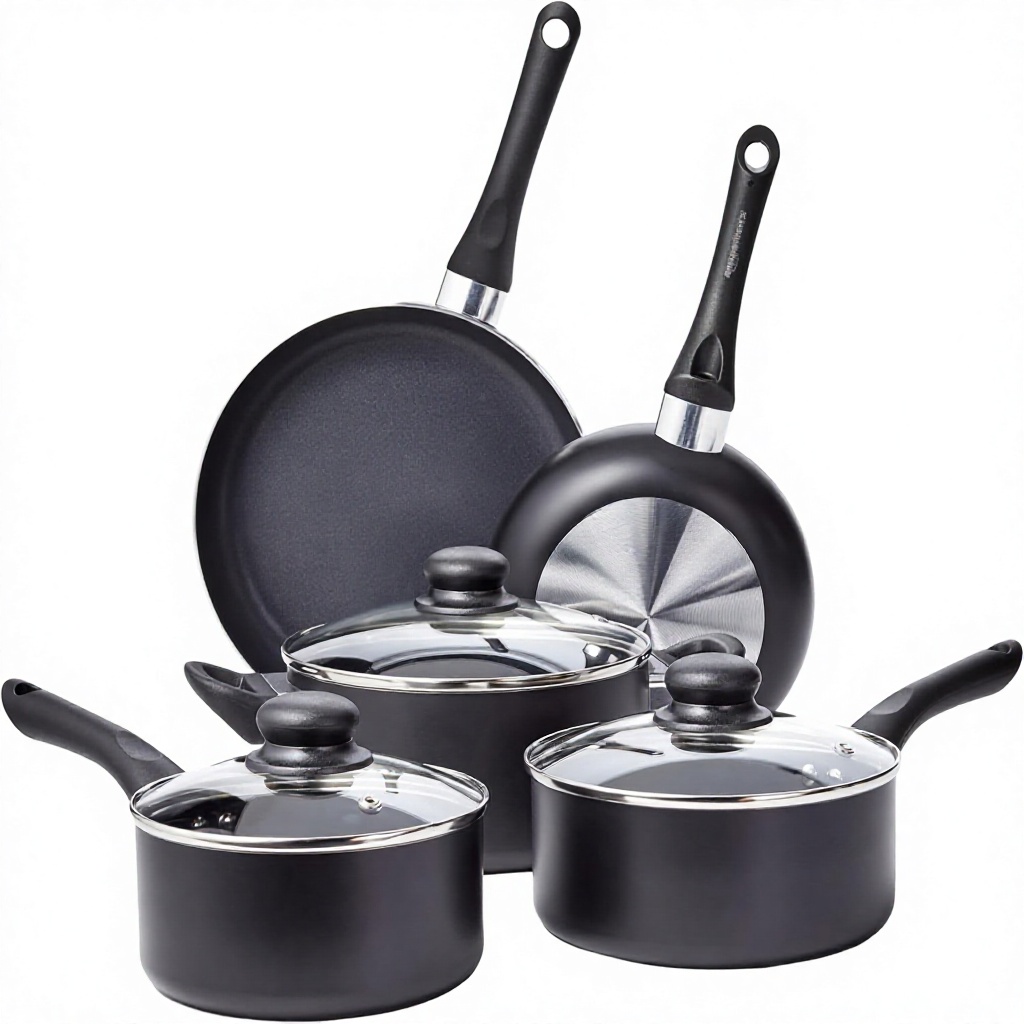
Basics Aluminum Ceramic Non-Stick 8-Piece Cookware Set
- Eco-Friendly Sol-Gel Ceramic Coating
- Gas & High-Voltage Induction Ready
- Ergonomic Heat-Resistant Grips
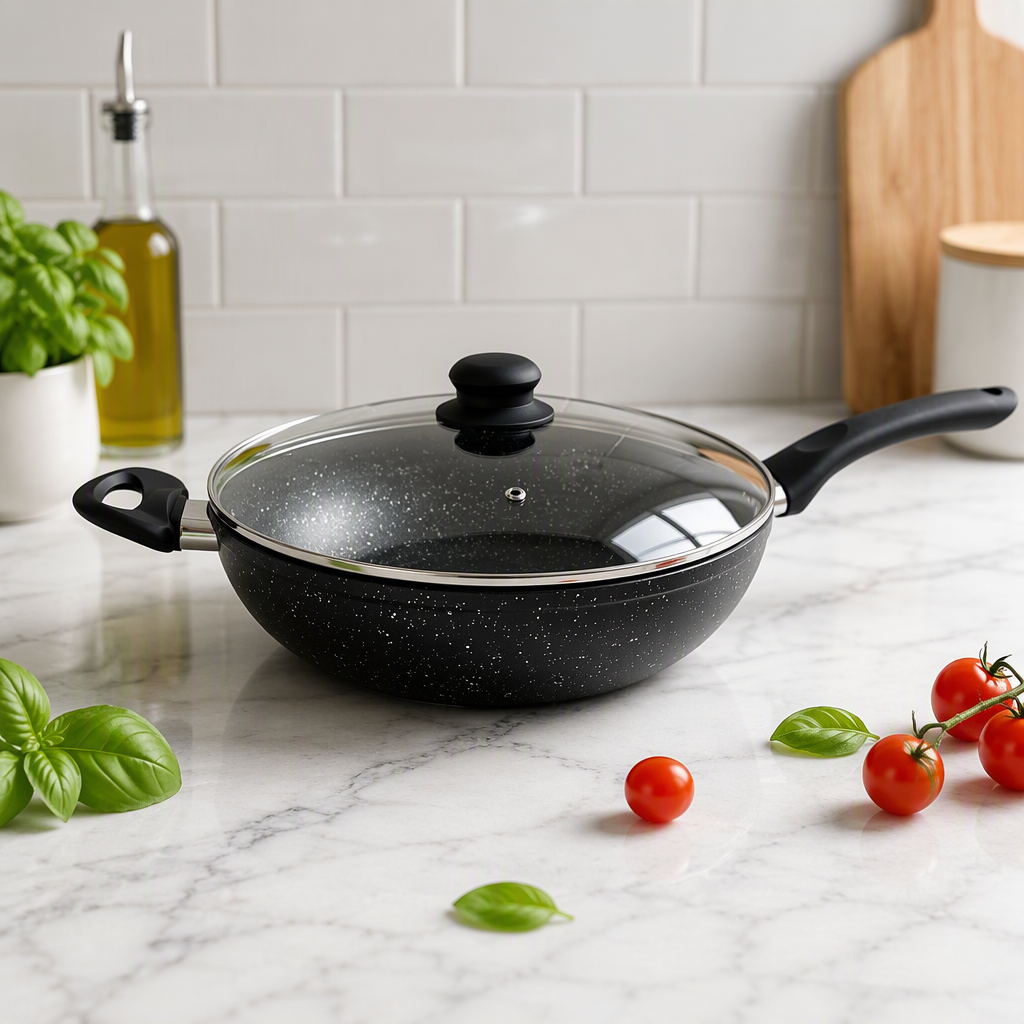
26 cm Non-Stick Forged Aluminum Wok Marble Coating (3.5L)
- Ultra-Durable Marble Layer Structure
- Tempered Glass Lid with Steam Vent
- Rapid Heat Dispersion (3.5L Capacity)
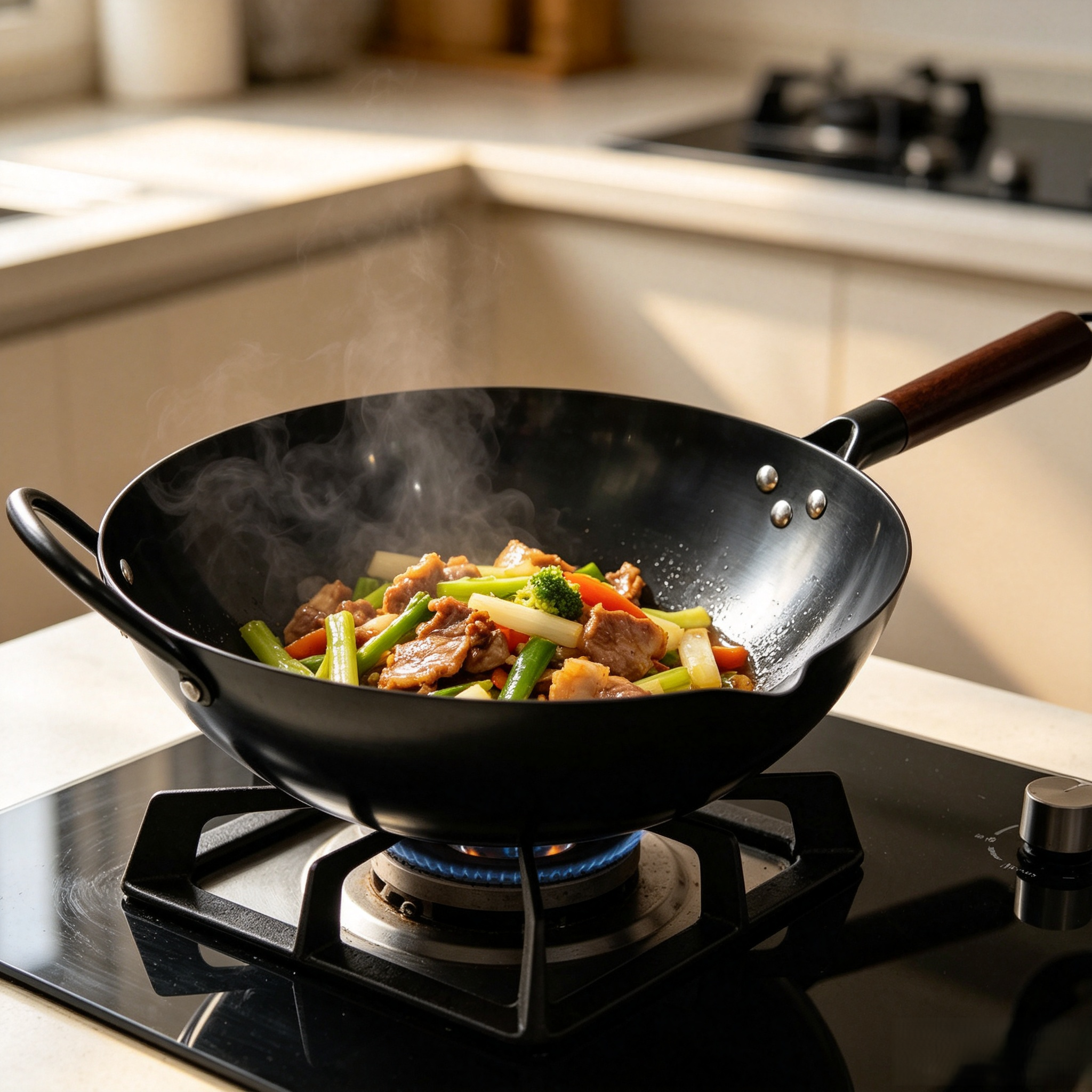
Healthy Nitrided Uncoated Carbon Steel Wok (28-34cm)
- High-Temperature Nitriding Anti-Rust Process
- Natural Nonstick via Traditional Pre-Seasoning
- Solid Riveted Natural Wooden Handle
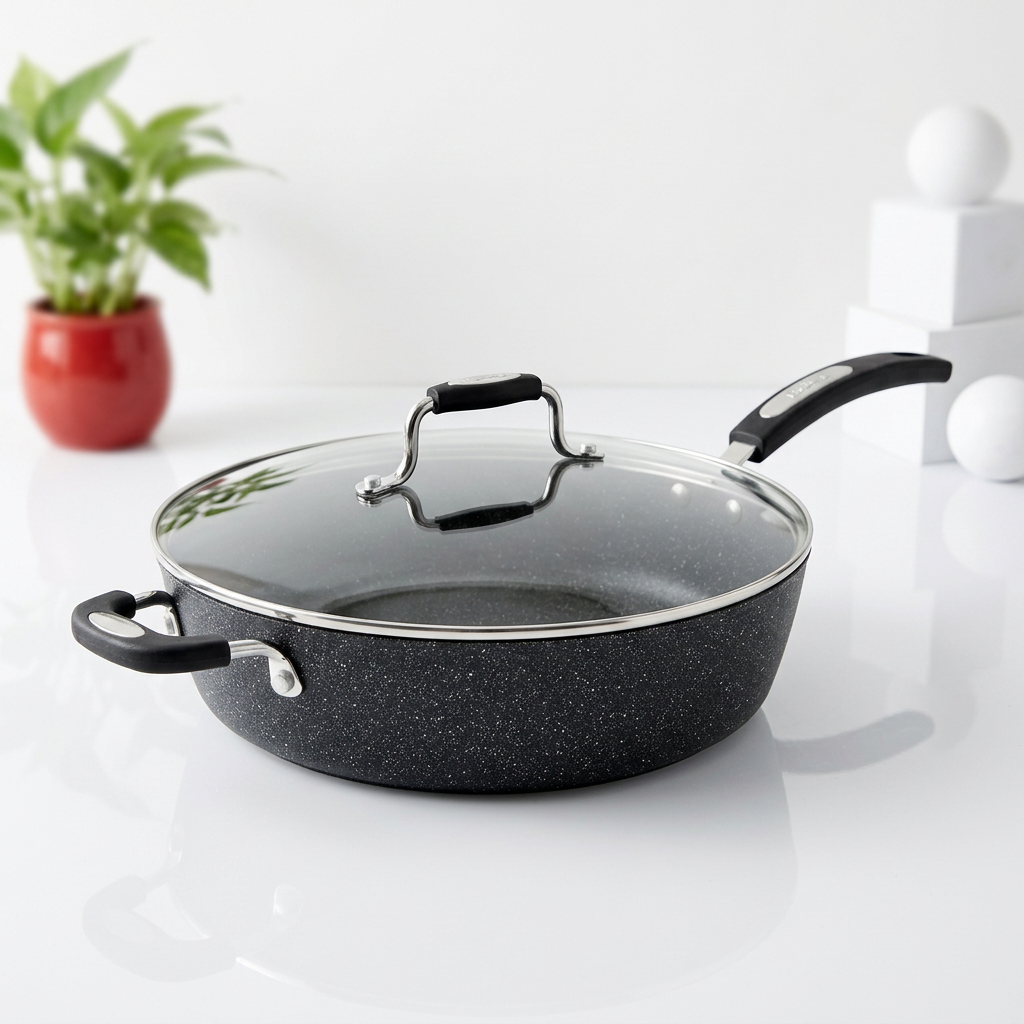
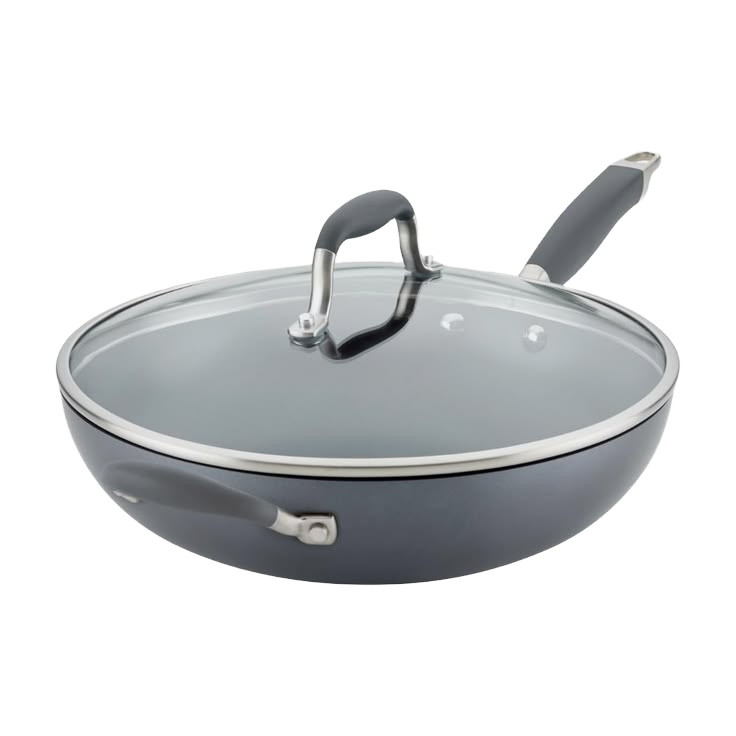
Classic 11 Inch (28cm) Non-Stick Deep Fry Pan / Wok (4 Qt)
- Forged Heavy-Gauge Aluminum Alloy Body
- Integrated Helper Handle for Balanced Lifting
- Full Stainless Steel Magnetic Bottom Plate
European-Style Pressed Aluminum Ceramic Frying Pan
- Smooth High-Gloss Ceramic Exterior
- Oven Safe Construction up to 260°C
- Tailored for CEE Retail Supermarket Chains
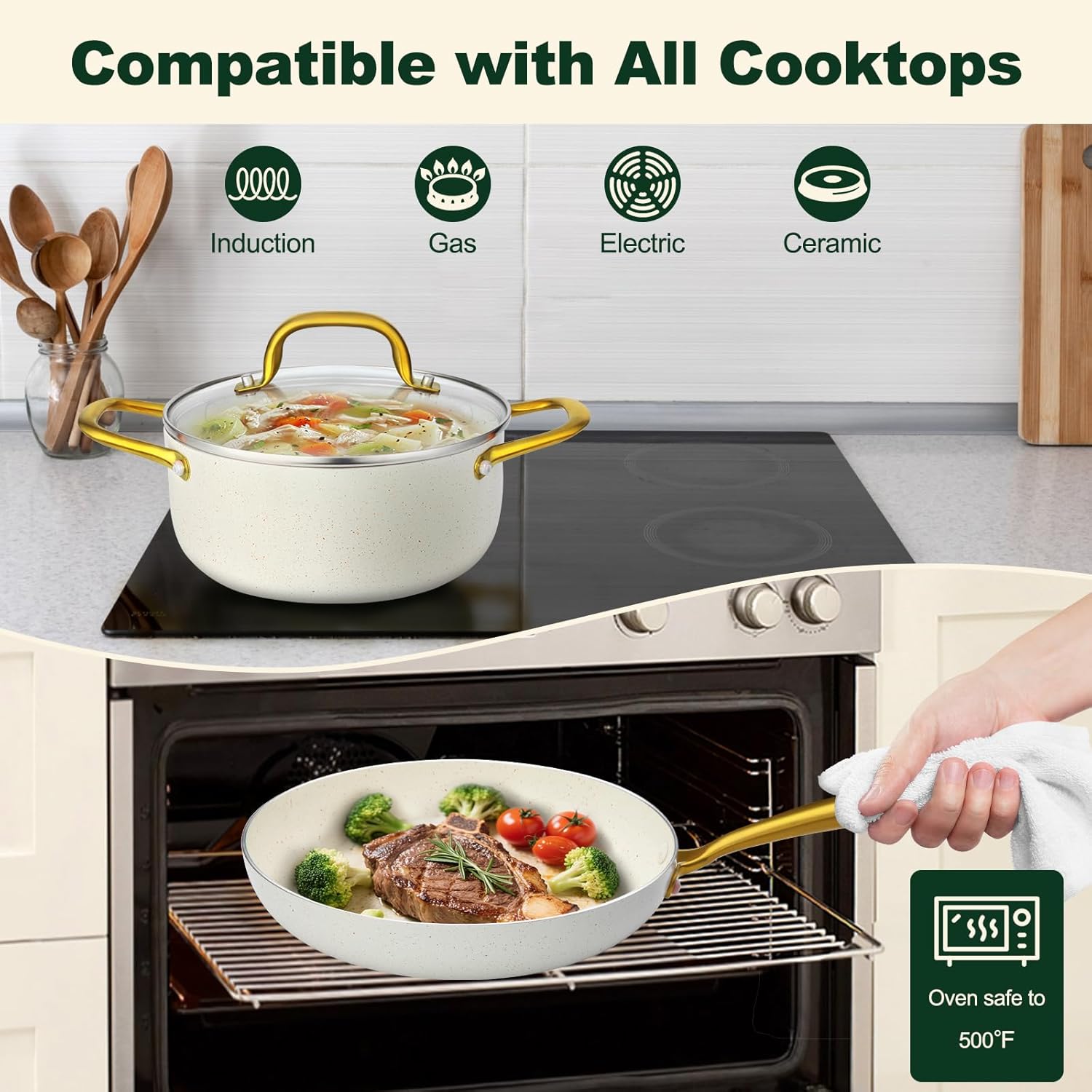
5-Piece Classic Ceramic Induction Kitchenware Set
- PVD Ceramic Interior Coating System
- Professional-Grade Cast Stainless Steel Handles
- Zero PFOA, Lead, or Cadmium Formulation
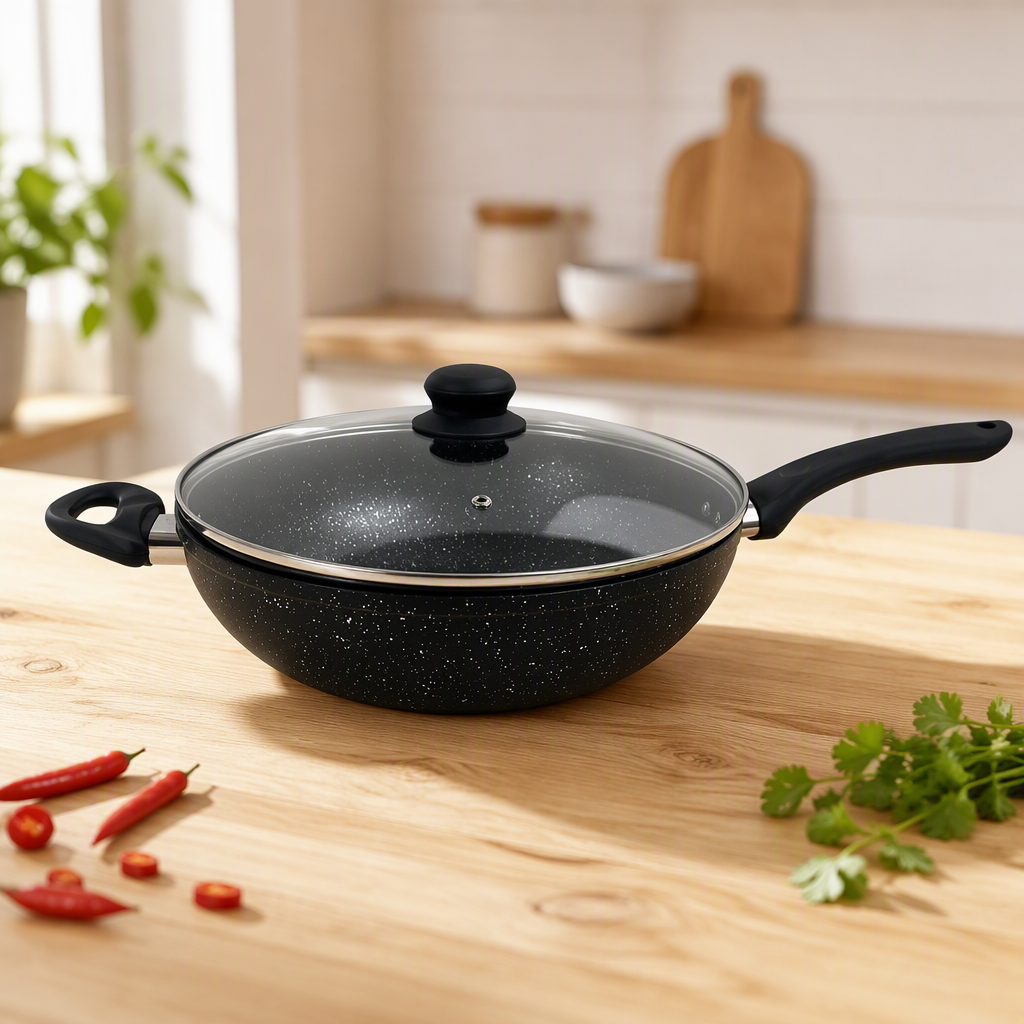
32 cm Granite Coating Non-Stick Forged Wok (5.5L)
- 5-Layer Reinforced Mineral Granite Matrix
- Deep-Vessel Stir-Fry Geometry (5.5L Volume)
- Cool-Touch Soft Silicone Soft-Grip Handle
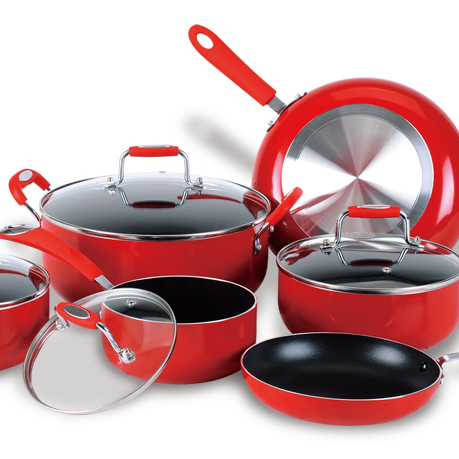
Fashion Kitchen Set of Nonstick Cookware
- Custom Pantone Color Coating Finishing
- Includes Woks, Saute Pans, and Stew Pots
- Turnkey Private Label Packaging Execution
Navigating the Warsaw Cookware Ecosystem: Demand Dynamics & Technical Drivers
The Mazovia region and Warsaw metropolis represent the vibrant economic core of Poland’s housewares and kitchenware import sector. As Warsaw continues to solidify its role as a premier commercial and logistical nexus for Central and Eastern Europe (CEE), the local demand for specialized, highly durable, and chemically compliant cookware—specifically nonstick woks—has surged by 22% year-over-year. B2B purchasing managers, category heads at retail chains (such as Euro-Net, Carrefour Polska, Allegro top merchants), and HoReCa procurement directors face a rapidly evolving consumer and commercial market.
Historically dominated by conventional stainless steel sauté pans and heavy cast iron, the Polish culinary scene in urban centers like Warsaw (Śródmieście, Mokotów, Wola) has undergone a major transformation. Driven by modern health-conscious eating habits (less edible oils, lower cooking smoke) and the booming popularity of Asian Fusion, Thai, Vietnamese, and Chinese stir-fry gastronomy, the nonstick wok has transitioned from a niche specialty item to an absolute staple in contemporary Polish households and commercial dining establishments.
Local Application Scenarios in Warsaw's Gastronomic & Domestic Landscape
To successfully capture market share in Warsaw, OEM nonstick woks must be precise engineering answers to three distinct operational environments:
Urban Domestic Kitchens (High-Efficiency Induction)
Over 74% of newly constructed residential apartments in Warsaw’s key districts (Wilanów, Towarowa 22, Żoliborz) lack natural gas connections due to stringent building codes. Cooking relies exclusively on high-voltage 230V/400V induction hobs. Woks must incorporate thick, warp-free magnetic base plates (minimum 3.5mm to 4.5mm stainless steel alloy discs) to guarantee instantaneous eddy-current heating without thermal vibration or base distortion.
Commercial HoReCa & Asian Fusion Hubs
Warsaw hosts over 850 Pan-Asian, wok-bar, and fusion dining venues along major corridors (such as Bakalarska, Chmielna, and Hala Koszyki). Commercial kitchens require heavy-gauge nitrided carbon steel woks or 32cm deep forged aluminum woks capable of withstanding constant metal utensil contact, thermal shock cycles, and intense oil temps up to 280°C without coating degradation.
E-Commerce & Private Label Retailing
Driven by Poland's dominant marketplace Allegro.pl and specialized kitchenware platforms, buyers require consumer-ready, eye-catching aesthetic coatings (granite speckle, marble textures, soft-touch wood-grain handles) paired with certified flat-pack mail-order packaging capable of surviving national courier drops (ISTA-1A standard).
Key Information Gain for Purchasing Managers in Poland
Did you know? Unlike southern European markets where gas burner woks still dominate, 88% of nonstick wok returns on Polish e-commerce platforms stem from base warping on high-power induction cooktops. Zhejiang MEIS Kitchenware solves this structural failure through high-pressure cold-forging (up to 4,000-ton hydraulic forging) and full-coverage impact-bonded stainless steel induction plates, ensuring zero thermal expansion deformation over 10,000 heat cycles.
Material Science & Tribology: Forged Aluminum vs. Carbon Steel Woks
When sourcing nonstick woks from China for distribution in the Polish market, selecting the correct substrate metallurgy and chemical coating matrix determines both your landed profit margins and long-term brand equity. At Zhejiang MEIS Kitchenware Co., Ltd., we manufacture both advanced forged aluminum woks and traditional nitrided carbon steel woks on dedicated automated lines in our Jinhua facility.
1. Forged Aluminum Nonstick Woks (26cm – 32cm)
Formed by subjecting pure 3003-grade aluminum alloy slugs to extreme mechanical pressure, forged aluminum woks feature thick bases (4.0mm to 5.0mm) tapering to thinner side walls (2.5mm to 3.0mm). This specific cross-sectional profile optimizes mass distribution, permitting rapid heat ascension while holding thermal energy at the cooking vessel's core. Coating systems applied include:
- Multi-Layer PTFE Sol-Gel Systems: Reinforced with micro-ceramic or titanium particles, achieving water contact angles >105° and taber abrasion resistance exceeding 20,000 cycles.
- Granite & Marble Mineral Matrix: Highly resistant to localized overheating and aesthetic scratching, presenting a luxurious stone finish heavily favored by Polish retail consumers.
2. Nitrided Uncoated Carbon Steel Woks (28cm – 34cm)
For purists and commercial chefs demanding authentic high-heat "Wok Hei" cooking without synthetic polymers, MEIS produces gas-and-induction ready carbon steel woks subjected to thermal nitriding treatment. In a specialized high-temperature nitrogen atmosphere (570°C), nitrogen atoms diffuse into the steel crystal lattice, forming an ultra-hard iron nitride layer (Fe₄N / Fe₂N) on the surface.
This process increases surface hardness to over 500 HV (Vickers), renders the metal virtually impervious to rust, and allows natural oil seasoning without flaking or chemical breakdown under 350°C sear temperatures.
| Engineering Criterion | Forged Aluminum Nonstick Wok | Nitrided Carbon Steel Wok | Pressed Aluminum Wok |
|---|---|---|---|
| Base Metallurgy | Forged 3003 Aluminum Alloy | Low-Carbon Cold-Rolled Steel | Stamped 1050/3003 Aluminum Sheet |
| Thermal Conductivity | 205 W/m·K (Very High) | 54 W/m·K (Moderate/Focused) | 210 W/m·K (Extremely Fast) |
| Induction Efficiency | Requires Impact-Bonded SS Plate | 100% Naturally Magnetic Substrate | Requires Punched Hole SS Base |
| Coating System | Ceramic / Granite / Marble PTFE | Chemical-Free Nitrided Anti-Rust | 2-Layer Decorative PTFE / Ceramic |
| Warp Resistance Rating | Exceptional (5.0mm forged base) | High (Rigid steel lattice) | Moderate (Suited for standard heat) |
| Target Retail Segment | Mid-to-High Retail / E-Commerce | HoReCa / Culinary Connoisseurs | Mass Market / Supermarket Promotions |
Strict Regulatory Compliance: LFGB, REACH & PFAS Directives for Poland
Importing cookware into the European Union via Polish customs (such as the Port of Gdańsk or the Małaszewicze rail terminal) involves stringent regulatory scrutiny regarding food contact materials (FCM). Products failing European chemical safety protocols face immediate border rejection, severe fines, and total brand damage.
Zhejiang MEIS Kitchenware operates under strict ISO 9001 quality management standards and guarantees total chemical transparency for every container shipped to Warsaw:
German LFGB § 30 & 31 & EU (EC) 1935/2004
All our nonstick woks and cookware sets undergo rigorous overall migration testing (using 3% acetic acid, 10% ethanol, and rectified olive oil simulants) to guarantee zero toxic element leaching under high temperatures and acidic cooking conditions.
PFOA, GenX, Heavy Metal & PFAS Compliance
We strictly eliminate Perfluorooctanoic Acid (PFOA), Lead, Cadmium, and hazardous fluorinated compounds. Our premium ceramic woks utilize inorganic Sol-Gel matrix technology (silica-based), offering 100% PTFE-free, eco-friendly cooking marketing narratives for Polish retailers.
Full REACH & Packaging Environmental Directives
Heavy metal content in printed color packaging, master cartons, and plastic handles complies with EU Packaging Directive 94/62/EC. Handles undergo REACH SVHC (Substances of Very High Concern) screening for polycyclic aromatic hydrocarbons (PAHs).
Enterprise Superiority: Zhejiang MEIS Kitchenware Co., Ltd.
Located in the Dongnan Industrial Zone, Shuxi Street, Jinhua City, Zhejiang Province, Zhejiang MEIS Kitchenware Co., Ltd. spans modern industrial production workshop space equipped with fully integrated manufacturing chains. With over 20 years of manufacturing history and 18 consecutive years as a top-tier verified supplier on Alibaba.com, MEIS operates as an authentic custom factory—eliminating middleman markups and offering total production visibility.
In-House Quality Assurance Laboratory Protocols
To preserve structural integrity across international shipping and intensive long-term use, every production run at MEIS is subjected to stringent destructive and non-destructive testing inside our TÜV-assessed laboratory:
- Salt Spray Corrosion Testing: Coated wok surfaces are subjected to continuous 5% neutral salt fog for up to 72 hours to verify absolute corrosion resistance against acidic food acids and saline washings.
- Handle Fatigue & Torsion Testing: Mechanized actuators cycle riveted and welded handles under 10kg bending loads for 10,000 repetitions, ensuring zero rivet loosening or handle fracture.
- Coating Adhesion Cross-Hatch Test: DIN EN ISO 2409 cross-cut tape adhesion testing ensures nonstick layers remain permanently anchored to the underlying aluminum or steel substrate.
- Base Flatness & Thermal Shock Cycle: Woks are heated to 250°C and instantly quenched in cold water; laser micrometers verify base planarity remains within 0.2mm tolerance.
Logistics Blueprint: Seamless Shipping from Jinhua to Warsaw & CEE
Optimizing landed costs is critical for Polish B2B buyers seeking maximum competitive advantage on margins. Situated in Jinhua, Zhejiang, MEIS Kitchenware benefits from immediate proximity to world-class logistics hubs: Yiwu Freight Terminals, Ningbo-Zhoushan Port, and Shanghai Port.
1. Direct Railway Express: Yiwu to Warsaw (Yixinou Rail)
For urgent seasonal store rollouts or rapid e-commerce restocks in Poland, we utilize the Yixinou Rail Express. Containers depart Yiwu/Jinhua, cross Kazakhstan, Russia, and Belarus, entering the EU via the Małaszewicze dry port in eastern Poland before terminating at Warsaw Euro-Terminal in just 14 to 16 days. This reduces transit time by 60% compared to ocean freight, enabling agile inventory turnarounds.
2. Maritime Shipping via Port of Gdańsk DCT Terminal
For large-scale volume orders (20ft / 40ft HQ full container loads), shipping via Ningbo/Shanghai directly to the Deepwater Container Terminal (DCT) in Gdańsk offers the lowest freight cost per unit. Sea transit typically spans 30 to 35 days, with smooth customs clearance arranged under FOB, CIF, or door-to-door DDP terms directly to your distribution center in Piaseczno, Pruszków, or Ożarów Mazowiecki.