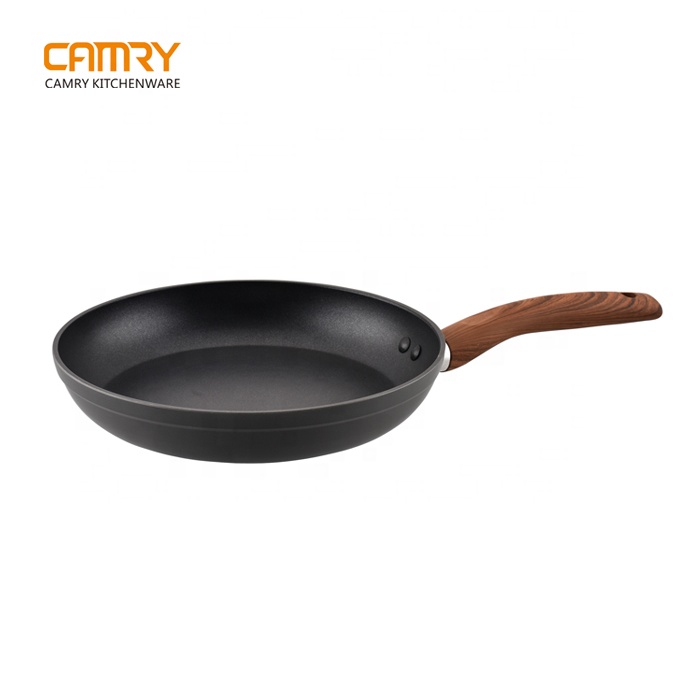
7PCS Dark Grey Forged Aluminum Megaware Cookware With Wooden Soft-touched Handle
- Heavy-gauge forged aluminum body
- Ergonomic heat-resistant stay-cool handle
- Full induction base plate
Direct from our TÜV Rheinland verified manufacturing facility in Jinhua, Zhejiang. Explore export-ready SKUs engineered specifically to meet North American culinary habits, retail shelf footprints, and stovetop performance standards.
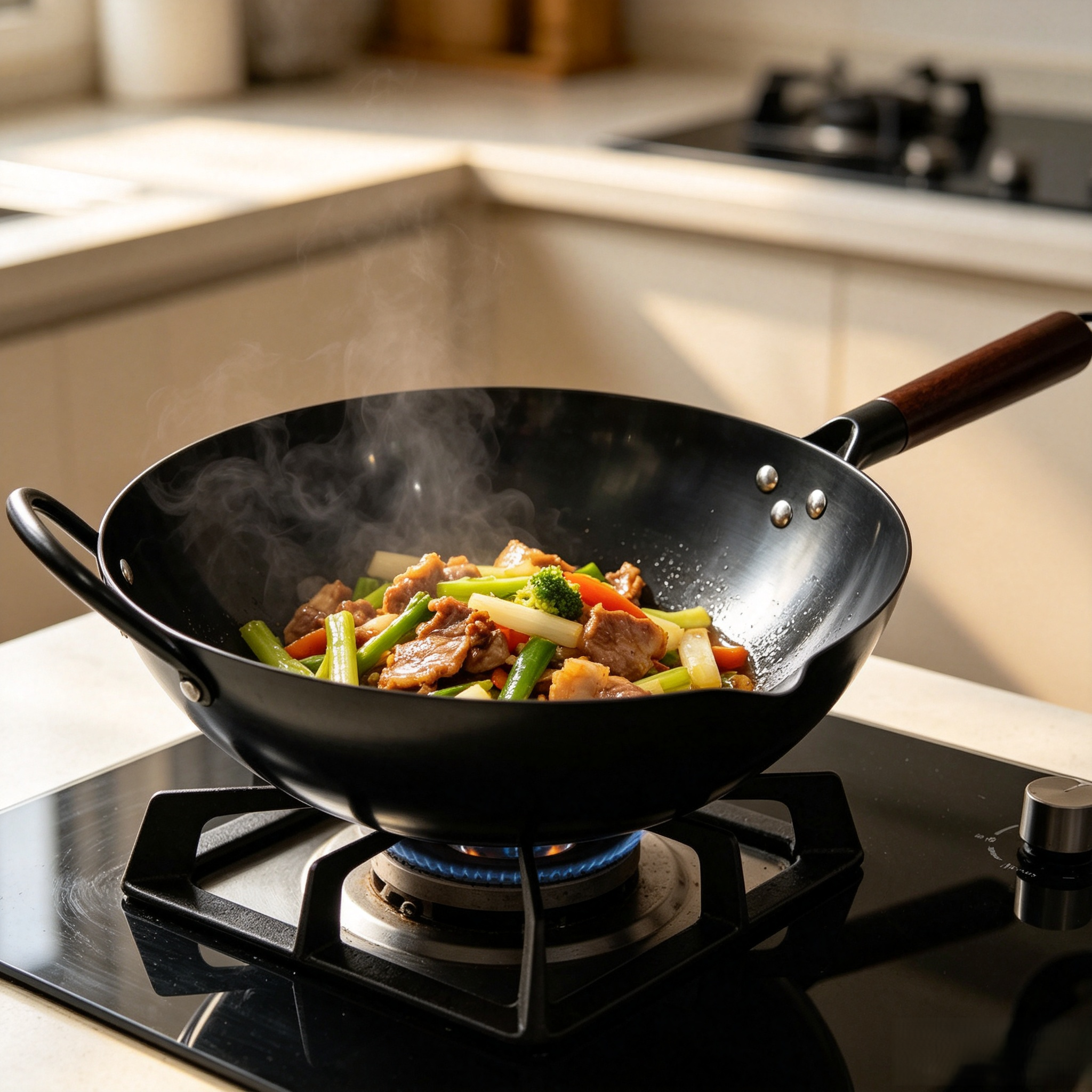
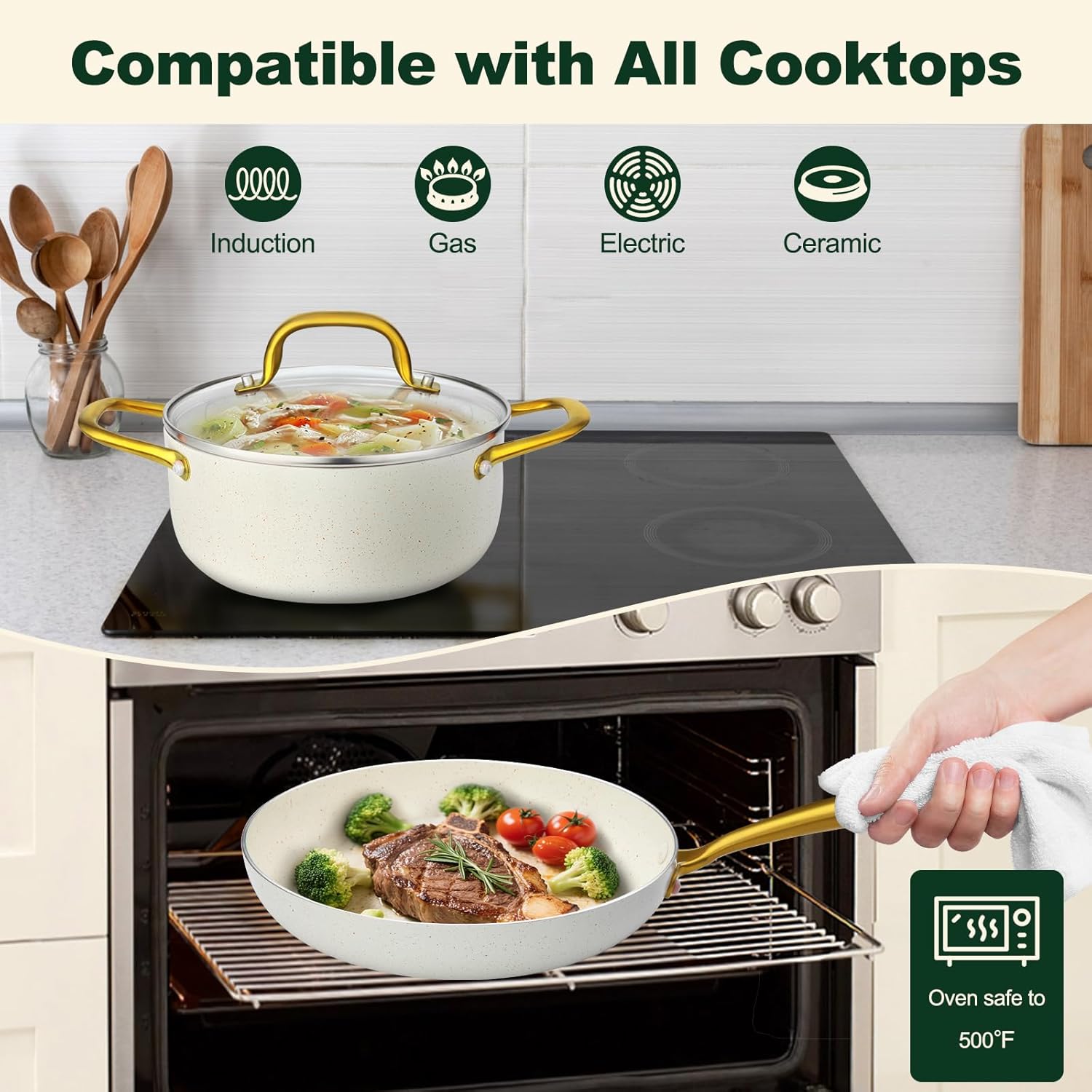
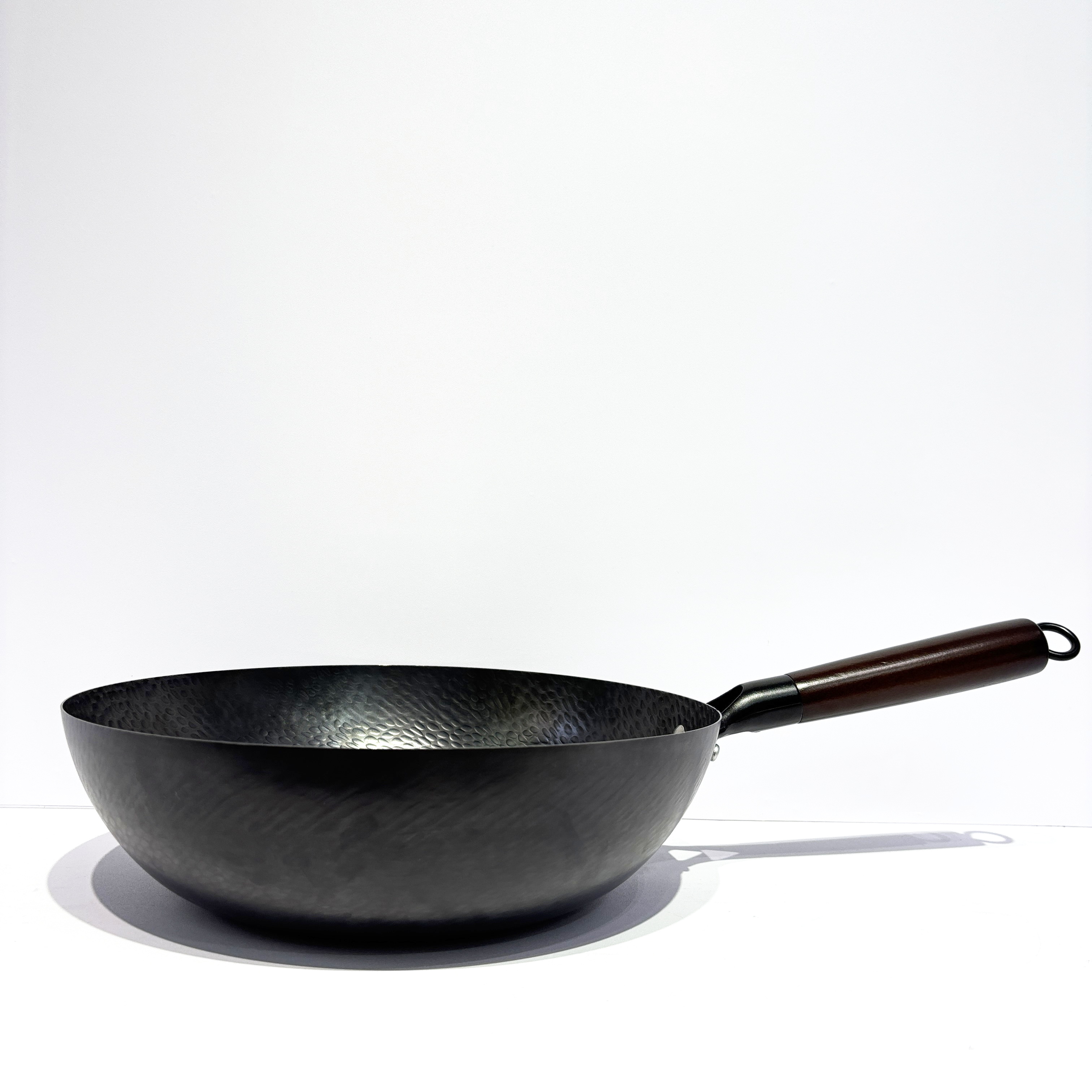
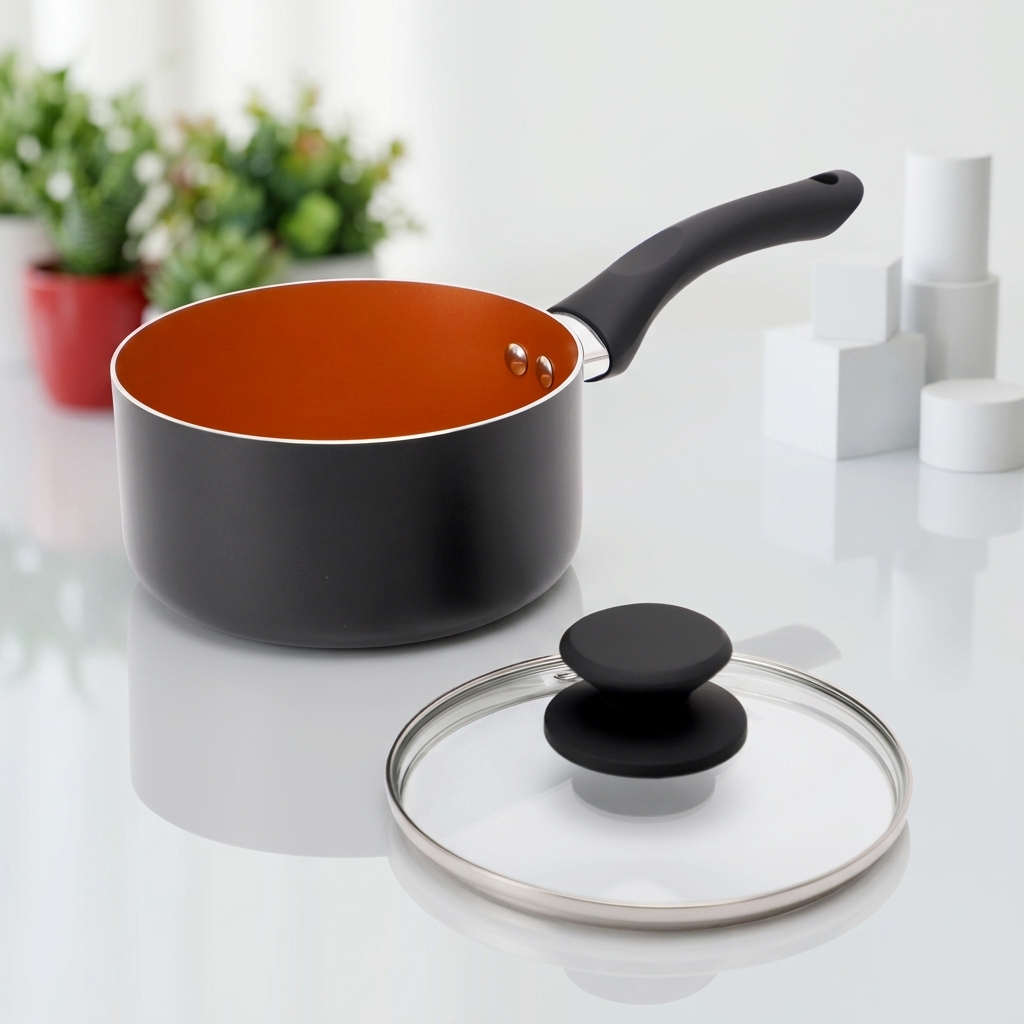
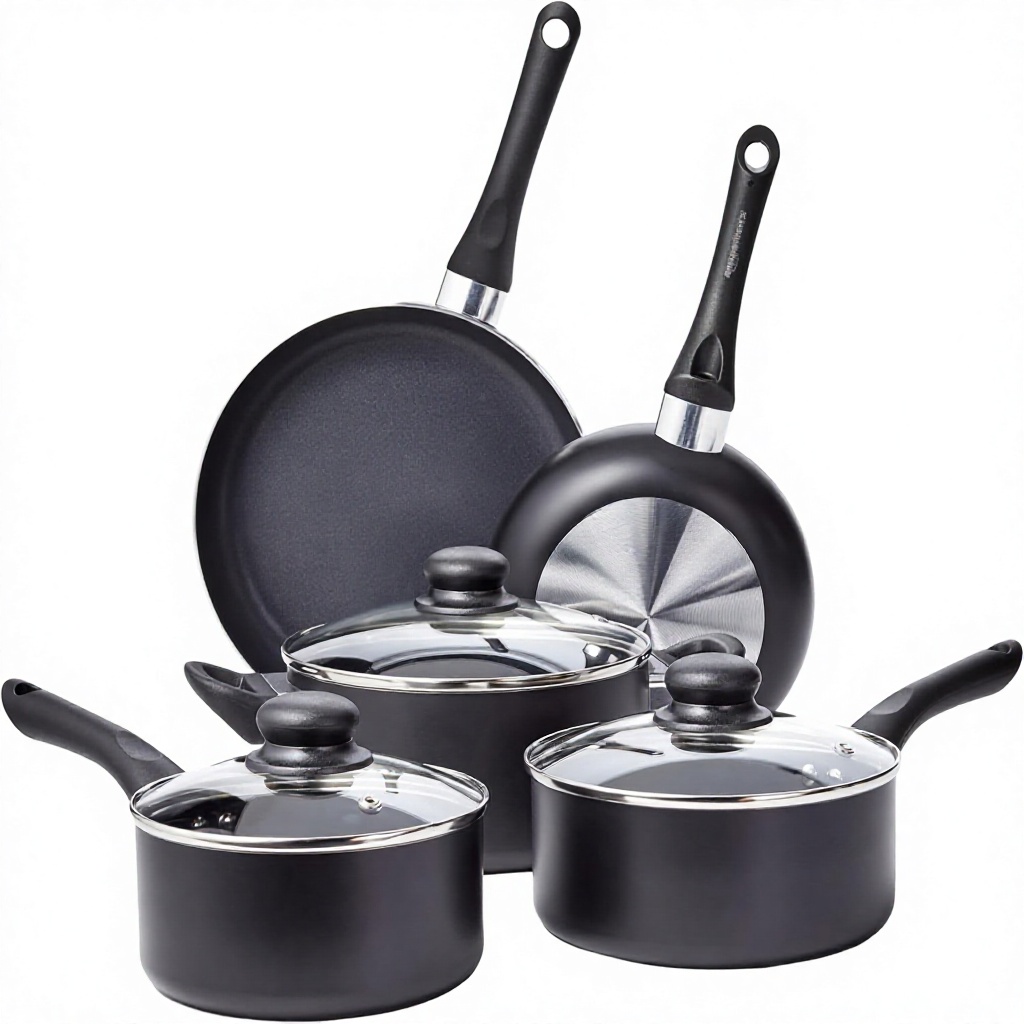
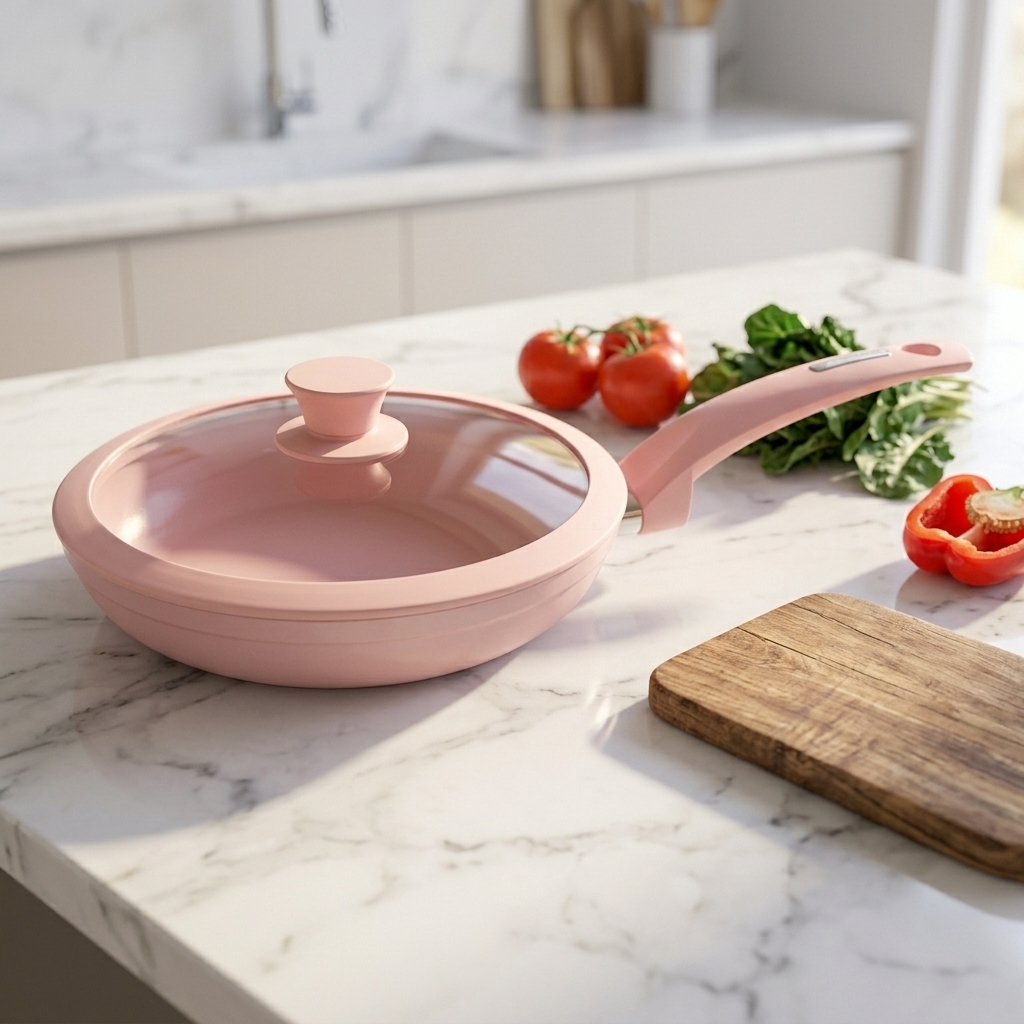
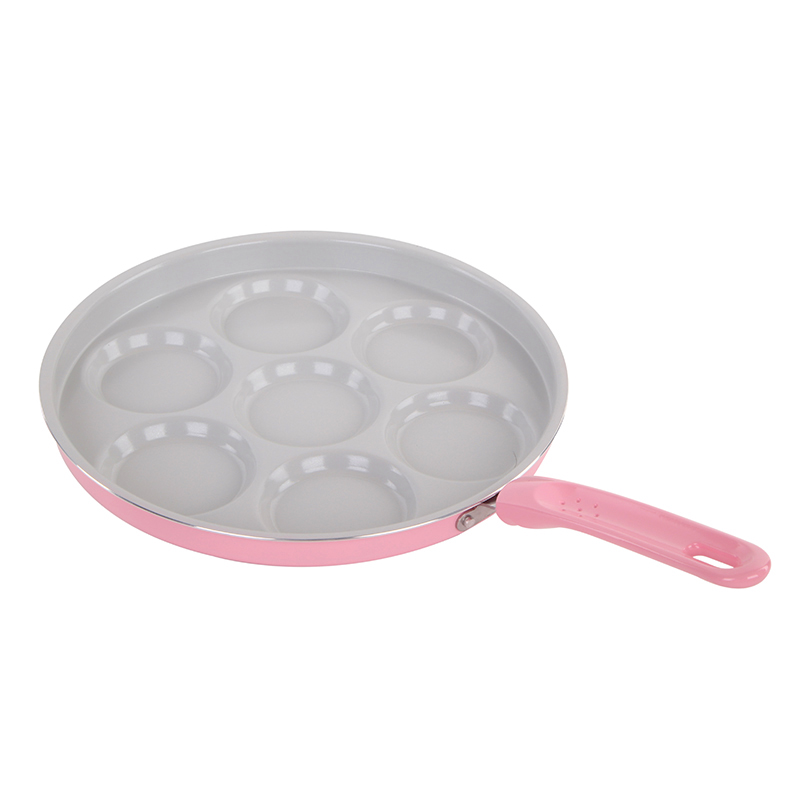
We provide full turn-key ODM engineering for US buyers. Submit your technical drawings or target price bands, and our Jinhua foundry will provide CAD prototypes and tool estimates within 48 hours.
Traditional round-bottom Asian carbon steel woks struggle in standard US kitchens. American stovetops require flat bases, thermal stability on electric coils, and structural integrity that resists intense thermal shock without warping.
Aluminum exhibits a thermal conductivity of roughly 205 W/(m·K), compared to merely 45–50 W/(m·K) for traditional carbon steel and 16 W/(m·K) for stainless steel. In residential US kitchens equipped with 7,000 to 12,000 BTU gas burners or standard electric elements, aluminum transfers heat up the wok walls 400% faster. This eliminates cold spots, enabling authentic stir-fry searing without commercial high-output jet burners.
US residential stoves require a wide, perfectly planar flat contact zone (typically 5.5 to 6.5 inches in diameter). Our precision CNC base turning creates microscopic concentric heat channels or flat induction-bonding disks that sit flush on glass-ceramic cooktops, avoiding the hot-spot concentration, oil puddling, and glass scratching common to generic imported woks.
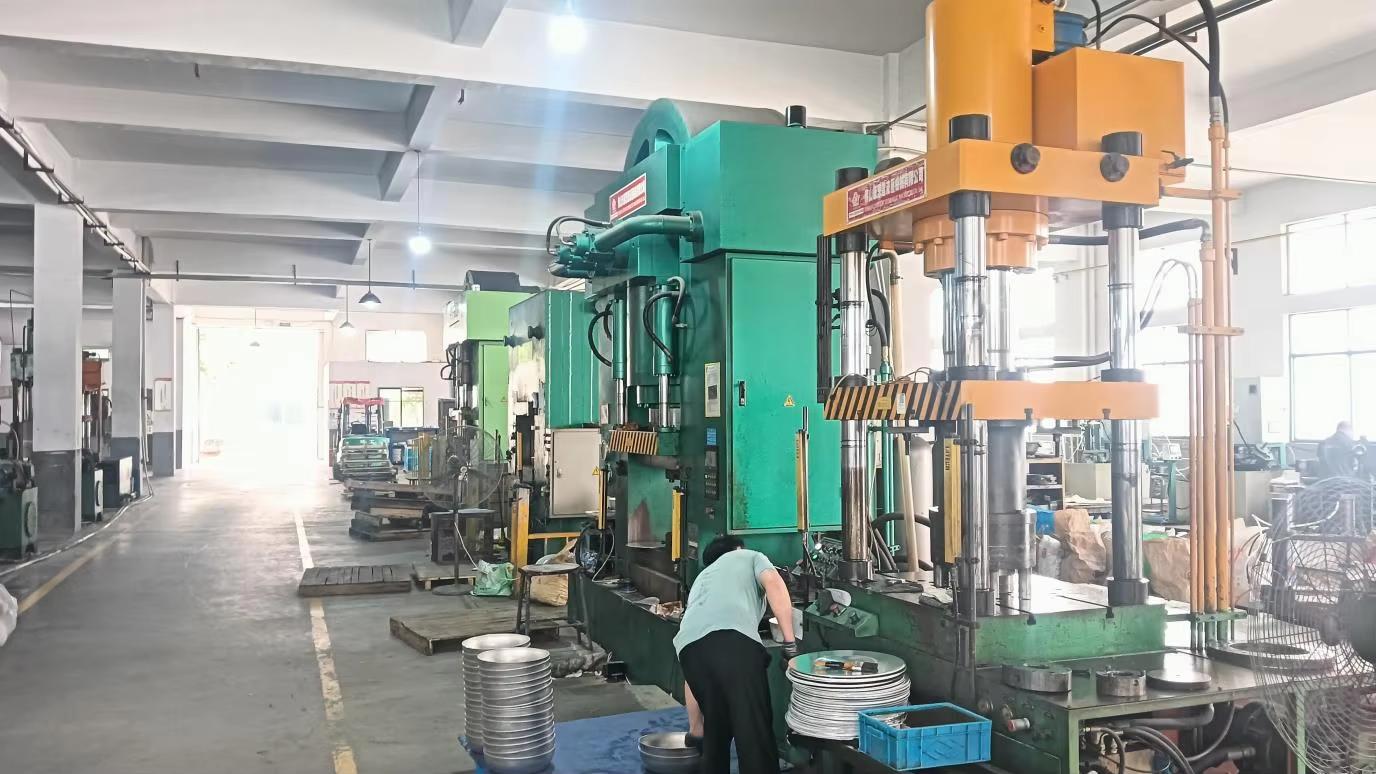
Using 2,500-ton hydraulic forging presses, our factory compresses virgin 3003-series aluminum discs into varying cross-sections: a heavy 4.0mm to 4.5mm base for heat retention, tapering to 2.2mm along the sidewalls to reduce wrist strain for Western consumers, reinforced by a 3.8mm flared rim to prevent out-of-round deformation during transit and repeated thermal shock.
Designing cookware for US procurement requires matching product ergonomics to North American culinary lifestyles, from urban apartment meal-prep to outdoor patio burners.
Over 55% of American households cook on smooth glass-ceramic, radiant, or induction surfaces. Traditional woks wobble and scratch these delicate stovetops. Our OEM aluminum woks incorporate stamped or impact-bonded 430 magnetic stainless steel bottom plates, maintaining dimensional flatness (tolerance within 0.15mm) across thermal extremes to ensure seamless sensor detection on GE, Whirlpool, Bosch, and Samsung induction hobs.
The US consumer views a wok as the ultimate multi-cooker: deep sautéing, shallow frying, pasta tossing, and steaming. Our deep-bellied woks (3.5 to 5.0-quart capacities) with helper handles and shatter-proof tempered glass lids cater directly to the weeknight meal-prepper needing volume without unmanageable cast-iron heft.
American health-conscious consumers demand cooking surfaces requiring less than 5ml of oil. Applying German-engineered or domestic premium multi-coat sol-gel ceramic nonstick systems allows smooth egg gliding and high-sugar sauce release without stick-on scorching.
Lightweight aluminum woks are surging in popularity for outdoor recreation, portable butane stoves, and tailgating. Weighing 60% less than carbon steel and impervious to rust when washed in campground conditions, they serve mobile US culinary needs effortlessly.
Unlike raw carbon steel or cast iron, which requires complex seasoning and strictly hand washing, US consumers overwhelmingly expect dishwasher compatibility. Our hard-anodized and encapsulated induction base treatments prevent alkaline blackening during intense dishwasher cycles.
Sourcing managers must navigate stringent state-level chemical disclosures, anti-PFAS regulations, and shifting retail aesthetics.
With California Assembly Bill 1200 (AB 1200), Colorado HB 22-1345, Minnesota's Amara's Law, and Maine LD 1503 taking full effect, conventional fluoropolymer coatings containing intentionally added PFAS are facing aggressive retail bans and mandatory on-box disclosure statements. MEIS supports US brands with tested and certified PTFE-free inorganic sol-gel ceramic interiors that deliver water contact angles >105° without chemical compliance liabilities.
US imports face strict class-action scrutiny over extractable lead, cadmium, and cobalt. Our factory operates internal XRF spectrometers and partners directly with SGS, TÜV, and Intertek to certify that all interior food-contact surfaces, outer pigments, and rivet alloys maintain non-detectable levels according to US FDA 21 CFR 175.300 standards.
Primary US houseware retailers (Target, Williams-Sonoma, Crate & Barrel, Amazon Basics) are shifting away from basic industrial black to warm neutral palettes: oatmeal, sage green, terracotta, and soft greige. Our electrostatic liquid spray booths match precise Pantone codes with UV-resistant, stain-resistant high-temperature silicone polyesters.
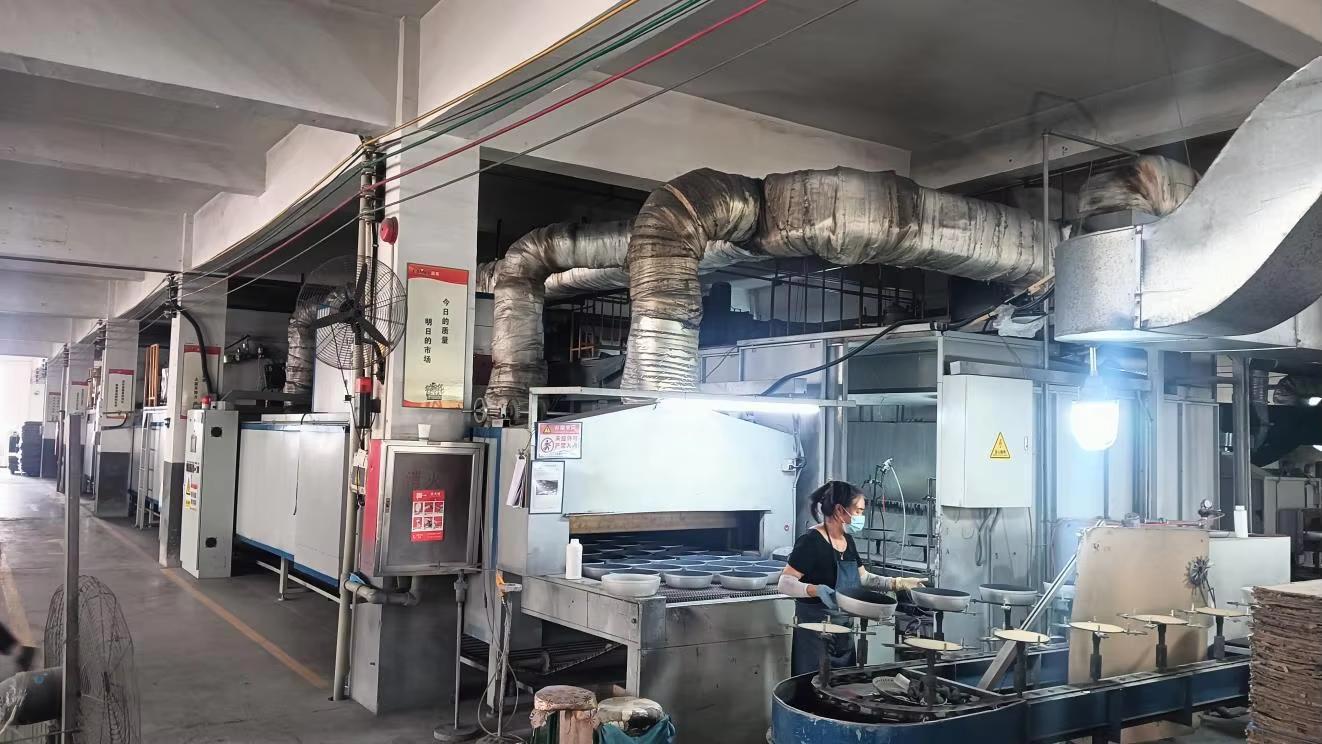
Operating in Dongnan Industrial Zone, Shuxi Street, Jinhua, Zhejiang, our factory unites metal stamping, CNC tooling, automated coating, and mechanical stress labs under a single TÜV Rheinland verified roof.
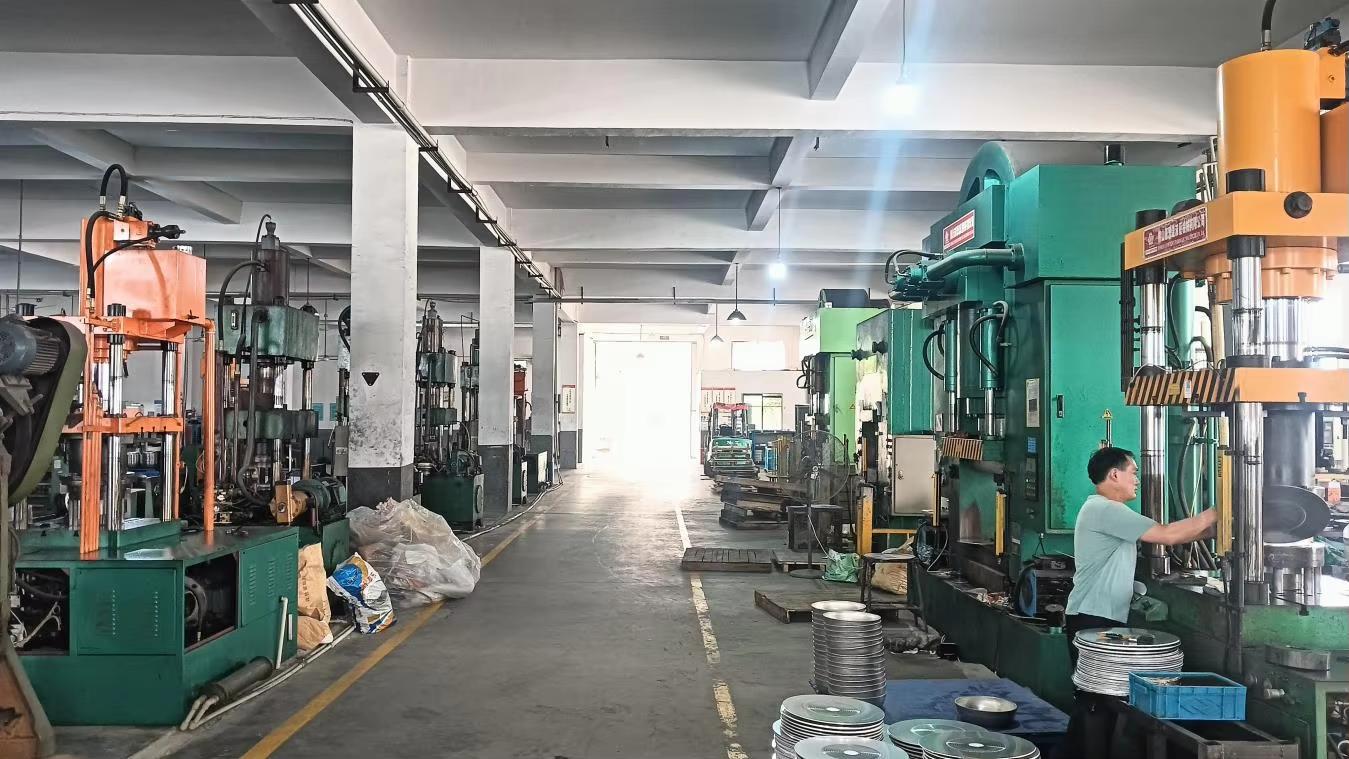
Unlike trading entities that outsource production steps across fragmented workshops, Zhejiang MEIS manages the complete manufacturing sequence. Our Jinhua workshop houses high-tonnage hydraulic drawing presses, multi-axis CNC base trimming lathes, automatic edge curling machines, and robotized surface sandblasting lines. Controlling the core tooling allows us to produce custom wok molds in as little as 18 days, minimizing upfront capital for private label programs.
High-tonnage stamping with automated centering for consistent gauge uniformity.
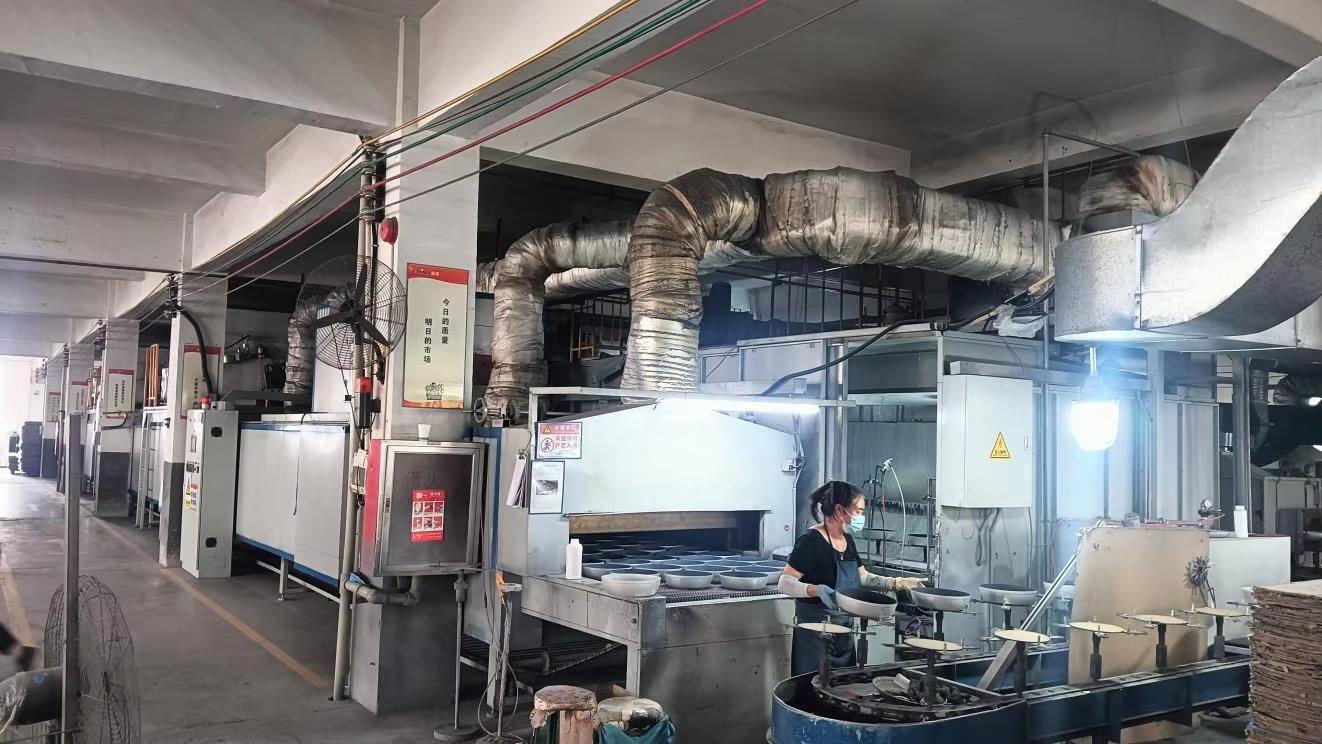
Climate-controlled cleanroom booths applying multi-layer ceramic and granite matrices.
In-house precision tool & die workshop speeding ODM prototyping cycles.
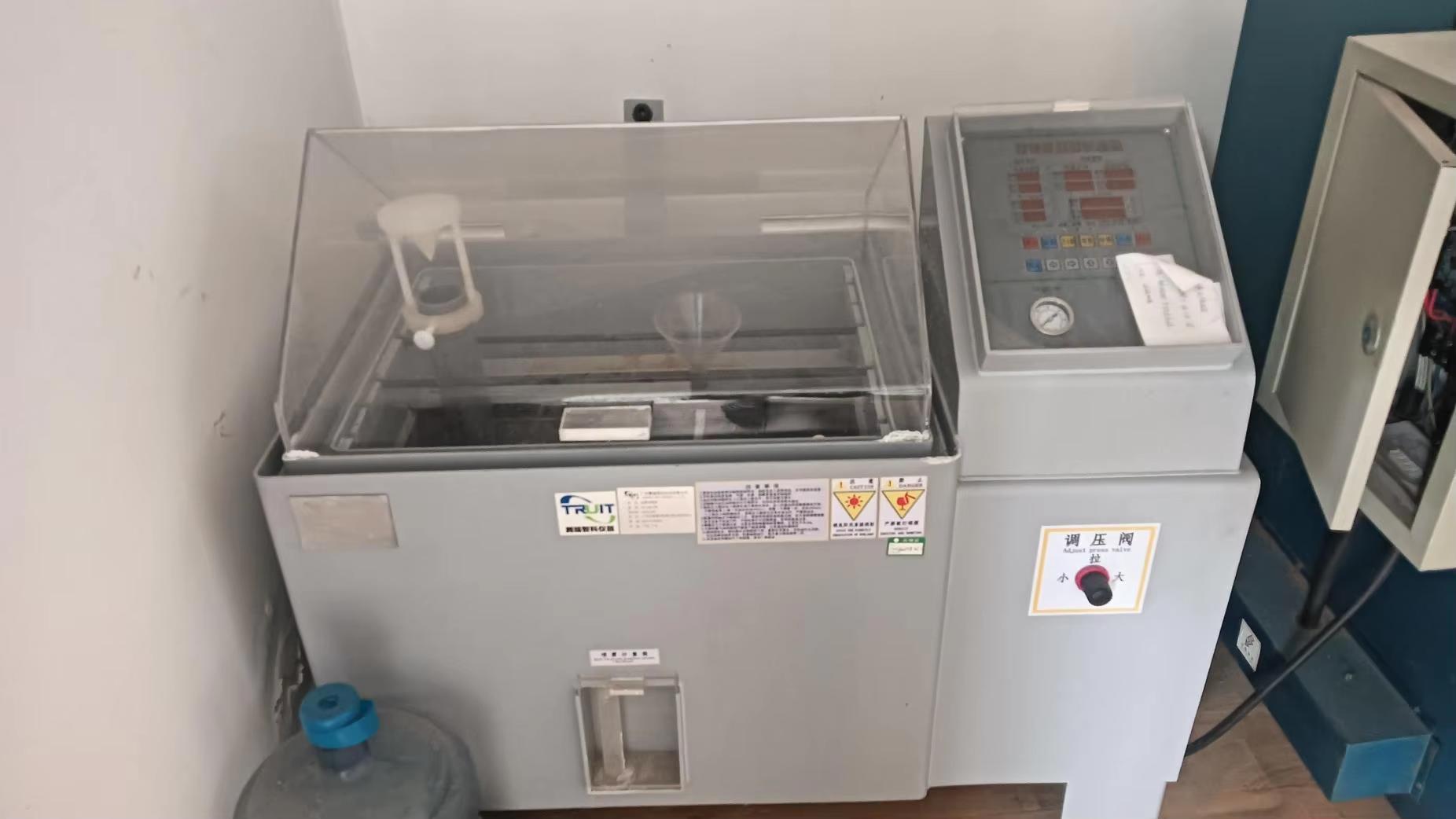
5% neutral salt spray chamber verifying exterior enamel and rivet anti-corrosion life.
A data-driven engineering evaluation to assist procurement teams in selecting the optimal substrate for their brand tier, price-point goals, and consumer demographic.
| Evaluation Parameter | Forged 3003 Aluminum Wok | Pressed Aluminum Wok | Nitrided Carbon Steel Wok | Tri-Ply Clad Stainless Wok |
|---|---|---|---|---|
| Thermal Transfer Speed | Rapid & Uniform (~205 W/mK) | Ultra-Fast, Thin Sidewalls | Moderate (~50 W/mK) | Slow to Moderate (~20 W/mK) |
| Base Warp Resistance | Very High (Thick 4.0-4.5mm base) | Moderate (Prone if overheated) | High (Subject to thermal oil shock) | Very High (Rigid core structure) |
| Stovetop Versatility | All Hobs (w/ induction plate) | Gas & Electric (Induction optional) | Naturally Induction Compatible | All Hobs / Commercial Ranges |
| Weight & Ergonomics | Balanced (900g - 1,200g) | Ultra-Lightweight (550g - 750g) | Medium-Heavy (1,100g - 1,500g) | Heavy (1,400g - 2,000g) |
| Coating Options | PFAS-Free Ceramic, Granite, Hard Anodized | Ceramic, Basic Nonstick, PVD | No-Coating Nitride, Vegetable Oil | Uncoated Mirror / Satin / Ceramic |
| US Market Positioning | Mid-to-Premium D2C, Department Stores | Promotional, Grocery, Supermarkets | Culinary Enthusiasts, Specialty Stores | Luxury Gourmet, Professional Kitchens |
| FOB Unit Cost Tier | Moderate ($$) | Economical ($) | Moderate ($$) | Premium ($$$$) |
A rigorous, transparent product realization pathway engineered to prevent delays, eliminate mold re-spins, and safeguard retail seasonal delivery commitments.
We analyze your industrial design or sample pan, verifying volumetric capacity, wall draft angles for de-molding, balance-point physics, and handle rivet shear margins against ANSI/NSF standards.
Our in-house tooling engineers cut pilot molds using CNC lathes and EDM. Fully functional samples with your custom handle ergonomics and custom color exterior are dispatched via air express within 14–21 business days.
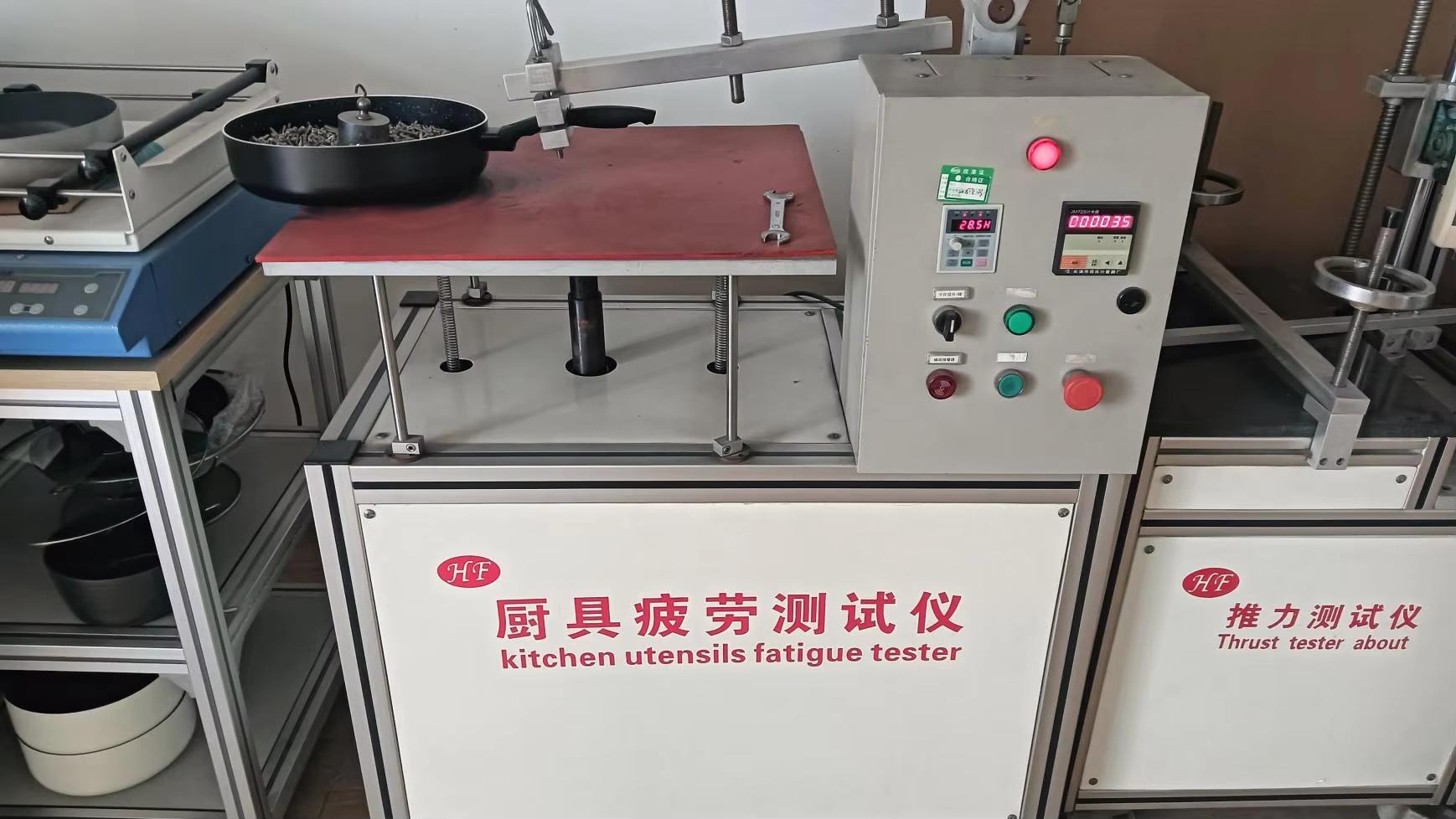
Prior to mass production, samples undergo 200,000-cycle handle fatigue oscillation, 1,000-hour dry heating tests, boiling water chemical immersion, and cross-hatch tape peeling (ASTM D3359) in our in-house lab.
Every staging area features strict Go/No-Go dimensional gauge monitoring. We check stamping gauge consistency, spray film thickness (dry film thickness 25–45 microns), curing oven heat curves, and handle riveting torque.
Cookware items are prone to transit shock. We engineer custom inner sleeves, corner pulp-molded protectors, and 5-ply export master cartons qualified under ISTA 1A/3A drop tests to withstand US e-commerce fulfillment (Amazon FBA/3PL).
Full support for Ningbo or Shanghai port FOB delivery, container space optimization, Bill of Lading generation, GSP / certificate of origin, and explicit HTS classification for US Customs Section 301 compliance.
Direct, technically precise answers addressing compliance, customs tariffs, minimum orders, and customization capabilities.
Aluminum cookware imported from China typically falls under HTS Subheading 7615.10.71 (cooking and kitchen ware of aluminum, enameled or glazed or containing nonstick interior finish) or 7615.10.91 (other aluminum ware). Under the continuing U.S. Trade Representative (USTR) Section 301 actions, these categories are subject to List 3 ad valorem tariffs in addition to standard column 1 duty rates. Zhejiang MEIS Kitchenware provides complete, transparent documentation, accurate unit value invoicing, and packaging optimization to ensure seamless customs clearance without bonded delays.
We enforce strict raw material traceability. All nonstick coatings (sol-gel ceramic, mineral-speckle, or PTFE matrices) are formulated strictly with certified chemical precursors that omit lead, cadmium, arsenic, and phthalates. Each batch is verified against extractable limits using toxicological migration testing in boiling acetic acid (mimicking acidic tomato-based cooking). Our products regularly obtain clean test certificates from internationally recognized third-party laboratories (TÜV Rheinland, SGS, Intertek) to satisfy the strict requirements of US national retail chains.
For standard models utilizing our existing body tooling with custom exterior Pantone colors, customized brand packaging, and laser-etched handles, our standard production MOQ begins at 1,000 to 1,500 units per size. For entirely custom-molded geometries (custom wall heights, proprietary handle brackets, or specialized induction stamps), production tooling MOQs generally start at 2,000 to 3,000 units. For qualified multi-item collection programs, split-container volume programs are negotiable.
We engineer three primary handle attachment configurations: (1) Heavy-duty solid aluminum or stainless steel rivets with interior flat-head geometry for high shear resistance; (2) Stud-welded brackets that leave a 100% smooth, rivet-free interior for effortless wiping and superior hygiene; and (3) Cast stainless steel ergonomic handles featuring hollow core designs to minimize thermal transfer while allowing oven safety up to 500°F (260°C). We also manufacture stay-cool soft-touch Bakelite with wood-grain water-transfer finishes for modern retail aesthetics.
For re-orders on existing tooling, standard factory lead time is 35 to 45 calendar days following deposit payment and artwork approval. For initial OEM/ODM programs requiring new mold casting and CNC tooling, allow 15 to 20 days for tool creation and initial T1 sampling, followed by 35 days for mass production after gold-seal sample approval. Our proximity to both Ningbo Port (approx. 2.5 hours) and Shanghai Port ensures immediate inland transit once customs declaration forms are cleared.
Yes, absolutely. Over 80% of our US-bound purchase orders undergo third-party inspections by agencies such as SGS, Bureau Veritas, QIMA, or buyer-appointed QC teams. We provide full on-site testing facilities, sample pulling according to ANSI/ASQ Z1.4 (ISO 2859-1) General Inspection Level II, and dedicated inspection stations equipped with coating thickness gauges, cross-hatch cutters, boiling pans, and packaging drop testers.
Looking to elevate your cookware brand's margin, enhance product durability, or launch a fully compliant PFAS-free aluminum wok series in the United States? Our engineering specialists in Jinhua are ready to review your project specs.