Ceramic Series
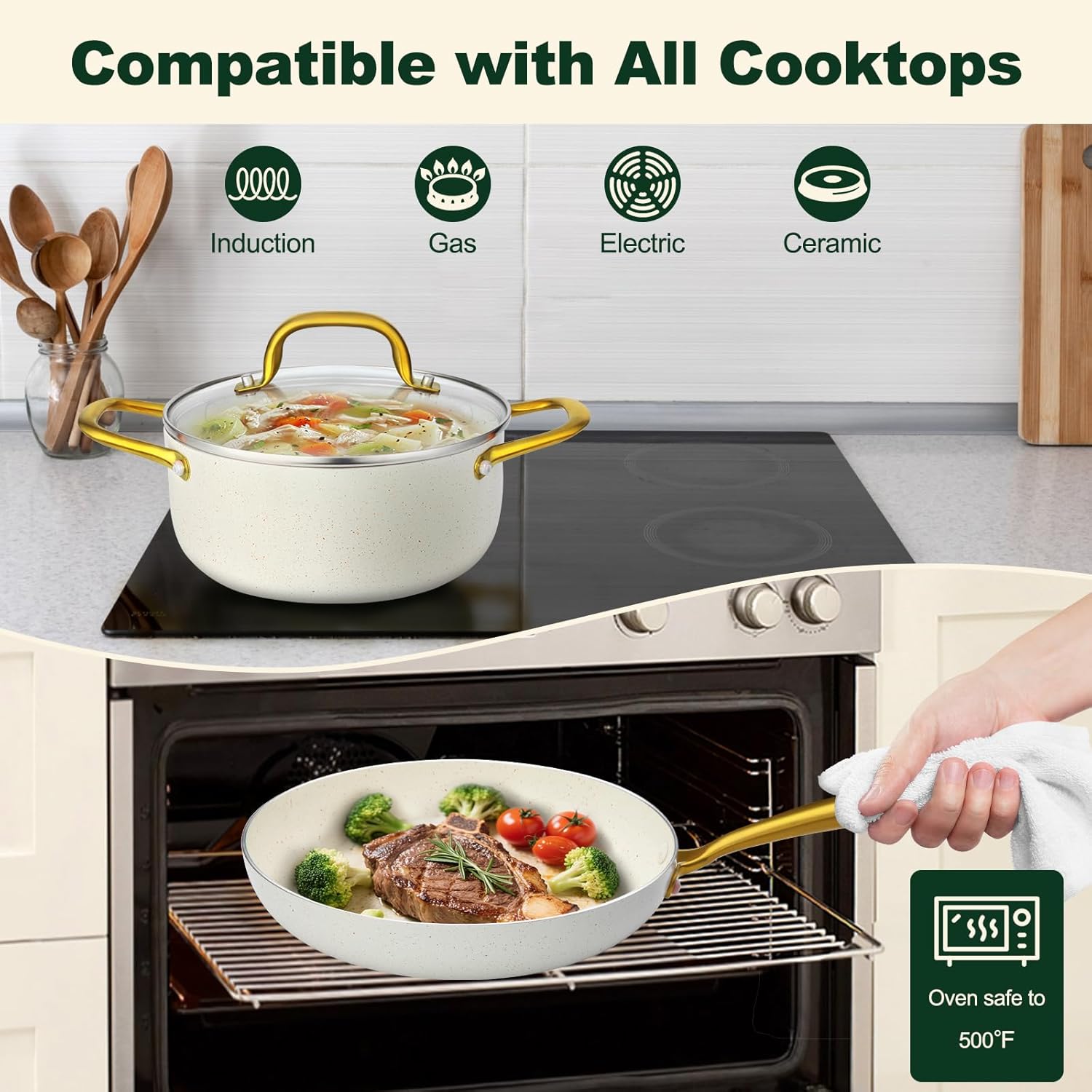
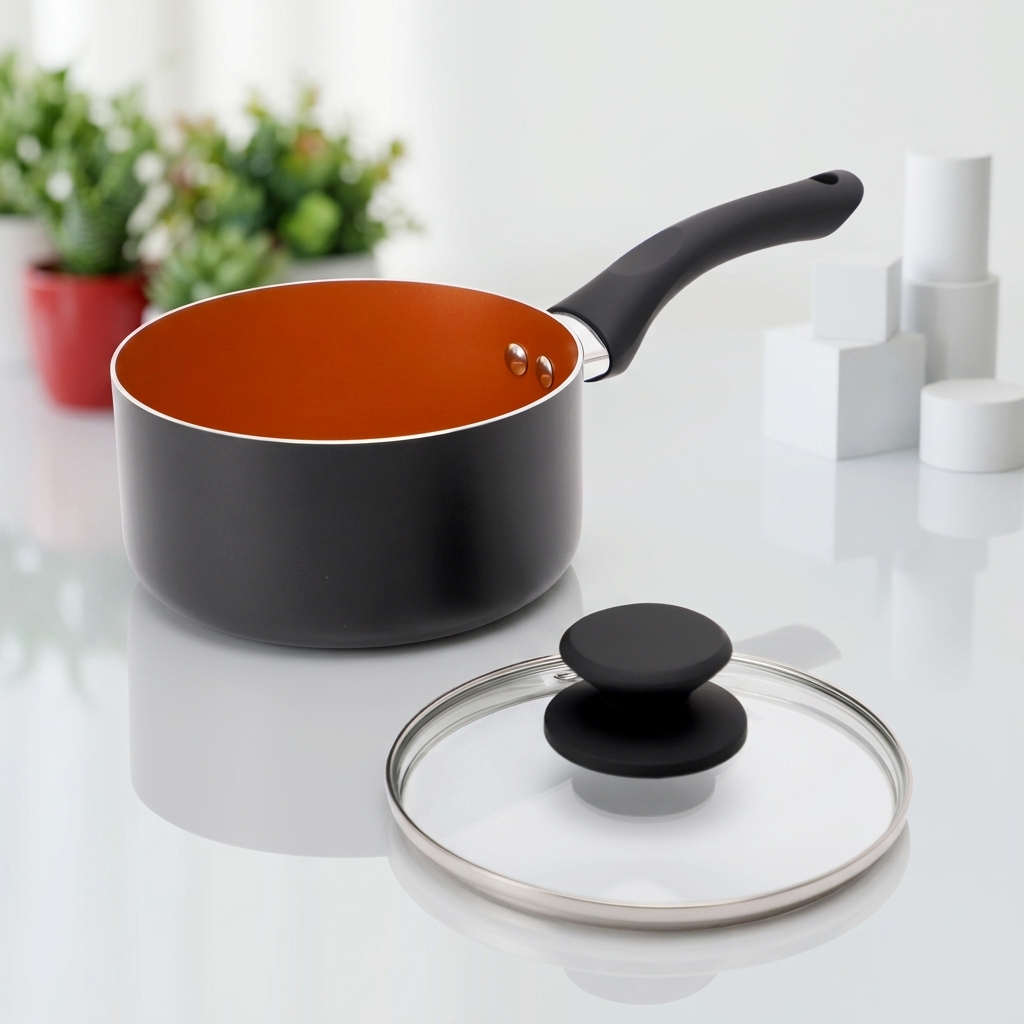
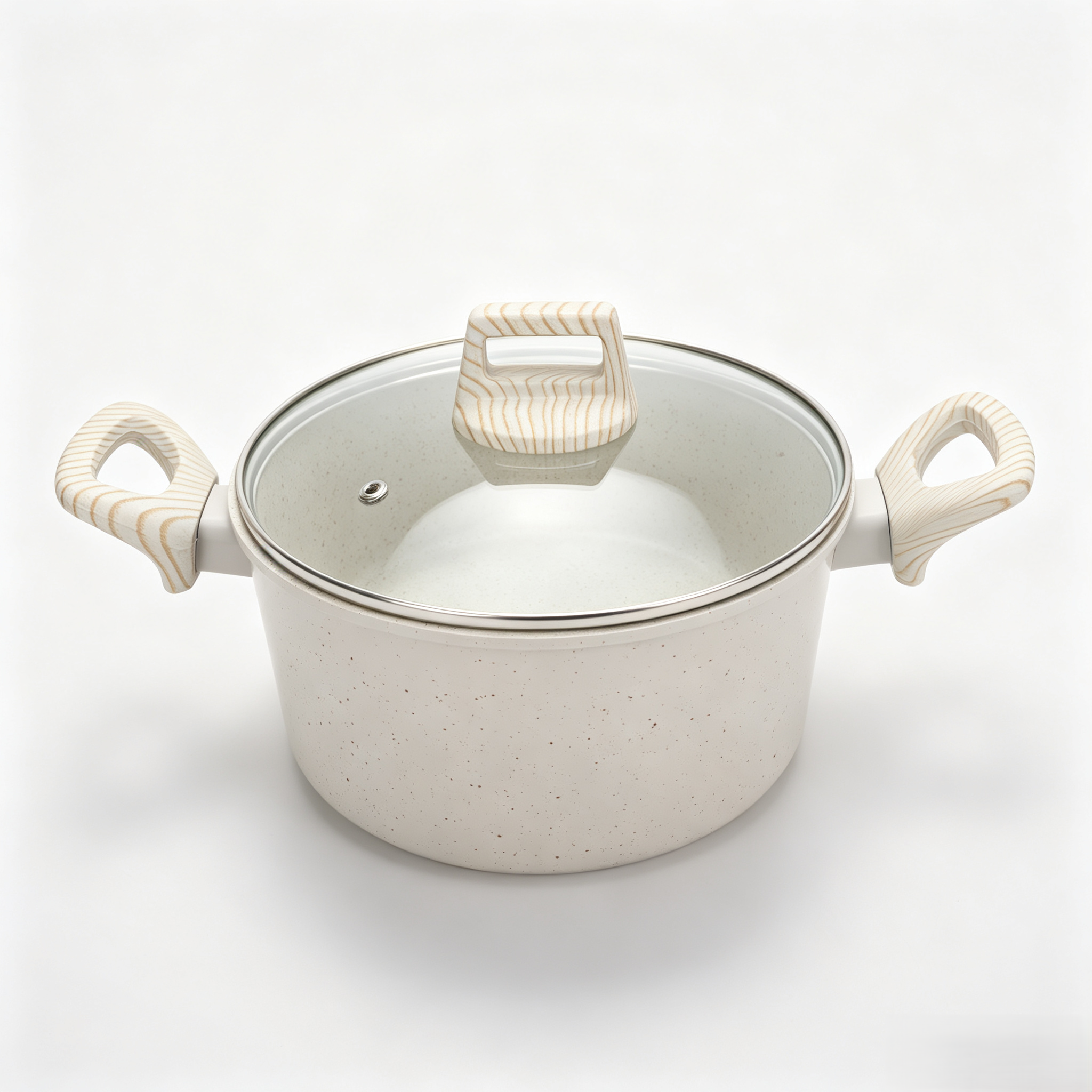
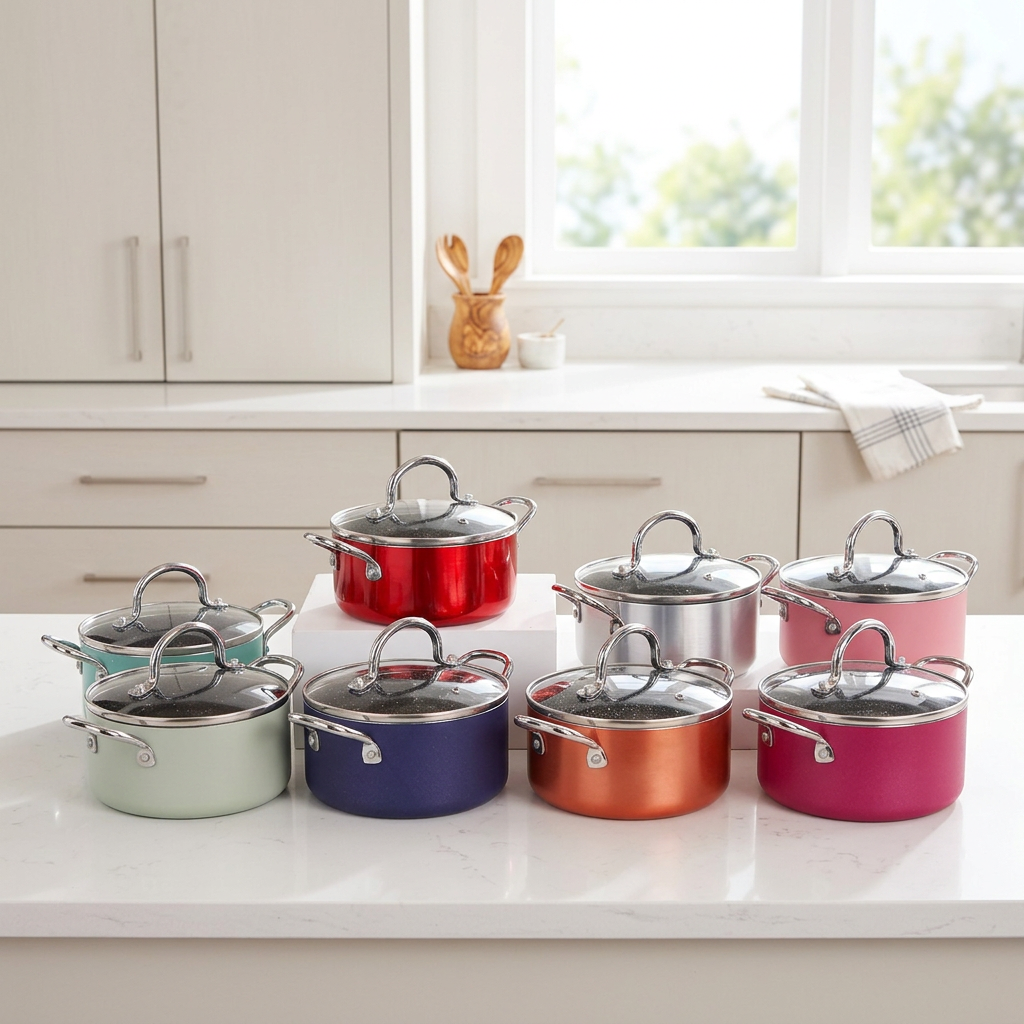
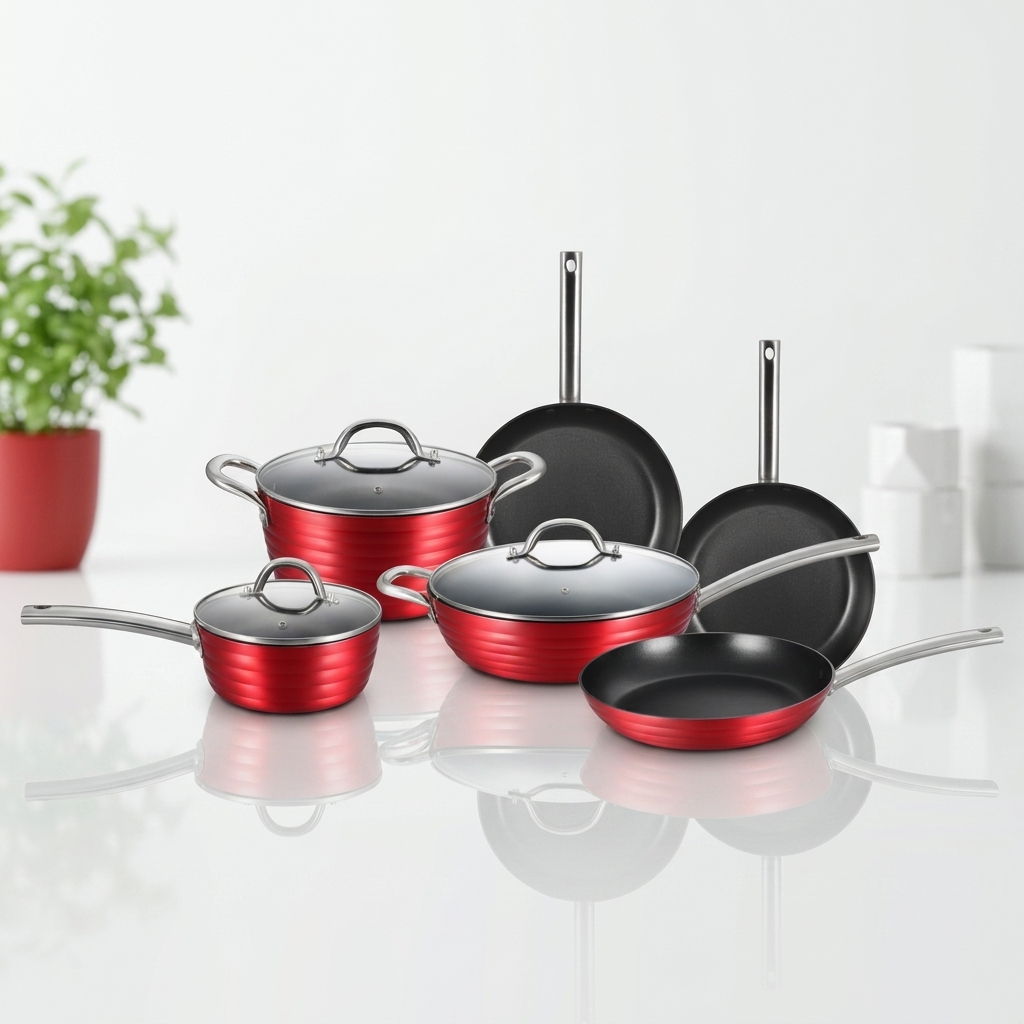
5-Piece Classic Ceramic Kitchenware Set Stainless Steel Handle
PVD Ceramic Interior
Induction Base
Eco-Friendly
Purpose-built for commercial importers, kitchenware retail chains, HoReCa distributors, and private brands across Southern Italy. Every line combines heavy-gauge structural stability with high-adhesion non-stick ceramic, granite, or titanium coatings.
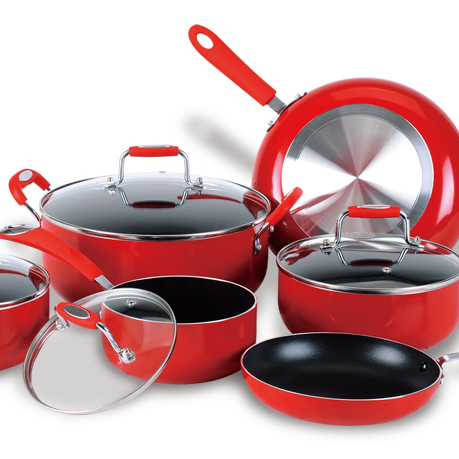
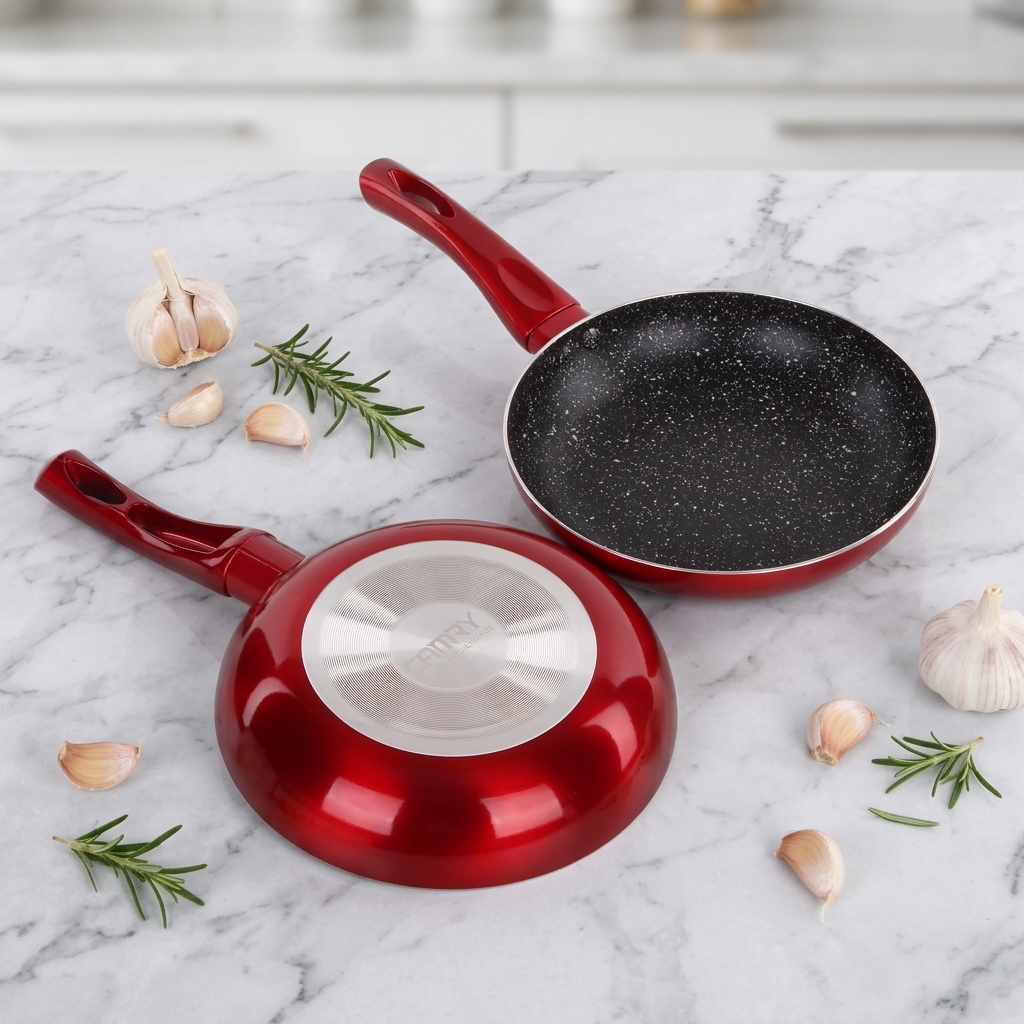
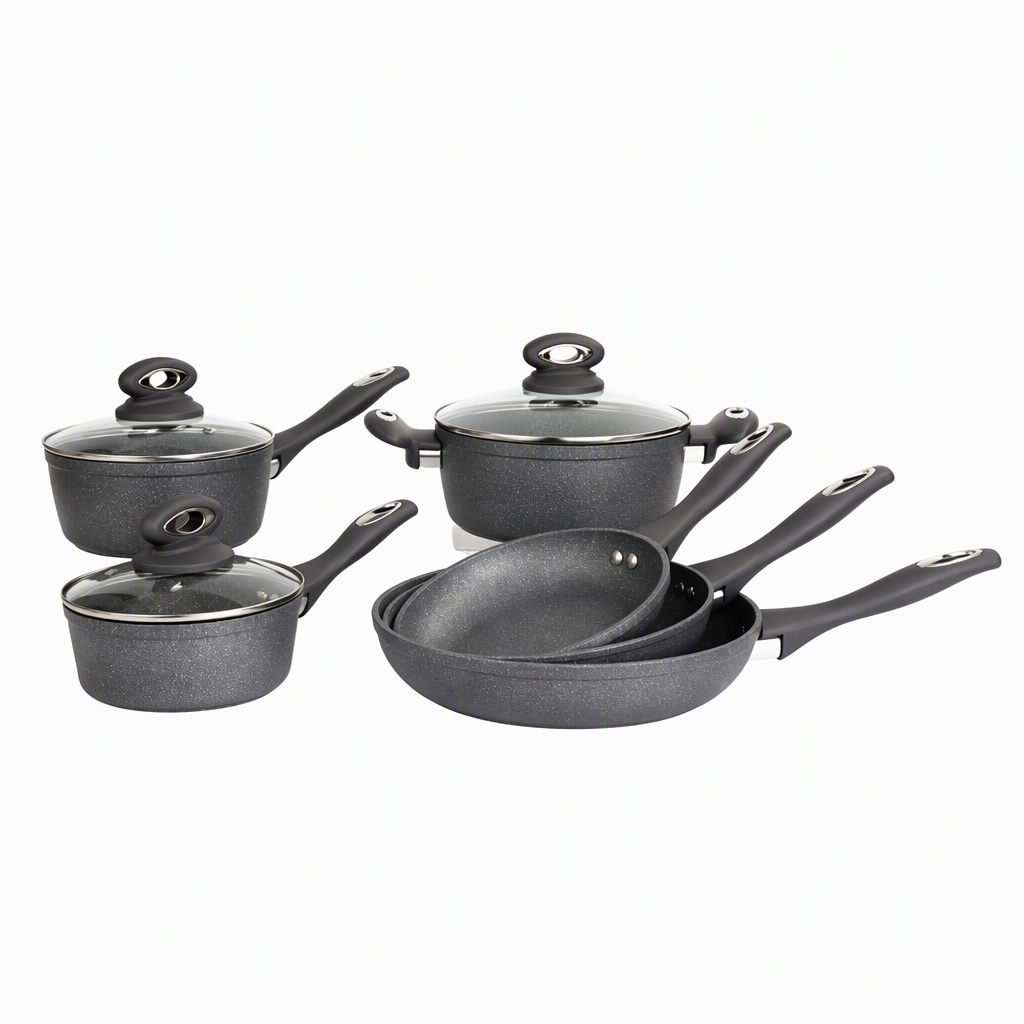
Naples represents the culinary heart of Southern Italy. The physics of Campania cooking place severe thermal, chemical, and mechanical stresses on cookware—demands that standard stamped aluminum cannot survive.
The iconic Neapolitan ragù requires 6 to 8 hours of low-and-slow simmering ("pippiare") using San Marzano tomatoes, red wine, and cured meats. High acid concentrations degrade inferior non-stick matrices.
Preparation of coastal Neapolitan classics (Spaghetti alle Vongole, Calamari sauté) demands rapid thermal recovery, intense flash searing, and violent manual pan tossing over heavy commercial burners.
From central Naples trattorias along Via Toledo to Michelin kitchens on the Amalfi coast, kitchens are shifting rapidly to high-kilowatt induction cooktops while retaining auxiliary gas lines.
In wholesale and private-label retail across Italy, return rates and consumer dissatisfaction stem almost entirely from bottom warping and premature non-stick coating delamination. Stamped (pressed) aluminum pans, typically manufactured from 1.8mm–2.5mm cold-rolled sheets, undergo excessive micro-expansion under high heat. When placed on an induction surface, the rapid localized heating forces the center upward, creating oil pooling at the perimeter and scorched centers.
Die-Forged Technology (Cold/Warm Forging under 4,000-Ton Hydraulic Presses) solves this by redistributing metal dynamically. Zhejiang MEIS Kitchenware compresses raw 3003-grade aluminum slugs into bodies engineered with a dense 4.5mm base, tapering gradually to 2.5mm along the lateral walls, and flaring to a reinforced 4.0mm rim. This delivers three critical thermodynamic advantages: optimal heat retention comparable to cast iron, rapid radial thermal conductivity of pure aluminum, and structural rigidity that remains perfectly flat across 20,000 thermal shock cycles (260°C to cold water quenching).
Procurement directors and brand owners targeting Campania, Lazio, and Sicily face shifting regulatory landscapes and evolving consumer preferences.
European Regulation (EC) 1935/2004 and the Italian Decree DM 21/03/1973 (MOCA) have created aggressive consumer demand for completely PFAS-free and PTFE-free alternatives.
Historical Neapolitan residential architecture and urban apartment layouts in central Naples necessitate hyper-efficient, space-saving kitchenware storage systems.
Rising overland trucking costs within Europe make maritime consolidation to the Port of Naples (Porto di Napoli / Interporto Campano di Nola) the most profitable logistics corridor for Southern Italy.
Analyze the metallurgical and commercial metrics before locking your OEM purchase order for the Italian market.
| Specification Feature | Standard Pressed Aluminum | OEM Die-Forged Cookware (MEIS) | Heavy-Gauge Carbon Steel |
|---|---|---|---|
| Base Thickness | 1.8 mm – 2.5 mm | 4.0 mm – 4.8 mm (Reinforced) | 1.2 mm – 2.0 mm (Rigid Steel) |
| Thermal Uniformity & Anti-Warp | Moderate (Risk under induction flash) | Maximum (Engineered zero-warp profile) | High (Requires controlled seasoning) |
| Induction Compatibility | Punched plate required | Full-surface bonded induction disc | Naturally Ferromagnetic |
| Recommended Coatings | Standard 2-coat PTFE / Sol-gel | PVD Ceramic, Multi-layer Granite / Marble | Titanium-infused non-stick or pre-seasoned |
| Weight-to-Strength Balance | Ultra-light (Budget retail) | Balanced Ergonomic Premium Feel | Dense, rugged commercial feel |
| Italian Market Category Fit | Discount Supermarkets & Flash Sales | Department Stores, Specialized Brands, HoReCa | Wok Ranges, Roasters, Outdoor Grills |
Operating from our modern production facility in Dongnan Industrial Zone, Jinhua, Zhejiang, MEIS delivers vertically integrated manufacturing without middleman markups.
Full facility inspection by TÜV Rheinland confirms genuine factory status, quality management consistency, and strict ESG compliance.
Dedicated mold design, CNC finishing, and lathing enable custom Italian profile sampling in as little as 10 to 14 working days.
Dust-free automatic spraying bays apply multi-layer ceramic, marble, and titanium finishes with strict micron-level thickness control.
In-house salt-spray corrosion chambers, handle fatigue cycle testers, cross-hatch adhesion meters, and base torsion benches.
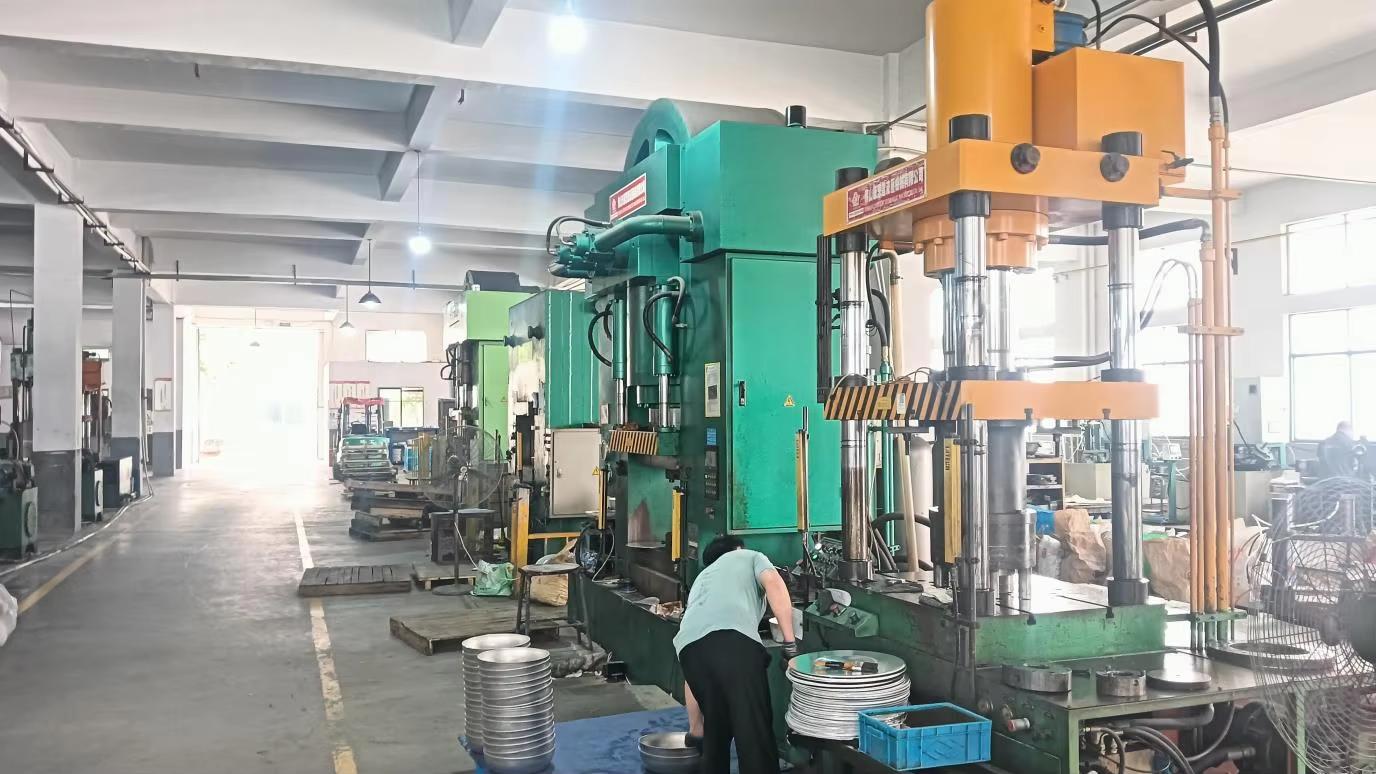
Multi-thousand ton automated hydraulic stamping and forging guaranteeing uniform wall thickness and anti-stress molecular cohesion.
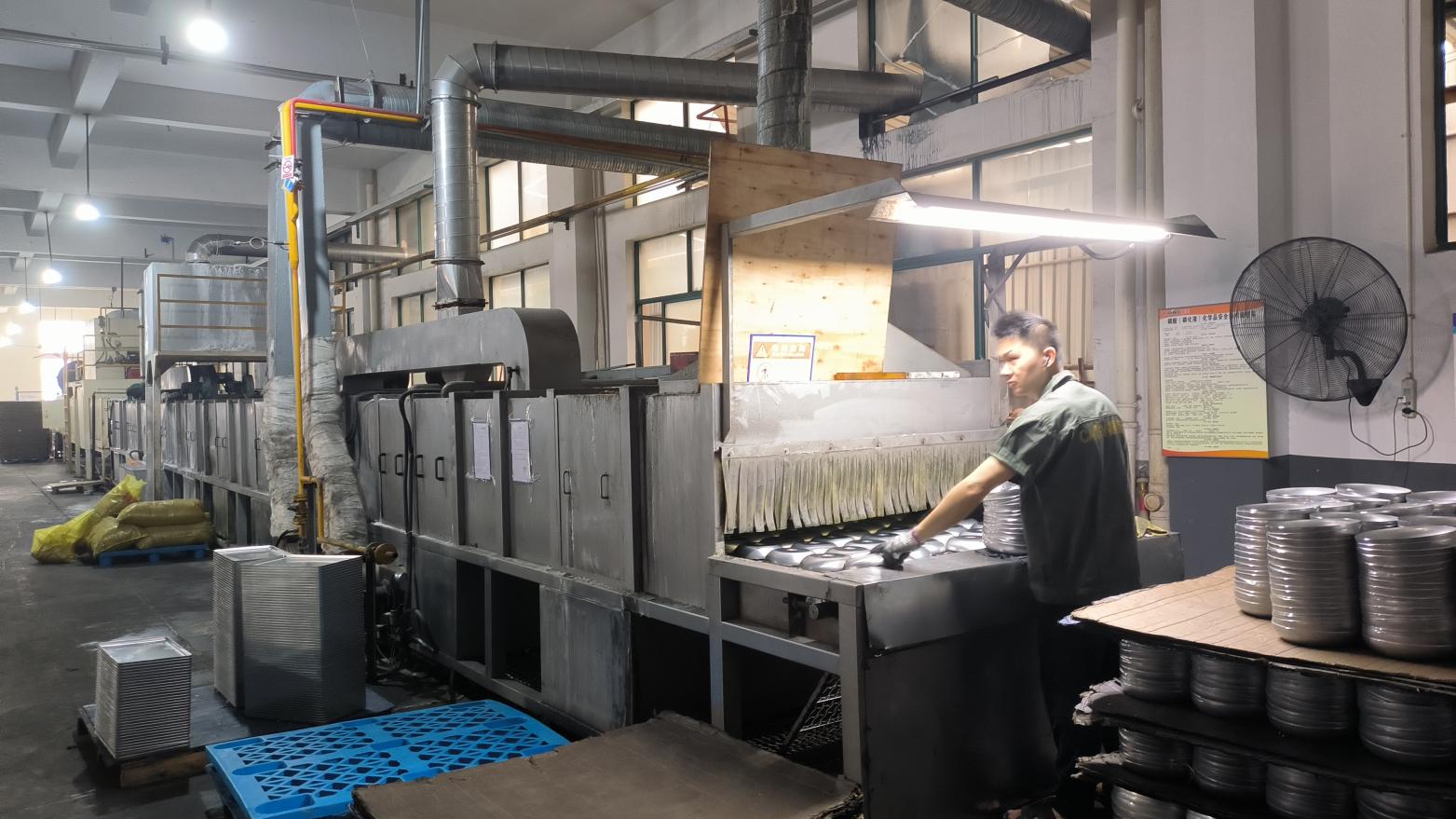
Continuous degreasing, sandblasting, and multi-stage washing ensuring optimal bonding substrate for high-performance non-stick layers.
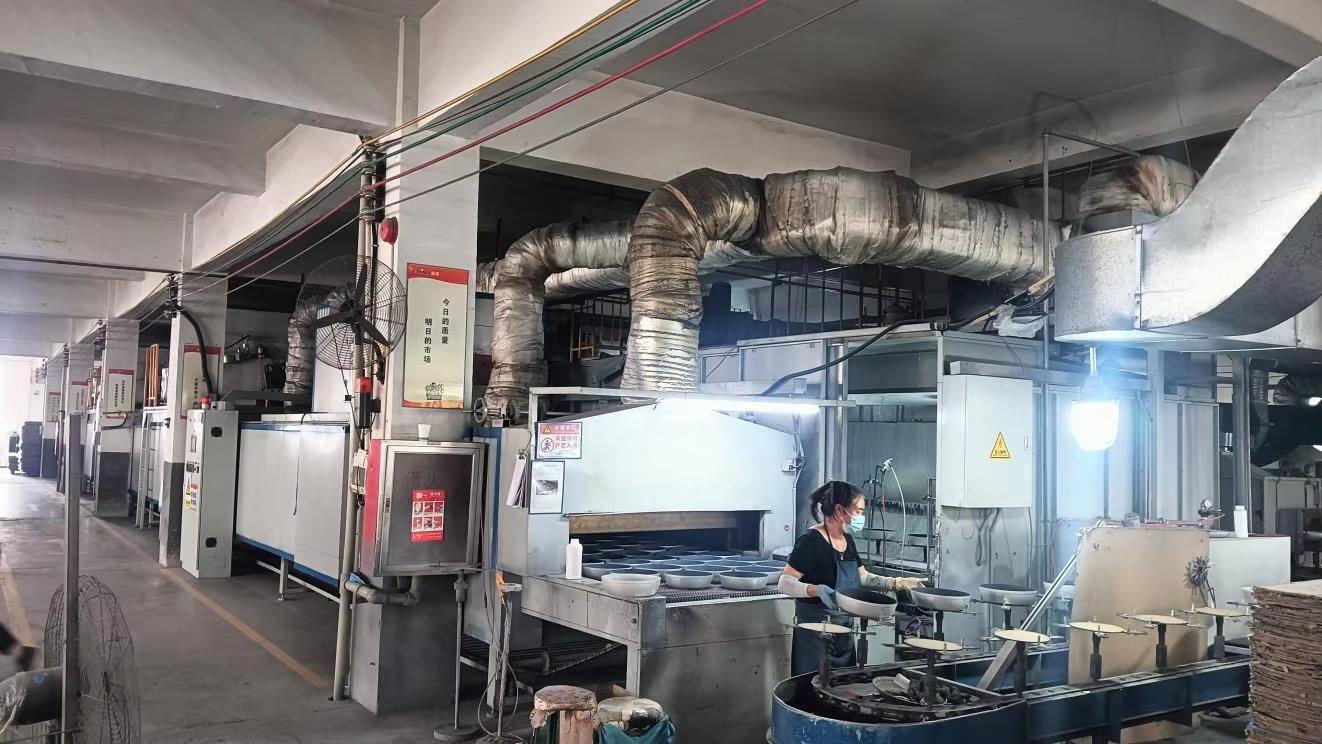
Multi-axis computer-controlled spray heads applying primer, mid-coat, and protective topcoats followed by precision thermal curing.
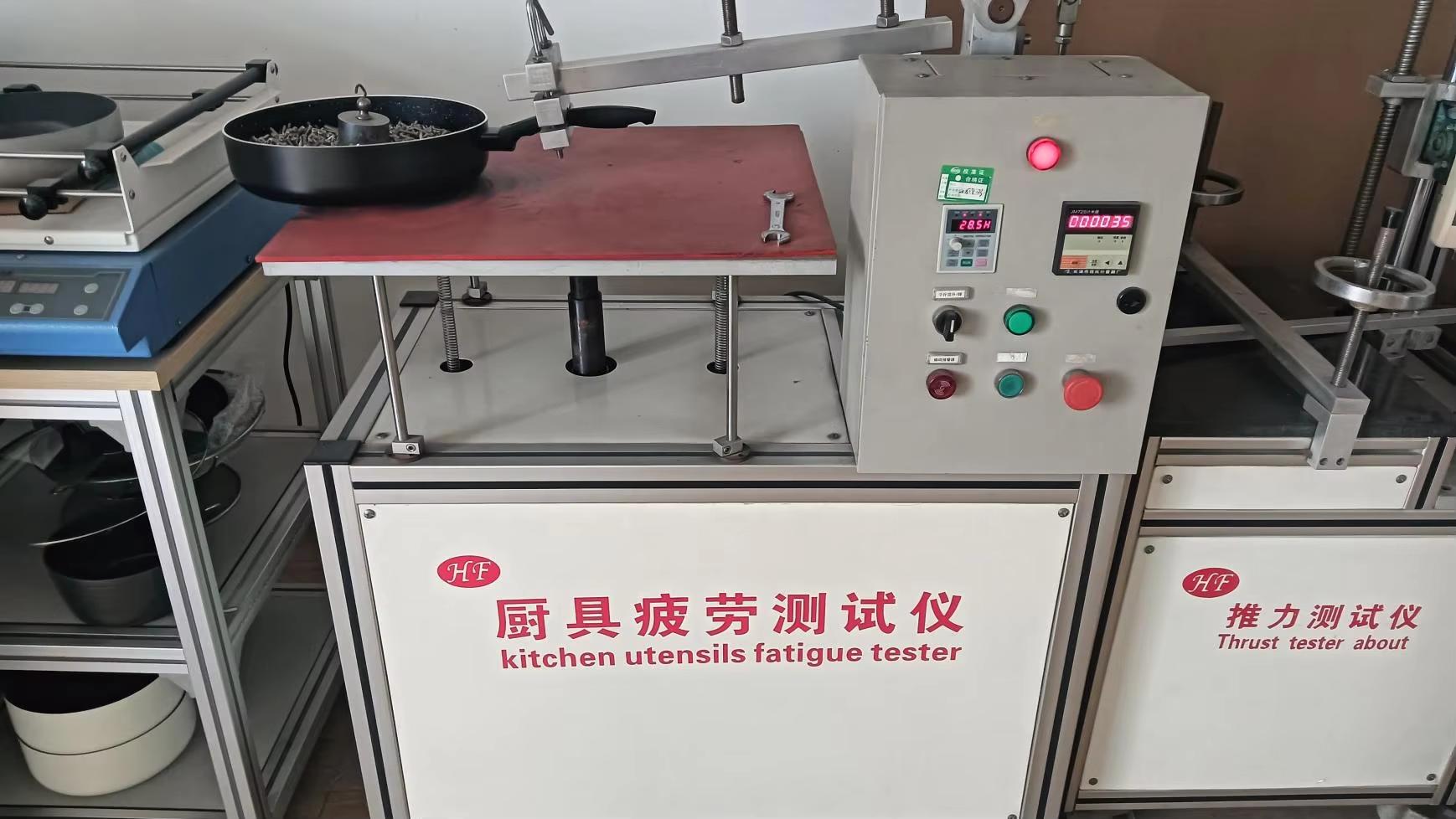
Handles and rivets tested beyond 15,000 continuous stress cycles to guarantee complete safety during vigorous kitchen service.
Clear, direct answers regarding compliance, MOQs, logistics to Naples, and private label customization.
Yes. Every batch manufactured by Zhejiang MEIS Kitchenware Co., Ltd. for the European market conforms to Regulation (EC) No 1935/2004, the French DGCCRF, the German LFGB, and specifically the Italian DM 21/03/1973 (Materiali e Oggetti a Contatto con Alimenti - MOCA). We provide comprehensive migration test reports covering Overall Migration (OML) and Specific Migration Limits (SML) for heavy metals (Lead, Cadmium, Nickel, Arsenic), volatile organic compounds, and PFAS/PFOA absence, validated by third-party testing houses such as SGS, TÜV, or Intertek.
Our standard production MOQ for custom die-forged cookware sets or individual pans is typically 1,000 to 1,500 units per size/colorway, depending on the complexity of the tooling and handle configurations. For trial orders, new brand market testing, or existing catalog shapes with laser-engraved logos and custom color packaging sleeves, we offer flexible starter quantities beginning at 500 units per SKU to support market entry across Campania and regional Italian distributors.
Our factory in Jinhua, Zhejiang enjoys direct high-speed freight access to Ningbo and Shanghai ports (approximately 3 to 4 hours trucking). Direct sea container vessels departing Ningbo/Shanghai have a maritime transit time of 26 to 30 days to the Port of Naples (Porto di Napoli). We provide full FOB, CIF, or DDP handling, including bill of lading documentation, EUR.1 / Certificate of Origin, packing lists with barcode data, and customs clearance support for smooth deconsolidation at local hubs like CIS / Interporto Campano di Nola.
Yes. Zhejiang MEIS Kitchenware operates an in-house tooling, lathe, and mold facility. If you have proprietary 3D CAD drawings (STEP/IGES) for ergonomic handles, custom pan wall tapers, or unique embossed induction base patterns, our engineering team can produce production prototypes in 12–15 days. We also support full Italian retail packaging engineering—from multilingual 4-color gift boxes, mail-order drop-test certified cartons, to eco-friendly recycled craft sleeves with Italian regulatory disposal symbology (D.Lgs. 116/2020 environmental labeling).
We utilize high-pressure hydraulic coin-bonding systems that mechanically integrate 430-grade stainless steel perforated induction discs deep into the 4.5mm die-forged aluminum base under extreme tonnage. Following bonding, the pan base passes through high-precision CNC lathe facing to ensure exact concavity tolerances (within 0.3% of diameter). This pre-calculated internal concavity ensures that when the cookware heats up on high-output European induction burners, thermal expansion drives the bottom into perfectly 100% flat surface contact, preventing humming, heat localization, or bottom warping.
Direct manufacturer pricing, in-house tooling, EU MOCA/LFGB certified lab compliance, and scheduled sea shipments to the Port of Naples. Contact our international export engineering team today to review technical drawings, request samples, or obtain an itemized container quote.