As the Eastern European consumer goods landscape undergoes structural shifts, kitchenware distributors, retail chain buyers, and private-label brand owners across Belarus (Minsk, Brest, Grodno, Gomel, Mogilev, and Vitebsk) demand high-performance culinary cookware engineered to strict Eurasian customs and quality standards. Sourcing professional-grade nonstick saucepans requires balancing precise metallurgical properties, heavy-duty induction compatibility, and robust coating adhesion certified to pass Eurasian Economic Union (EAEU) technical regulations.
This technical whitepaper serves as an executive sourcing reference for commercial buyers seeking direct-factory OEM (Original Equipment Manufacturer) and ODM (Original Design Manufacturer) partnerships. Produced by Zhejiang MEIS Kitchenware Co., Ltd., a verified 20-year manufacturing leader operating comprehensive die-casting, cold-pressing, surface finishing, and automated coating lines in Jinhua, Zhejiang, China, this guide provides complete transparency into alloy selection, nonstick chemistry, localized culinary ergonomics, and trans-Eurasian logistics corridors.
Featured OEM/ODM Cookware & Nonstick Saucepan Portfolio
Explore our core engineering lines available for private-label customization, bulk export, and wholesale retail programs across Belarusian market channels:
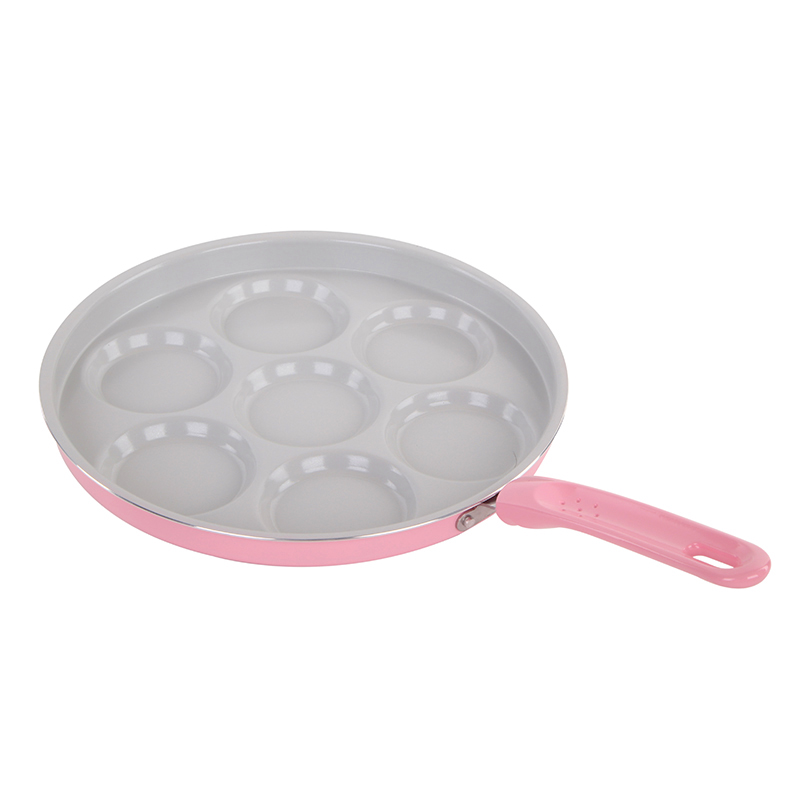
Home Kitchen Eco-Friendly Modern Aluminum Alloy Non-Stick Pan Set
View Product Details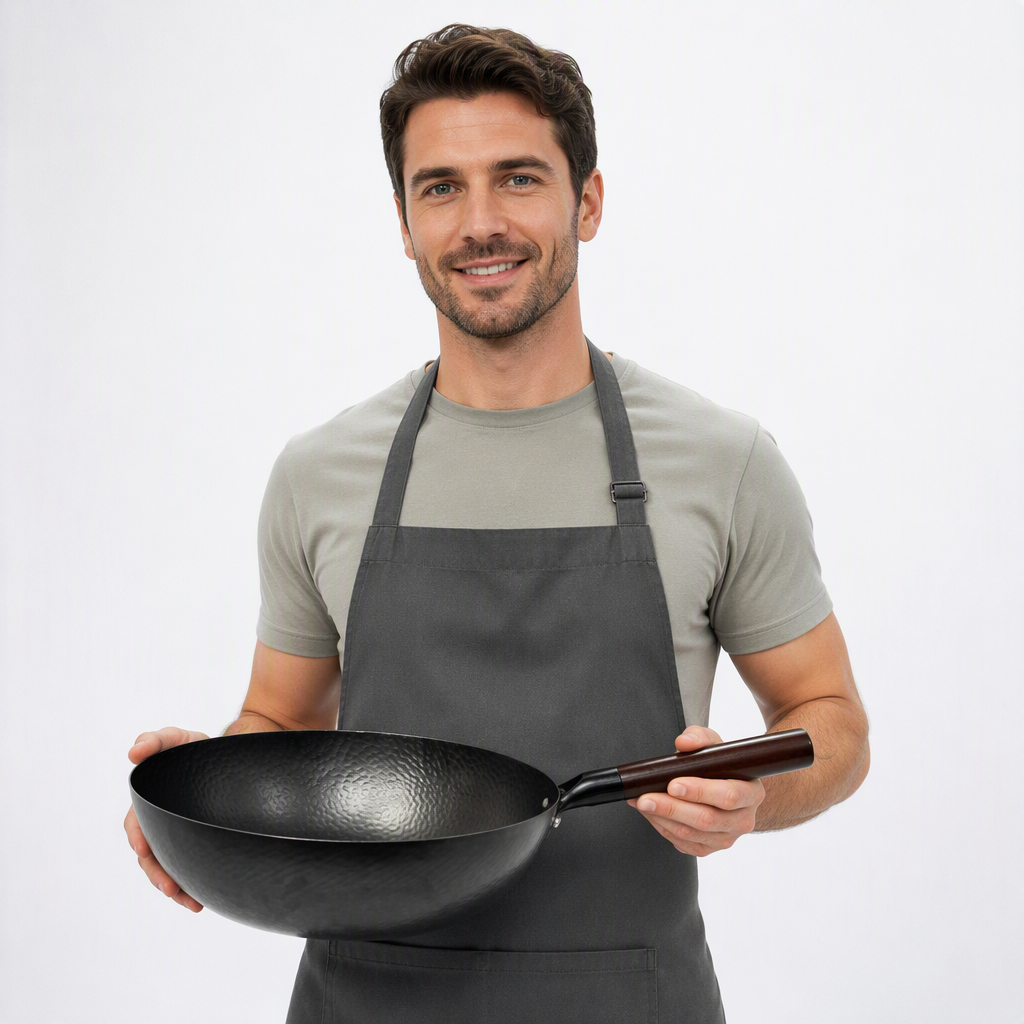
30cm Carbon Steel Round Wok Nitrided Surface Wood Handle Non-Stick Pan
View Product Details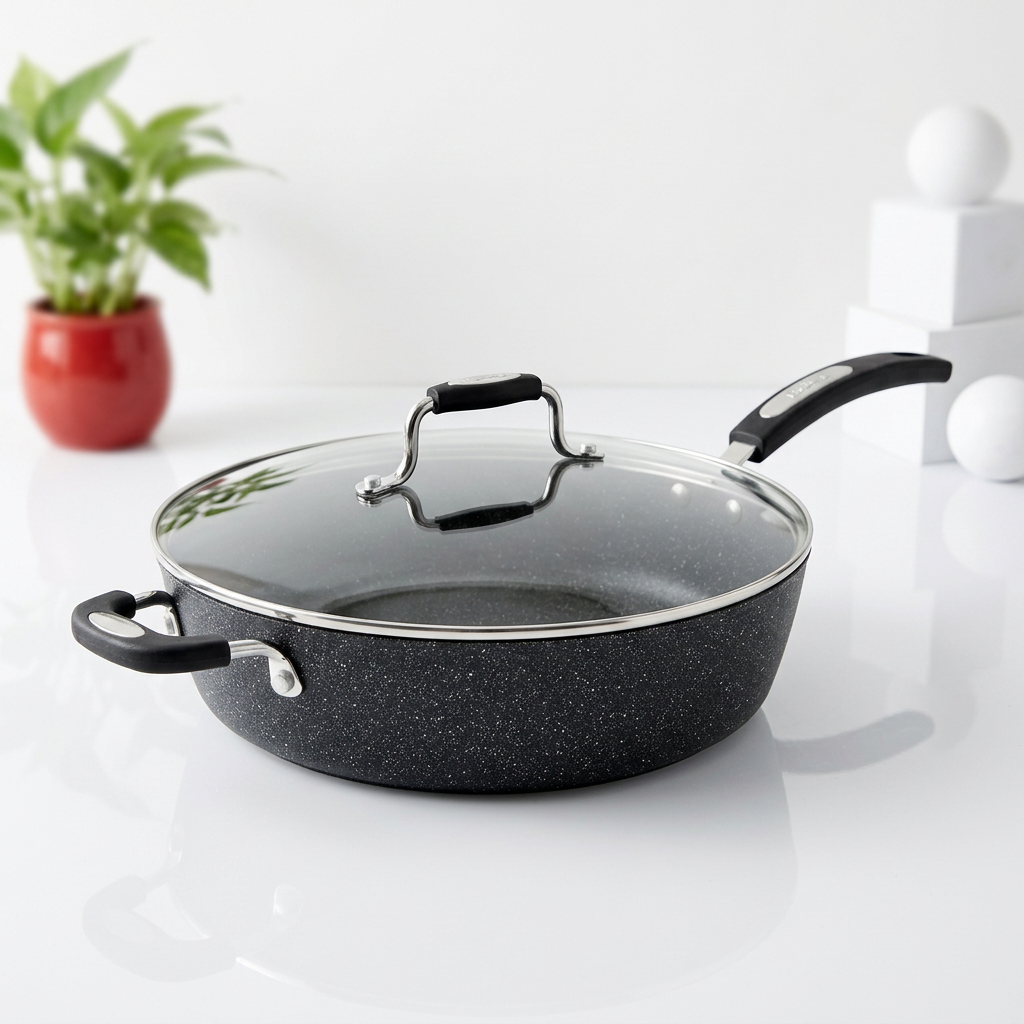
Classic 11 Inch (28cm) Non-Stick Deep Fry Pan Helper Handle Forged Aluminum
View Product Details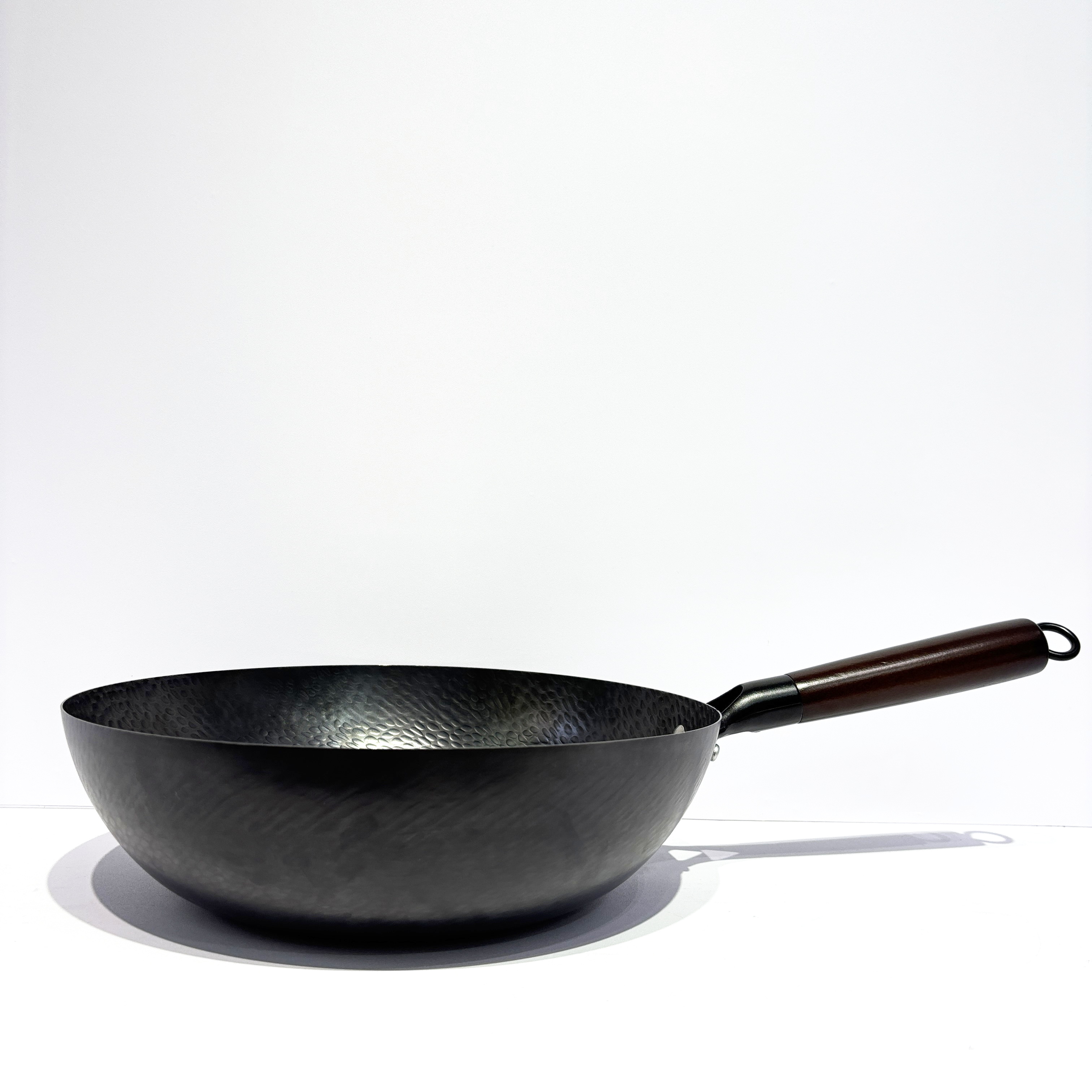
CAMRY Customized Logo Nitrided Nonstick Hammered Carbon Steel Wok
View Product Details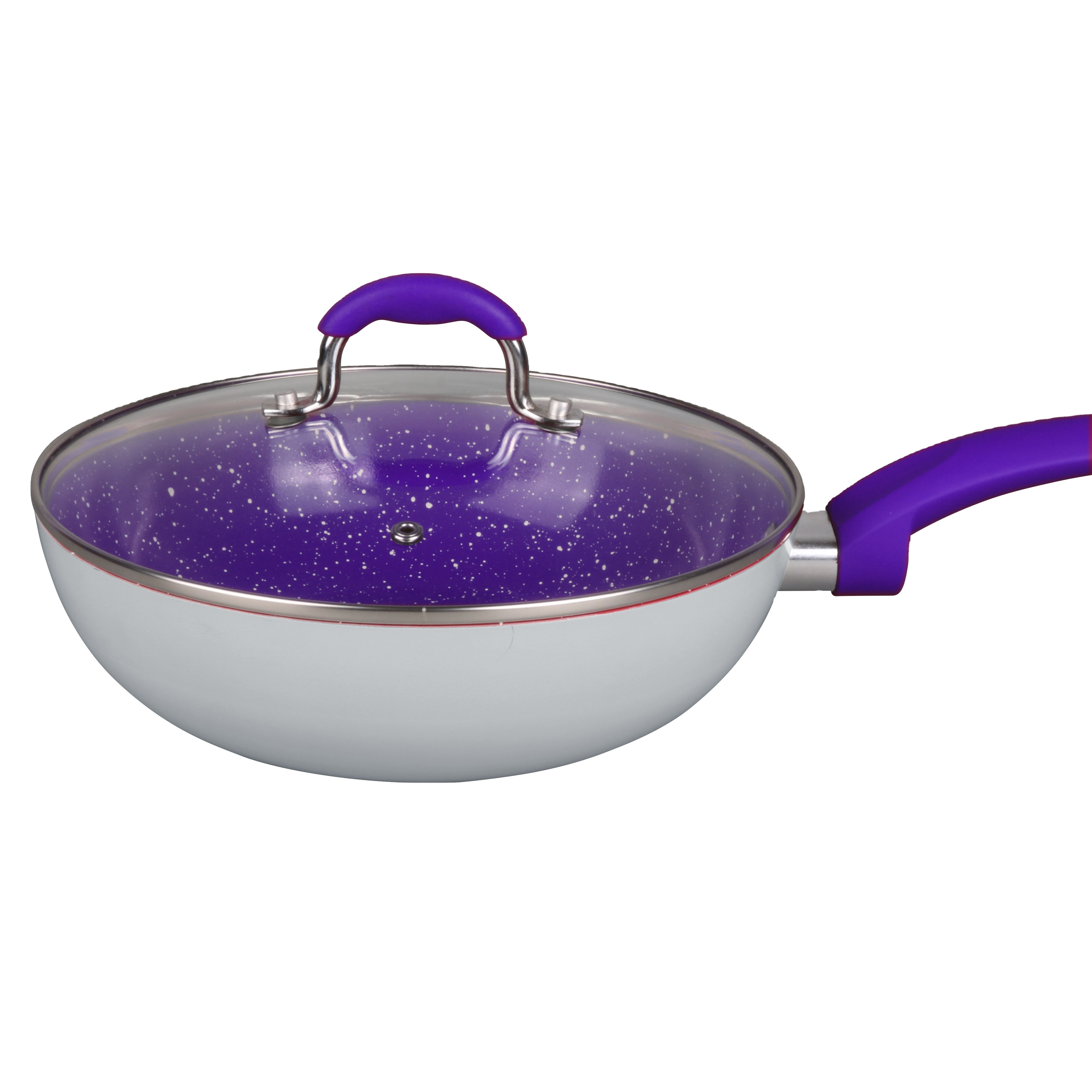
30 cm Marble Coating Non Stick Pressed Wok Deep Fry Pan Bakelite Handle
View Product Details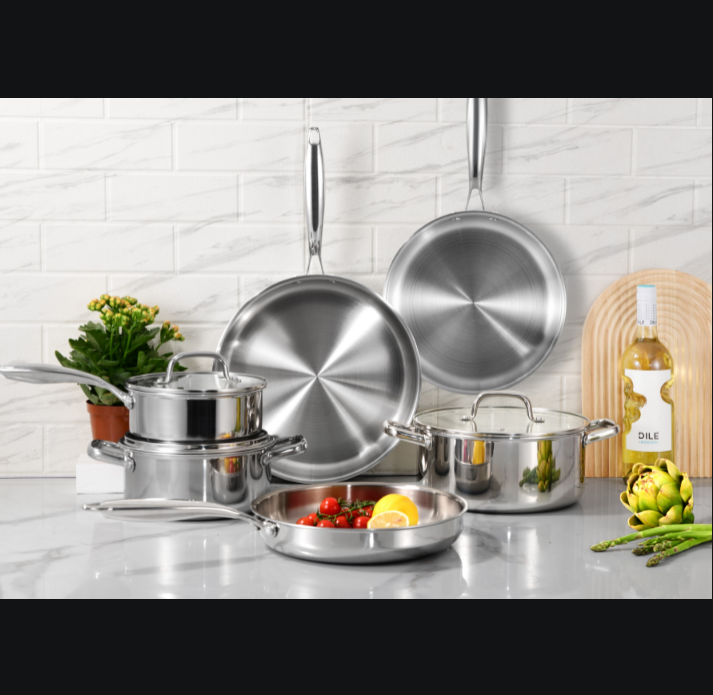
Tri-ply Stainless Steel Cookware Set Non-Stick Interior Glass Cover
View Product Details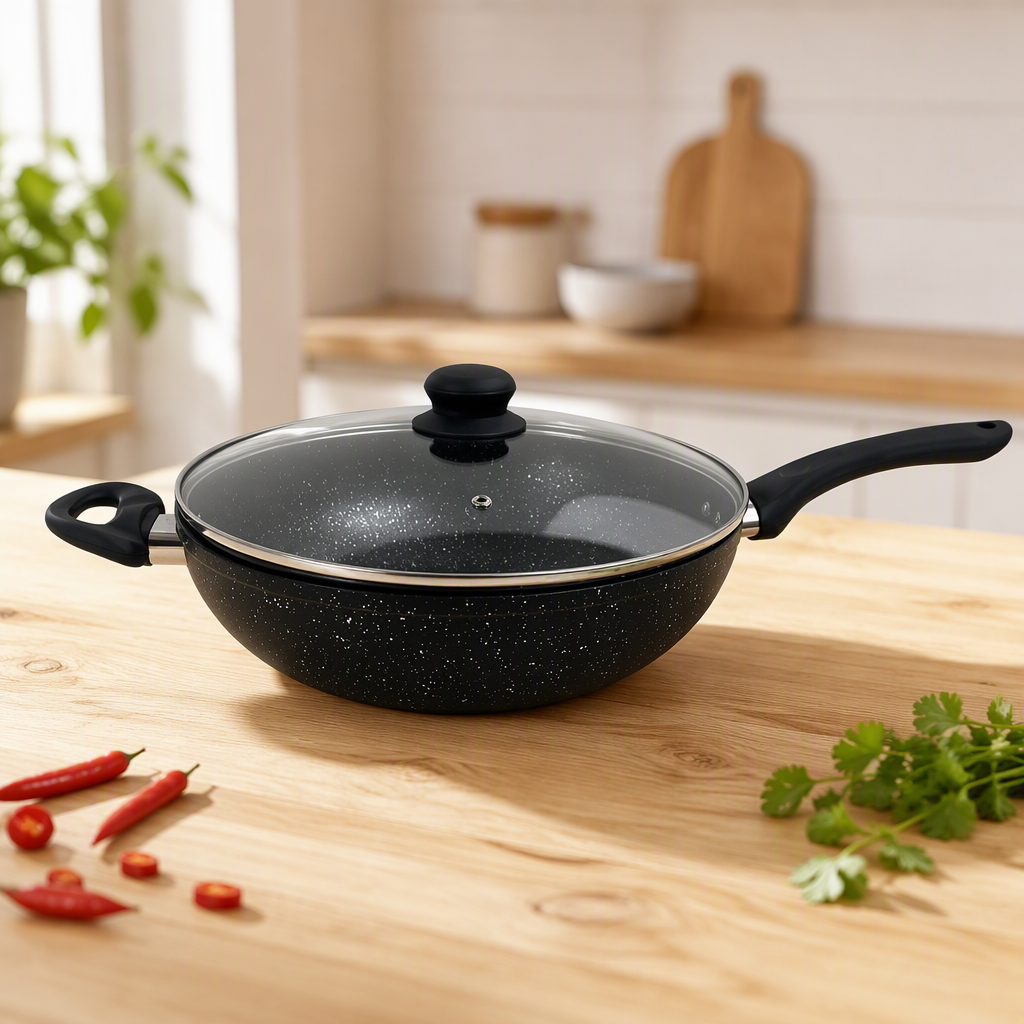
32 cm Granite Coating Non Stick Forged Wok 5.5L Aluminum Pan Lid
View Product Details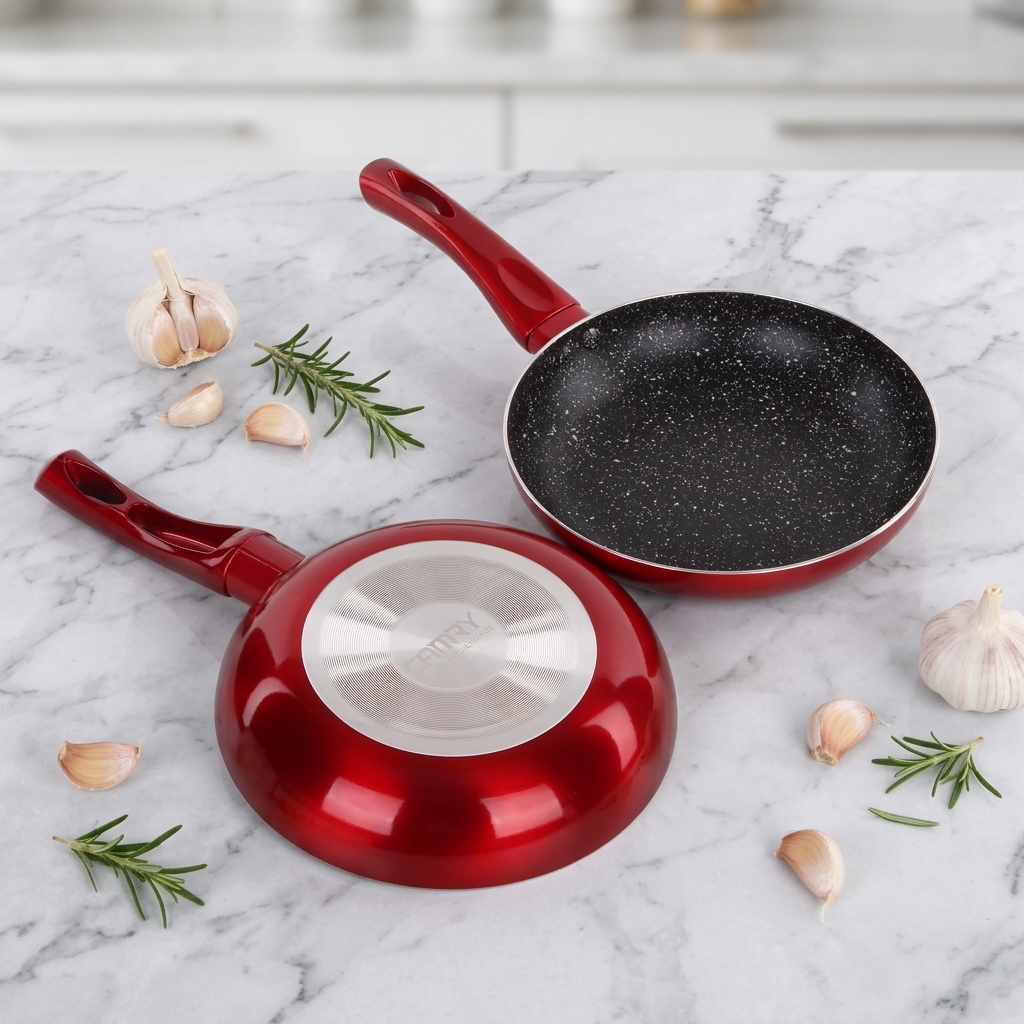
Durable 30 cm PFOA-Free Non-Stick Pressed Frying Pan Glass Cover
View Product Details1. Metallurgical & Metallographic Engineering for Belarusian Sourcing
Saucepans occupy a unique operational category in residential and commercial kitchens. Unlike broad frying pans designed primarily for dry searing or woks intended for high-heat stir-frying, saucepans require optimized liquid-to-surface heat transfer dynamics, exceptional sidewall thermal stability, and uniform bottom heat retention. When engineered for OEM export to Belarus, saucepans must withstand distinct regional cooking habits and stovetop infrastructure.
Forged Aluminum (3003 Alloy)
Utilizing high-pressure die-forging, saucepans are constructed with heavy 4.0mm to 5.0mm bases and tapered 2.5mm sidewalls. This structural geometry prevents warpage under thermal shock while ensuring rapid heat migration up the vessel walls, critical for simmer control.
Induction Impact-Bonded Bases
To operate seamlessly across modern glass-ceramic and induction hobs in Minsk urban developments, saucepans feature high-pressure impact-bonded AISI 430 magnetic stainless steel bottom discs. This guarantees 98%+ magnetic flux conductivity without delamination.
Multi-Layer Fluoropolymer & Ceramic Coated Systems
Our OEM saucepans incorporate multi-coat PTFE ceramic or granite marble matrix systems (3-coat application: primer, mid-coat with mineral reinforcement, and top clear sealer). All spray systems are 100% PFOA, PFOS, Lead, and Cadmium free.
Engineering Deep Dive: Thermal Efficiency in Liquid-Based Cooking
In sauce preparation, sugar-rich gravies, and milk-based cooking, localized hotspots lead to scorching and coating degradation. MEIS Kitchenware utilizes computer-controlled CNC base flattening to maintain a concavity tolerance under 0.5% during heated expansion, ensuring flat contact with stovetop glass and preventing localized thermal spikes.
2. Localized Application Scenarios Across Belarusian Households
Understanding user intent in Belarus requires examining local culinary routines and kitchen hardware adoption. Belarusian gastronomy heavily features root vegetables, rich dairy sauces, stews, grains, and slow-simmered dishes that place specific demands on saucepan geometry and nonstick performance.
Machanka & Thick Gravy Reduction
Traditional Belarusian Machanka (a rich pork and sausage gravy) requires extended simmering with flour and cream thickeners. Premium nonstick saucepans prevent starch scorch at the vessel base, allowing smooth reduction without scraping or burning.
Kasha & Dairy Porridge Preparation
Buckwheat, millet, and oats prepared with milk are daily staples in Minsk families. Standard single-layer pans cause milk proteins to bind to metal walls. Our multi-layer granite ceramic nonstick saucepans eliminate sticky residues, streamlining hand and dishwasher cleanup.
Mushroom & Vegetable Simmering
Belarusian soups like Krupnik and wild mushroom broths demand saucepans with high-capacity pouring rims and heat-resistant tempered glass lids equipped with steam release valves to prevent liquid boil-overs on glass touch-control hobs.
3. Technical Specification Matrix: OEM Saucepan Configurations
Below is an engineering comparative matrix tailored for procurement managers structuring private-label orders for retail distribution in the EAEU region:
| Specification Feature | Standard Pressed Aluminum Line | Premium Forged Aluminum Line | Professional Carbon / Tri-Ply Line |
|---|---|---|---|
| Base Metal Material | 1050/3003 Aluminum Sheet | 3003 High-Density Die-Forged Alloy | Heavy-Gauge Carbon Steel / SUS304-Alu-SUS430 |
| Wall & Rim Thickness | Wall: 2.0mm | Rim: 3.0mm | Wall: 2.5mm–3.0mm | Rim: 4.5mm–5.0mm | Wall: 1.5mm–2.0mm | Rim: 2.0mm–3.0mm |
| Coating System Options | 2-Layer PTFE / Basic Granite Speckle | 3-Layer Titanium / 5-Layer Granite Matrix | Ceramic High-Temp / Nitrided Corrosion Layer |
| Hob Compatibility | Gas, Electric, Spiral Base Option | Full Induction Magnetic Stainless Disc | Native Induction & All Stovetops |
| Handle Structure | Ergonomic Bakelite / Riveted | Soft-Touch Wood Grain / Silicone Stay-Cool | Cast Stainless Steel / Detachable Click System |
| Target Belarus Segment | Volume Supermarket Promotions | Mid-to-High Retail Chains & E-Commerce | Professional Culinary & Specialty Stores |
4. Belarus & EAEU Market Macro Trends (Compliance & Sourcing Dynamics)
Navigating the Belarusian wholesale market requires strict adherence to regional regulatory directives and evolving consumer buying patterns across CIS trade corridors. Sourcing directors must align production specifications with the following macro dynamics:
EAEU Technical Regulations & EAC Marking
Cookware imported into Belarus must comply with Technical Regulations of the Customs Union (TR CU 005/2011 "On Packaging Safety") and national food-contact hygiene standards (GOST certificates). MEIS provides full testing dossier support to facilitate seamless Declaration of Conformity issuance at Belarusian customs checkpoints.
Direct China-Belarus Railway Freight (Yiwu/Jinhua to Minsk)
Logistical reliability is critical. Located in Jinhua, Zhejiang, our factory benefits from direct access to trans-Eurasian container rail express lines connecting to Minsk (Kolyadichi/Brest hub). Rail freight reduces transport transit times to 14–18 days compared to maritime shipping via Baltic ports.
Shift Toward Detachable Handles & Compact Storage
Urban apartments in Minsk prioritize space efficiency. Demand for cookware sets with removable handle mechanisms (one-click detachable systems) is growing rapidly, allowing saucepans to transition directly from stovetop to oven to refrigerator.
5. Zhejiang MEIS Kitchenware: Factory Capabilities & Quality Assurance
When selecting an OEM partner in China, background verification and production oversight are paramount. Zhejiang MEIS Kitchenware Co., Ltd. operates a fully integrated, audited production facility designed for international private-label compliance.
Verified On-Site Infrastructure (TÜV Rheinland Certified)
Our facility in Dongnan Industrial Zone, Shuxi Street, Jinhua, Zhejiang, houses end-to-end manufacturing divisions under strict ISO quality management protocols:
- Cold-Pressing & Forging Workshop: High-tonnage hydraulic presses forming precise disc geometries.
- CNC & Base Machining Line: Precision lathes for base flattening, rim trimming, and induction plate joining.
- Automated Pre-Treatment Washing: Multi-stage chemical degreasing to guarantee optimal coating bonding.
- Dust-Free Spraying Chambers: Reciprocating automatic spray guns applying uniform micrometer nonstick coatings.
- High-Temperature Curing Tunnel: Computerized thermal ovens ensuring complete fluoropolymer cross-linking.
6. OEM/ODM Private-Label Sourcing Workflow
We streamline the custom manufacturing journey from initial concept art to final customs dispatch in Belarus:
CAD & Sample Tooling
Send 3D CAD files or reference samples. Our engineering team prepares mold drawings within 48 hours for customized saucepan shapes and handles.
Prototype Coating Validation
Sample saucepans are sprayed with your specified coating system (marble, ceramic, or granite colorways) and laser-etched with your brand logo.
Rigorous In-House Testing
Prototypes undergo salt spray corrosion trials, cross-hatch adhesion testing, handle torque fatigue stress tests, and thermal shock evaluations.
Mass Batch Production
Upon sample approval, mass production executes with real-time QC inspection checkpoints at trimming, coating, and final packaging.
7. Frequently Asked Questions (FAQ) for Belarusian Buyers
Address key purchasing considerations regarding custom orders, minimum quantities, compliance, and shipping logistics:
Is MEIS Kitchenware a verified manufacturer or a trading agency?
Zhejiang MEIS Kitchenware Co., Ltd. is an on-site verified manufacturer audited by TÜV Rheinland. We own and operate manufacturing workshops in Jinhua, Zhejiang, including pressing, CNC finishing, spraying, and assembly operations. We export directly to international importers and brand owners.
What is the Minimum Order Quantity (MOQ) for custom OEM nonstick saucepans?
For standard OEM saucepan orders with customized color coatings, logos, and retail gift box packaging, the MOQ generally ranges from 1,000 to 1,500 pieces per size/color. For trial market runs or selected hot-selling models, smaller quantities can be accommodated upon request.
How do you ensure nonstick coatings comply with food safety standards?
All raw coating materials (Greblon, Whitford, Teflon, or local premium ceramic matrices) applied in our factory are certified PFOA-free, PFOS-free, Lead-free, and Cadmium-free. We supply material safety data sheets (MSDS) and testing reports compatible with EAEU / GOST hygienic registration requirements.
Can saucepans be customized for Belarusian retail packaging and Russian/Belarusian labeling?
Yes. We provide full OEM packaging customization, including 5-ply color retail boxes, sleeve labels, barcode sticker applications (EAN-13), instruction manuals printed in Russian/Belarusian, and master carton markings compliant with EAEU import guidelines.
What are the recommended freight transit routes from Jinhua to Belarus?
The most cost-effective and dependable transport route is the Yiwu-Minsk (Kolyadichi) China-Europe Railway Express (Zhongou Banlie). Transit times typically take 14 to 18 days, providing a fast alternative to sea freight routes through Baltic ports.
What testing procedures do saucepans undergo prior to shipment?
Every batch undergoes strict in-house laboratory evaluations: 1) Cross-hatch tape adhesion test for coating integrity, 2) Salt spray test for corrosion resistance on exposed metal parts, 3) Handle fatigue and vertical load pull testing, and 4) Thermal shock immersion tests (heating to 200°C and plunging into cold water).
Partner with a Verified OEM/ODM Nonstick Saucepan Manufacturer
Expand your retail portfolio in Belarus with high-margin, durable nonstick saucepans engineered for Eastern European kitchens. Request customized product catalogs, factory price lists, and sample arrangements today.
Contact Us