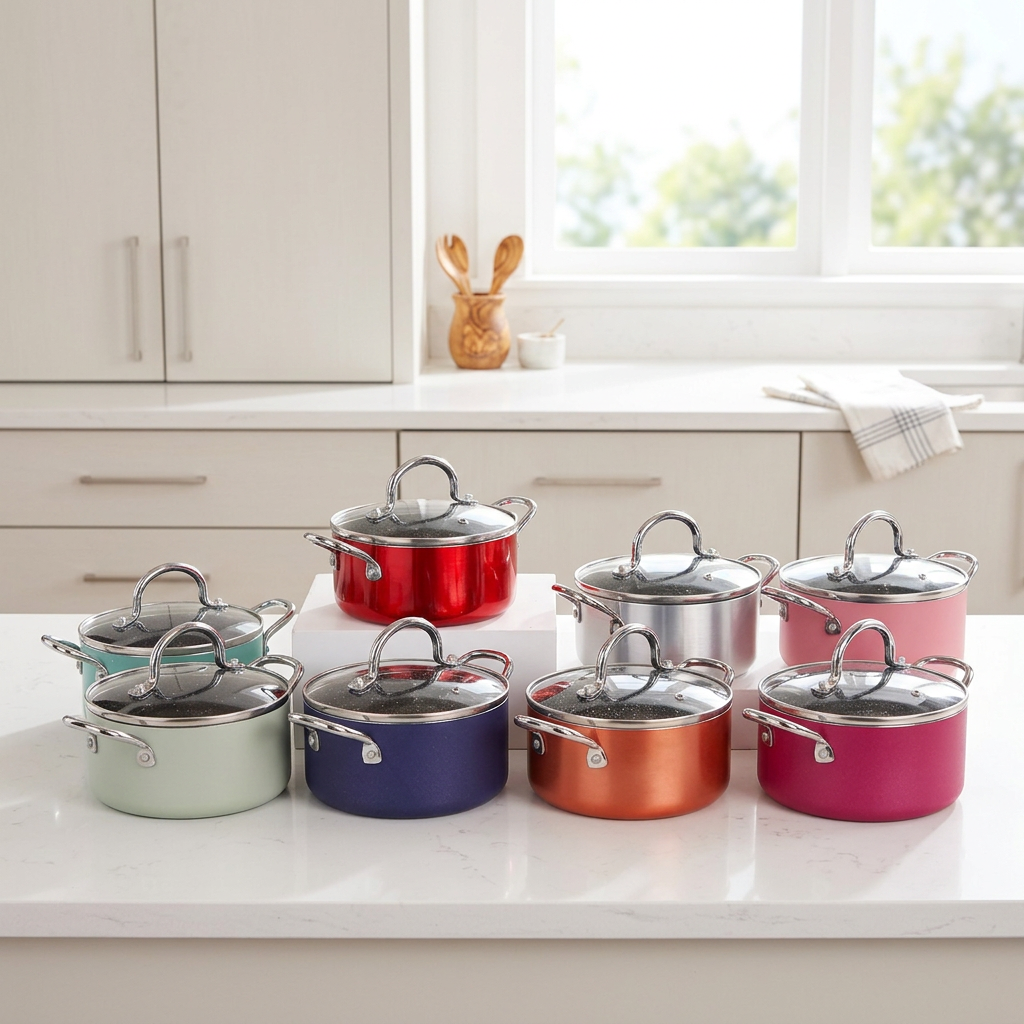
Factory-Direct Product Showcase
Engineered Aluminum & Carbon Steel Cookware Collections
Explore our verified high-volume manufacturing lines. Every configuration below supports private label tailoring, bespoke gauge calibration (2.0 mm to 4.0 mm), robotic spray coatings, and rigorous retail packaging standards.
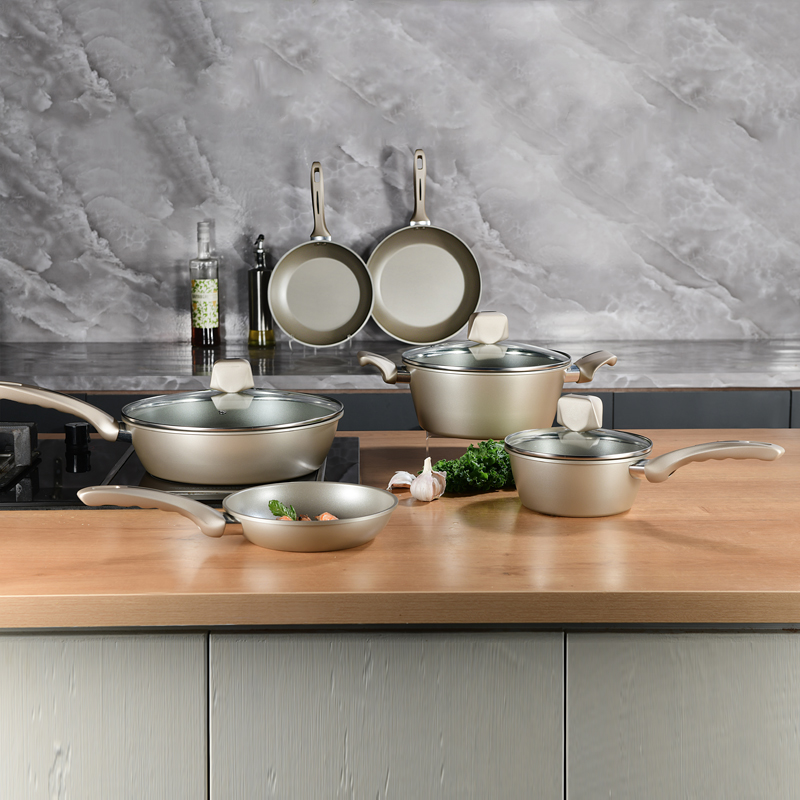
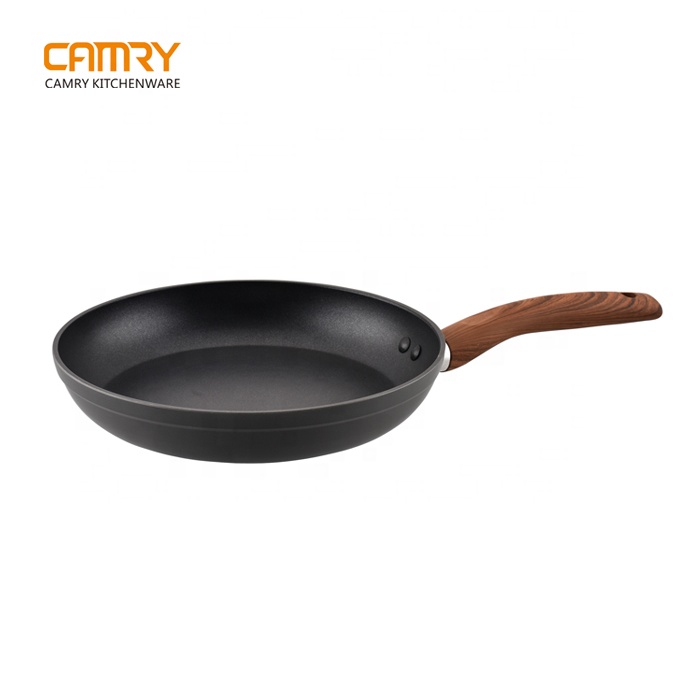
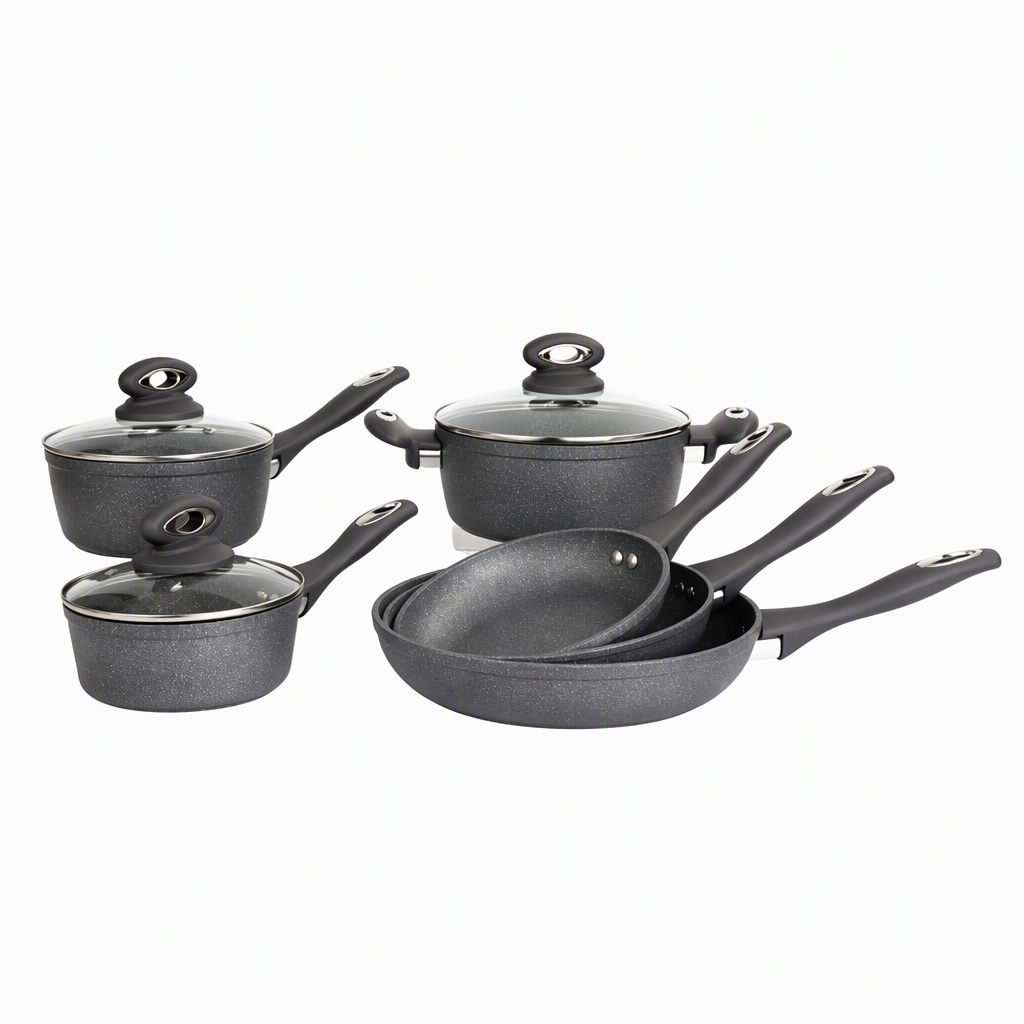
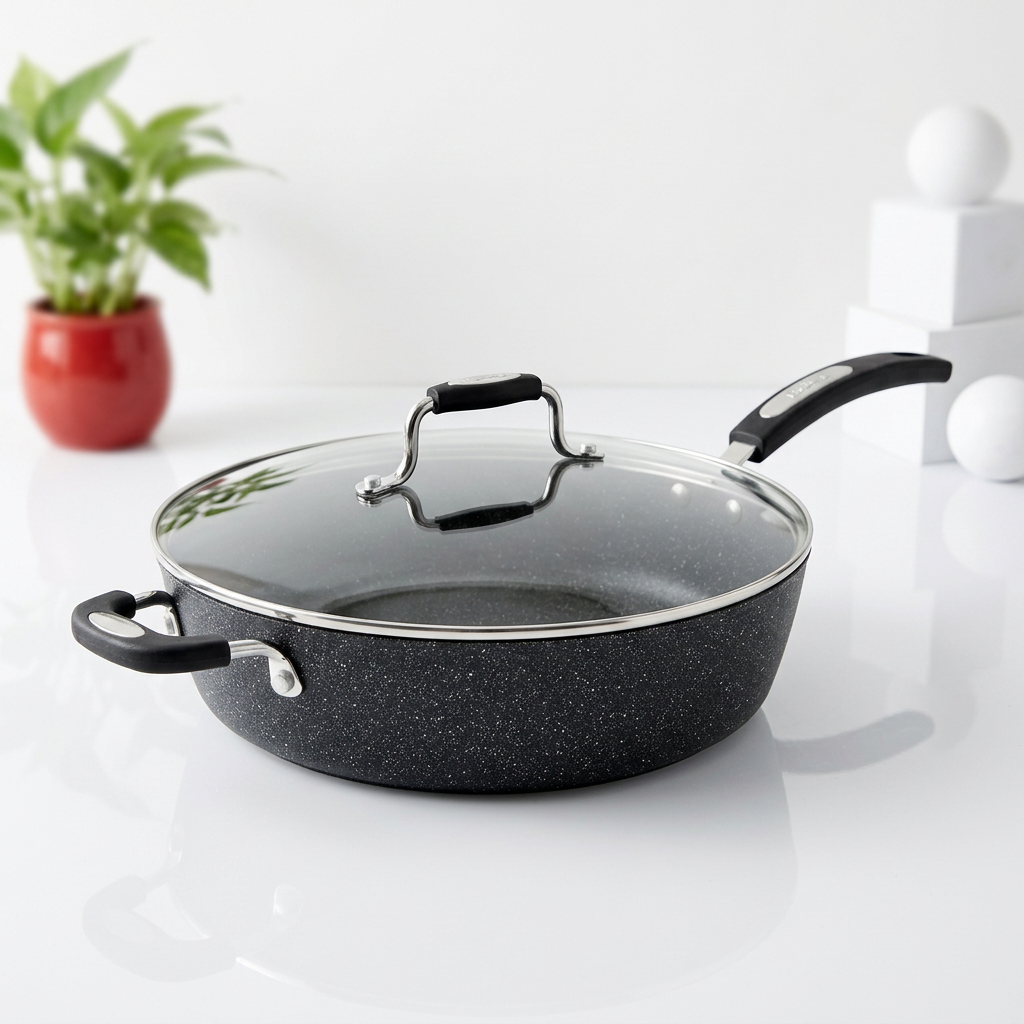
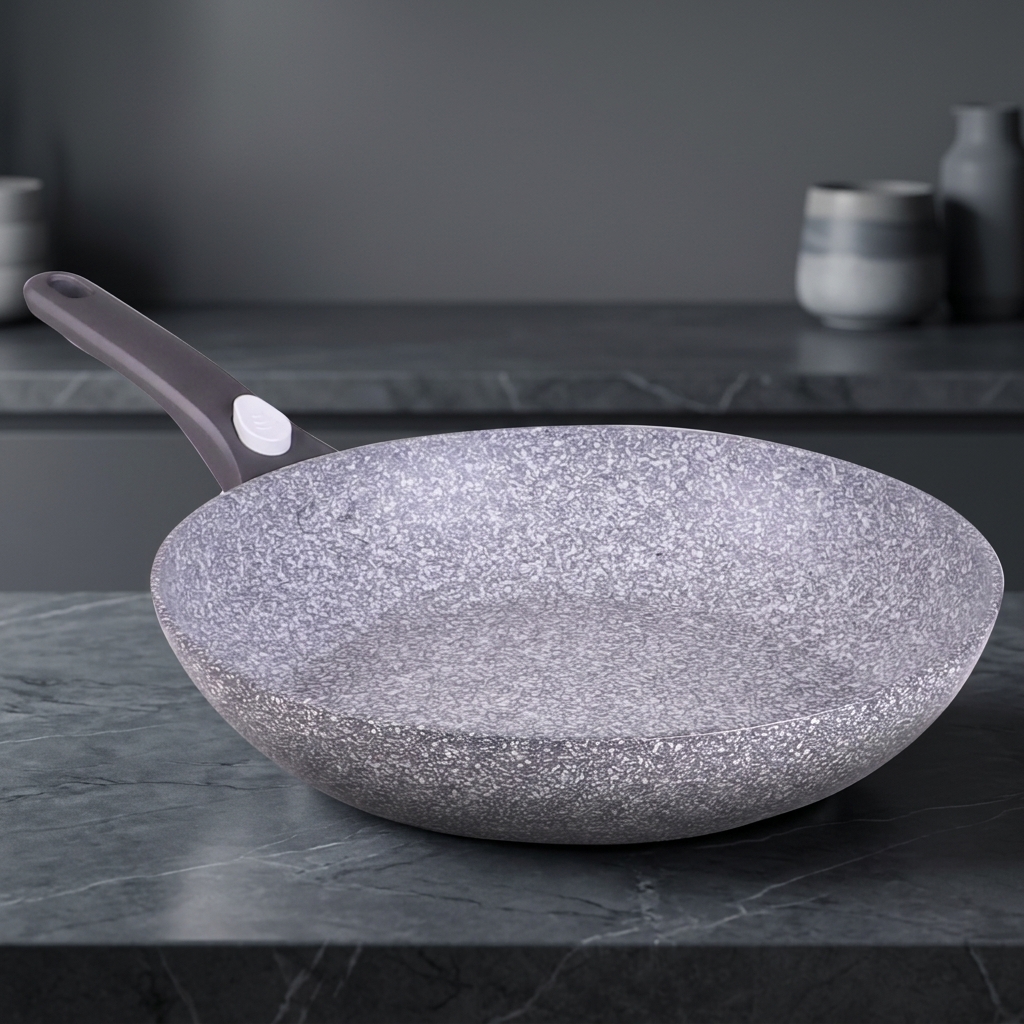
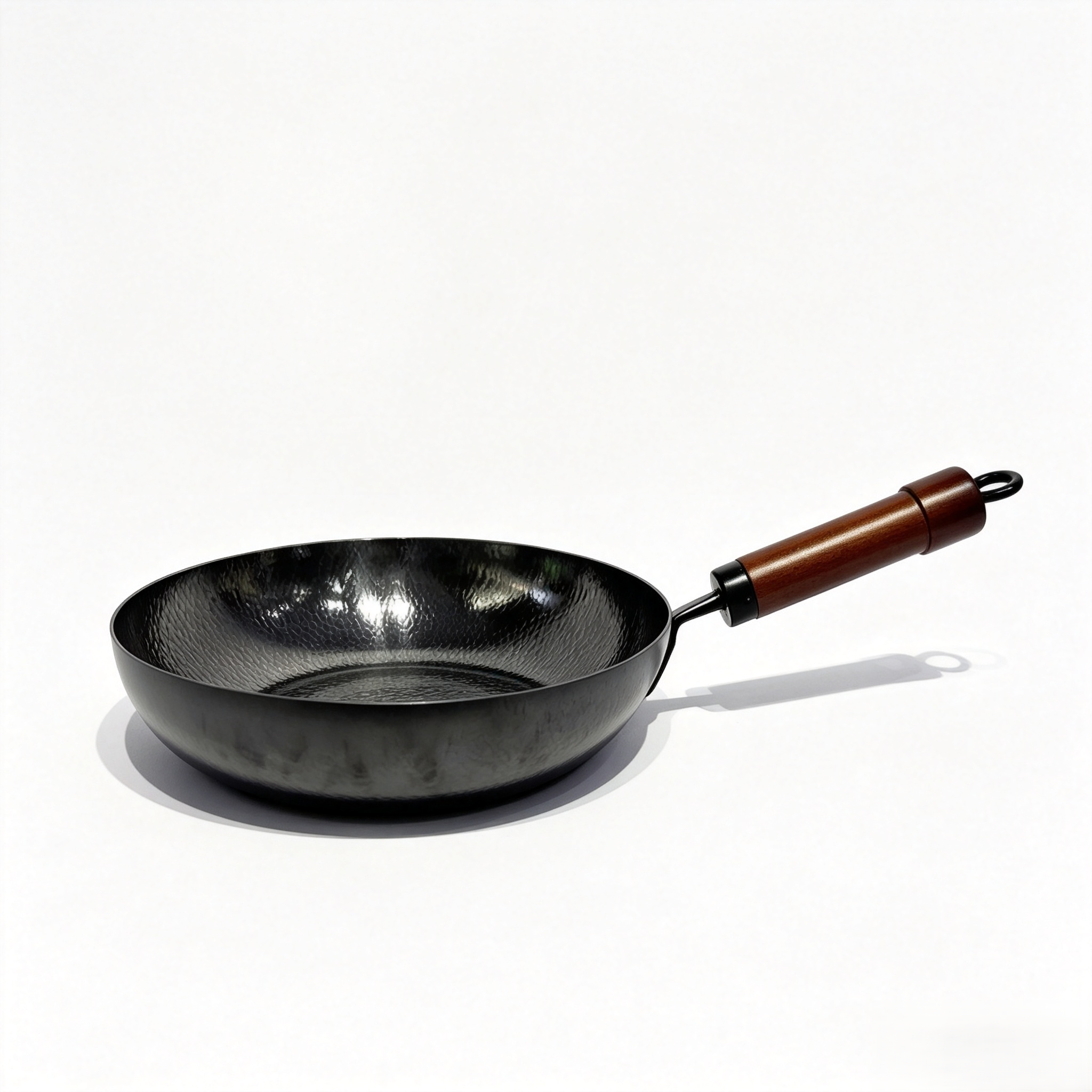
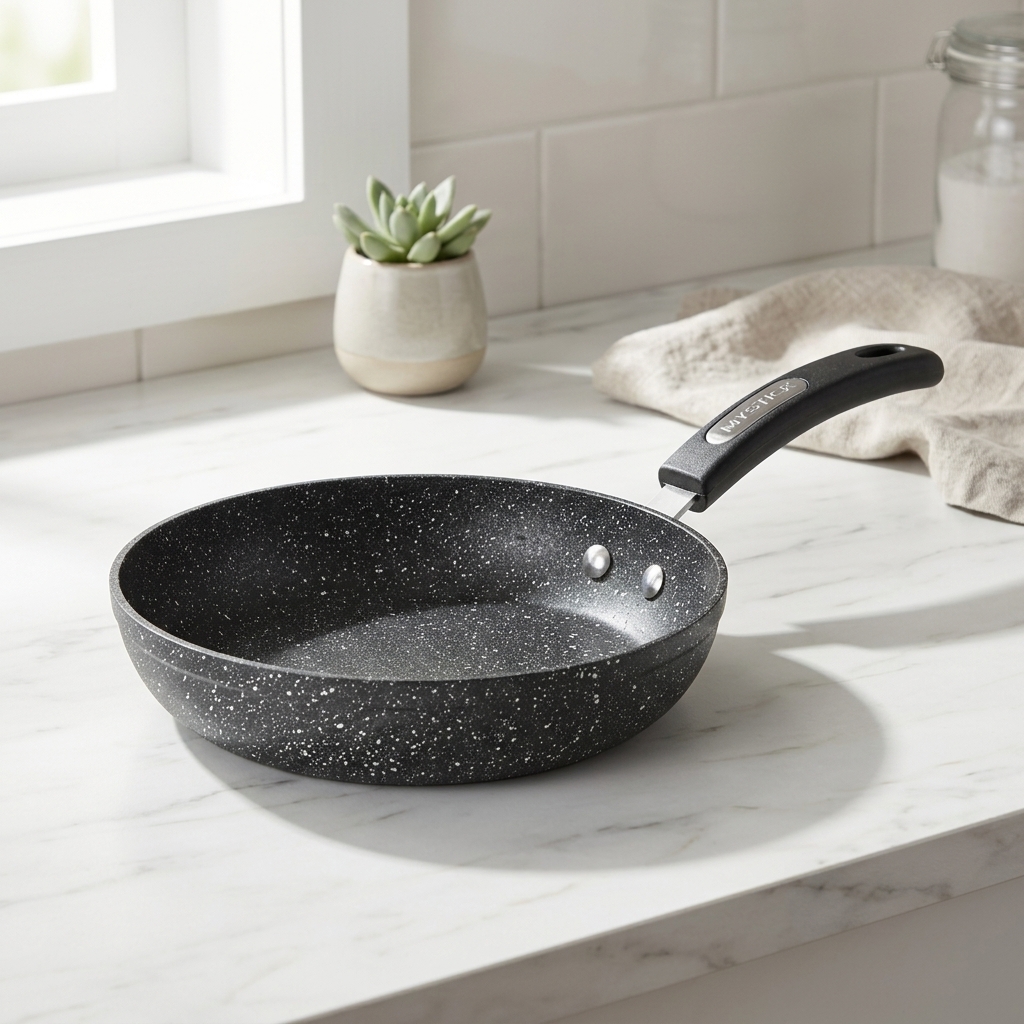
20+
Years Cookware Manufacturing
105+
TÜV Verified Line Specialists
100%
Raw Material & Final Batch QC
18Yrs
Global B2B Supply Consistency
Engineering Whitepaper & Metallurgical Analysis
The Mechanics of High-Volume Pressed Aluminum Cookware
Evaluating drawing depth, yield strength, thermal transfer coefficients, and polymer matrix bonding for high-efficiency procurement teams.
In modern commercial kitchenware distribution, selecting between stamped/pressed aluminum, die-forged aluminum, and carbon steel substrates requires deep insight into thermodynamic performance and landed cost balance. Pressed aluminum cookware relies on high-tonnage hydraulic presses to stamp calibrated pure-grade 3003 or 1050 alloy aluminum discs into rigid cylindrical vessel forms. The crystalline molecular orientation resulting from cold hydraulic drawing provides exceptional mechanical ductility and a uniform thermal conductivity threshold (approximately 205 W/(m·K)), which outperforms both cast iron (~52 W/(m·K)) and AISI 304 stainless steel (~16 W/(m·K)) by an order of magnitude.
For brands and retail importers serving the Nashville and wider Tennessee culinary corridor, this rapid thermal response translates directly to operational cost savings and superior cooking precision. By engineering pan walls with optimized thicknesses (typically between 2.0 mm and 3.2 mm) and reinforcing the bottom profile through induction spray-plate or friction-welded stainless steel induction bottoms (430 alloy), our factory guarantees flat, true warp-resistant contact surfaces suitable for both high-output natural gas burners and modern induction cooktops.
| Evaluation Parameter | Cold-Pressed Aluminum (MEIS) | Heavy-Forged Aluminum | Deep-Drawn Carbon Steel |
|---|---|---|---|
| Base Alloy Grade | Aluminum Alloy 3003 / 1050 Pure Grade | A380 / High-Density Forged Alloy | Q235 / Heavy Gauge Carbon Steel |
| Thermal Conductivity | ~205 W/(m·K) (Ultra-fast heat rise) | ~160-180 W/(m·K) (Sustained retention) | ~50-54 W/(m·K) (Concentrated high heat) |
| Mechanical Weight Profile | Lightweight to Medium (Ergonomic speed) | Substantial / Solid bottom feel | Rigid, high-density metallic matrix |
| Induction Adaptability | Requires perforated or whole-disc base plate | Integrated induction plate / spray bottom | Inherently ferromagnetic (No plate required) |
| Coating Systems Available | Multi-layer PTFE, Granistone, Sol-Gel Ceramic | Reinforced Marble, Titanium Ceramic, Hard Anodized | High-temperature silicone, Enamel, Ceramic |
| Commercial Strategic Fit | Supermarket promotions, fast casual lines, starter sets | Premium retail, bridal registries, gourmet retail | Value utility lines, heavy baking, wok cookery |
Geographic Sourcing Integration
Localized Application Scenarios across Greater Nashville
Bridging Zhejiang manufacturing capacity with the dynamic requirements of Davidson County's hospitality epicenters, direct-to-consumer distributors, and institutional buyers.
High-Turnover Nashville Hot Chicken & Southern Diners
Nashville's booming culinary scenes—spanning downtown Broadway, The Gulch, and East Nashville—demand fast-heating, lightweight pans for intensive prep lines. Quick-turn frying pans with multi-layer reinforced nonstick allow kitchen lines to handle heavy oil, sweet bastes, and cayenne-infused glazes without sticking or surface degradation, guaranteeing fast wash turnaround between seatings.
Urban Short-Term Rentals & Hospitality Furnishings
With thousands of boutique Airbnbs, corporate apartments, and extended-stay properties across Davidson, Williamson, and Rutherford Counties, property managers require durable, visual-first cookware sets. Modern 7-to-9 piece pressed aluminum cookware sets equipped with aesthetic ceramic finishes and soft-touch faux-wood handles provide exceptional perceived value, resisting tourist wear and harsh dishwasher cycles.
Regional Retail Chains & E-Commerce Fulfillment Hubs
Tennessee stands as a key freight hub via the I-40/I-65/I-24 logistics nexus. Importers and regional brand incubators targeting southern mass-merchandisers benefit from lightweight pressed cookware, which significantly reduces ocean-drayage and inland freight expenses compared to heavier cast metals while optimizing retail shelf cube efficiency.
Strategic Industry Intelligence
Market Trends Transforming Cookware Demand in the US South
Anticipating regulatory demands, coating chemistry transitions, and end-consumer purchasing shifts across North American distribution channels.
PFAS / PFOS Transition & Clean-Label Compliance
US buyers are enforcing strict compliance checks against "forever chemicals." Our automated coating booths support gen-next PTFE (strictly PFOA/PFOS/PFNA-free) along with pure inorganic sol-gel ceramics that withstand up to 450°C. For brands selling into Tennessee grocers and regional department chains, complete FDA/California Prop 65 certification dossiers are standard deliverables.
The Surge in Induction Range Adoption
As modern residential developments across Nashville shift away from natural gas hookups toward clean induction and glass-ceramic cooktops, non-ferrous aluminum pans must evolve. Our factory utilizes heavy stamping presses to mechanically integrate perforated 430 magnetic stainless steel bottom plates, ensuring full induction heating resonance without risk of bottom delamination or thermal bowing.
Modular Handles & Space-Optimized E-Commerce Kits
Rising warehouse fulfillment surcharges make compact packaging essential. We specialize in stackable, detachable-handle cookware configurations that reduce retail box cubic volume by up to 45%. This provides immediate freight savings for direct-to-consumer merchants operating out of Middle Tennessee logistics centers.
Verified Manufacturer Capabilities
Why Global Brands Partner with Zhejiang MEIS Kitchenware
Operating our own pressing, CNC finishing, surface treatment, coating, and assembly lines in Jinhua, Zhejiang—providing end-to-end quality governance without trading intermediaries.
TÜV Rheinland On-Site Assessed
Our Dongnan Industrial Zone facility undergoes continuous on-site third-party auditing by TÜV Rheinland. We maintain transparent operational verification across machinery health, environmental controls, and fair labor practices, shielding Western brand partners from supply chain liability.
In-House Mold & Tooling Shop
With internal precision CNC centers and industrial lathes, we eliminate third-party tooling delays. From custom flared-edge lips to bespoke helper handle ergonomic geometries, initial physical samples can be machined, cast, and validated within 14 business days.
In-House Physical & Chemical Lab
Every batch undergoes rigorous quality assurance inside our internal testing center: continuous neutral salt-spray exposure (ASTM B117), mechanical cross-hatch coating adhesion checks, handle dynamic torsion fatigue testing, and high-temp oil cycle stress validation.
Full Export Documentation & DDP
Having supplied overseas importers for more than a decade, our export division manages turnkey logistical pathways from Ningbo/Shanghai ports directly to Savannah, Charleston, or Houston rail terminals with continuous cargo tracking and complete customs classification.
Buyer Knowledge Base
Frequently Asked Questions by North American Importers
Critical insights covering lead times, compliance standards, minimum production volumes, and landed container logistics.
What are the key technical differences when specifying pressed aluminum versus forged aluminum?
Pressed aluminum cookware is punched and cold-drawn from an aluminum alloy sheet of consistent thickness (typically 2.0 mm to 3.0 mm). This creates a very fast-heating, lightweight vessel that maintains a highly competitive price point for volume promotions and starter sets. In contrast, forged aluminum cookware uses a die-forging press that concentrates mass into the base (4.0 mm to 5.0 mm) while thinning the sidewalls, resulting in greater heat retention and enhanced resistance to warping under extreme temperature swings.
How does your factory ensure compliance with US and Tennessee consumer safety standards?
All nonstick raw materials used at Zhejiang MEIS are formulated without PFOA, lead, or cadmium. We provide comprehensive FDA 21 CFR 175.300 compliance documentation and support California Proposition 65 total lead testing. Third-party testing partners like SGS, TÜV, and Intertek regularly audit our cured coating lots to guarantee chemical migration levels remain well below federal thresholds.
What is the standard Minimum Order Quantity (MOQ) for custom-branded orders?
For custom full-set runs (including custom color formulations, silicone-rim glass lids, and printed four-color gift packaging), our standard production MOQ is between 1,000 and 1,500 sets per model. For standalone frying pans or specialized individual SKUs, initial trial orders can start from 50 to 500 units depending on raw material stock and coating batch cycles.
What are the lead times for ocean shipments serving the Nashville / Middle Tennessee corridor?
Typical mass production cycles take between 35 and 45 days after deposit confirmation and sample approval. Transit from Ningbo or Shanghai port via East Coast water routes (Savannah or Charleston) or Gulf ports (Houston/Mobile), combined with inland intermodal rail transfer to the Nashville terminal, generally averages an additional 28 to 35 days, providing a predictable replenishment timeline for local inventory management.
Can you support customized induction bases for commercial and home use?
Yes. We offer both friction-pressed hole-pattern induction discs and full-coverage bonded induction bases. The magnetic steel base is applied with automated hydraulic pressure to prevent thermal separation and ensure optimal magnetic resonance across all commercial and residential induction cooktops.