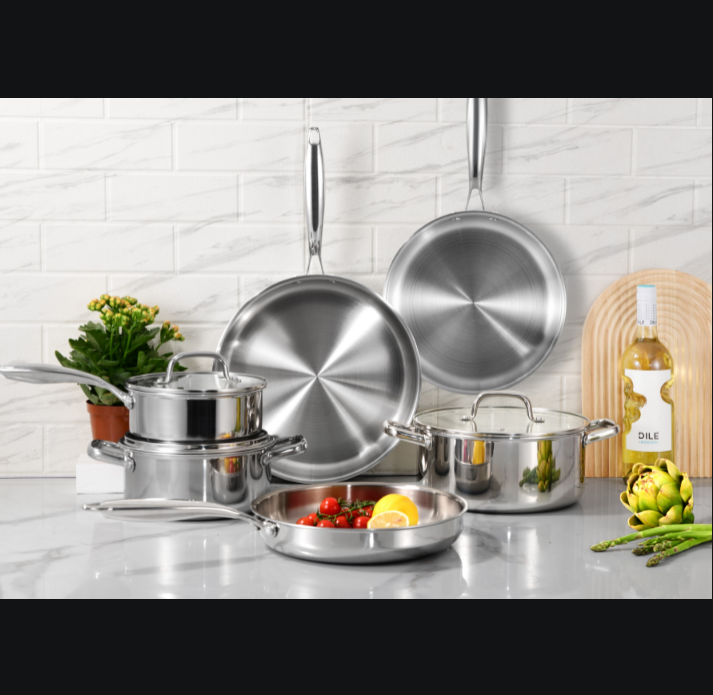
Factory Price Tri-ply Stainless Steel Cookware Set Non-Stick Interior Glass Cover
Classic flat-bottom design with heavy aluminum core encapsulated between 304 and 430 magnetic stainless steel. Premium non-stick coating suited for oven roasting.
Engineered for high thermal shock resistance, induction compatibility across urban Hungarian households, and strict compliance with EU Food Contact Regulations.
Classic flat-bottom design with heavy aluminum core encapsulated between 304 and 430 magnetic stainless steel. Premium non-stick coating suited for oven roasting.
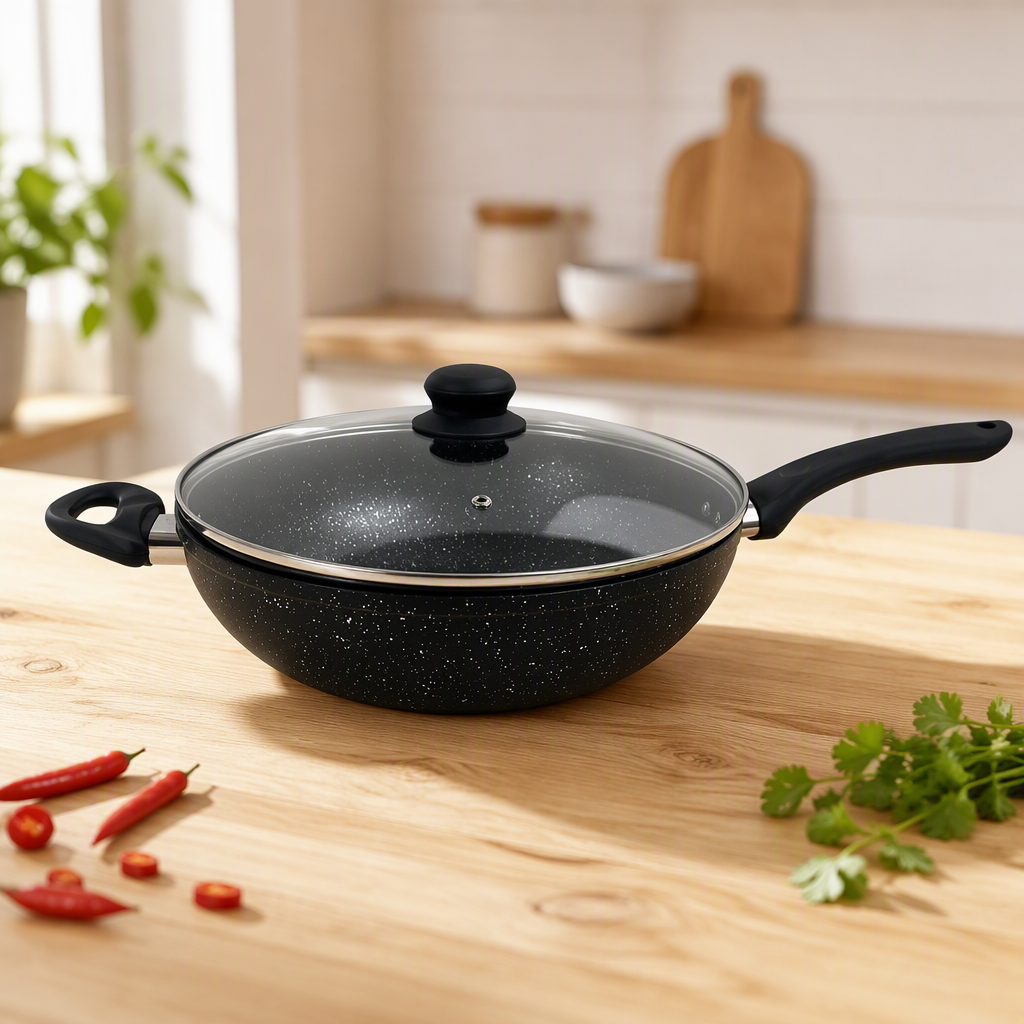
Die-forged 4.5mm aluminum rim with multi-layer mineral granite coating. Ergonomic heat-resistant handle engineered for gas and induction hobs.
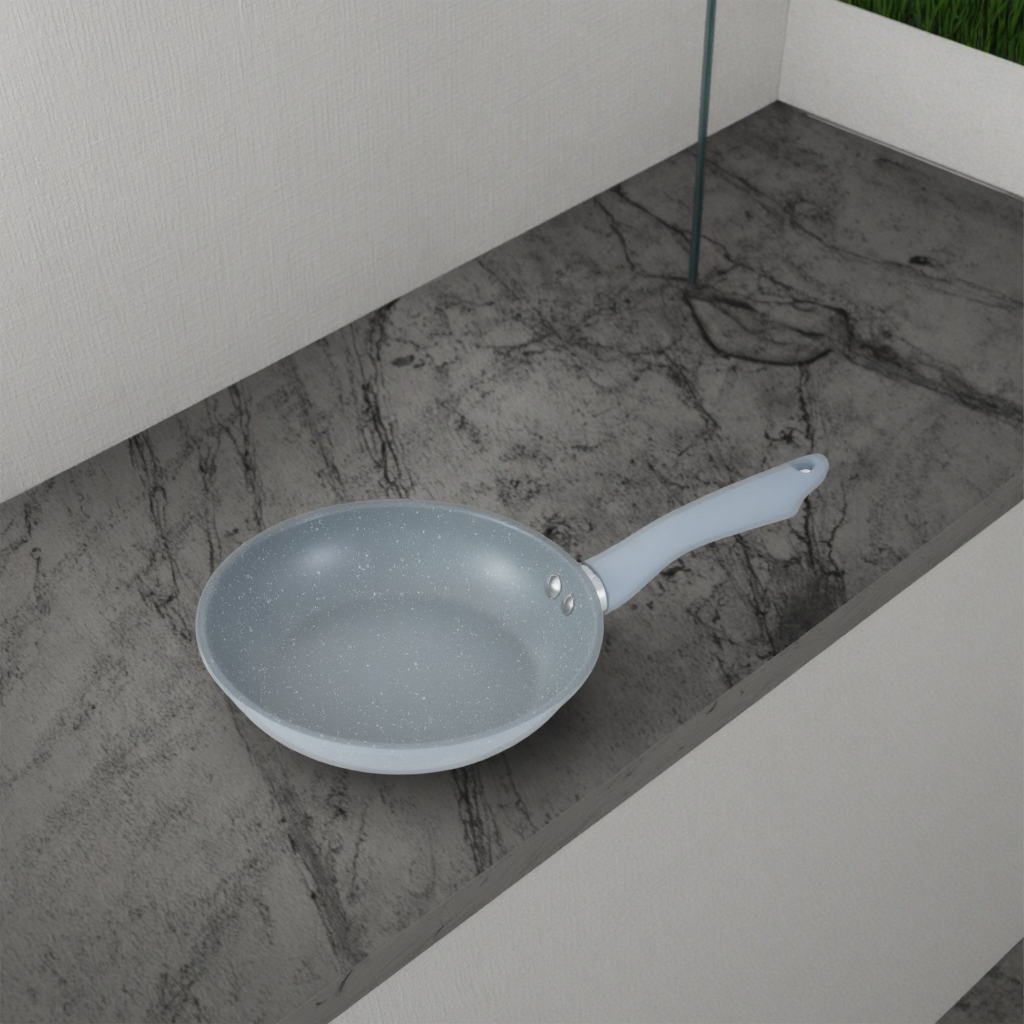
Eco-friendly sol-gel ceramic non-stick interior over rigid carbon steel matrix. Delivers ultra-fast heat transference with zero PFOA/PTFE off-gassing.
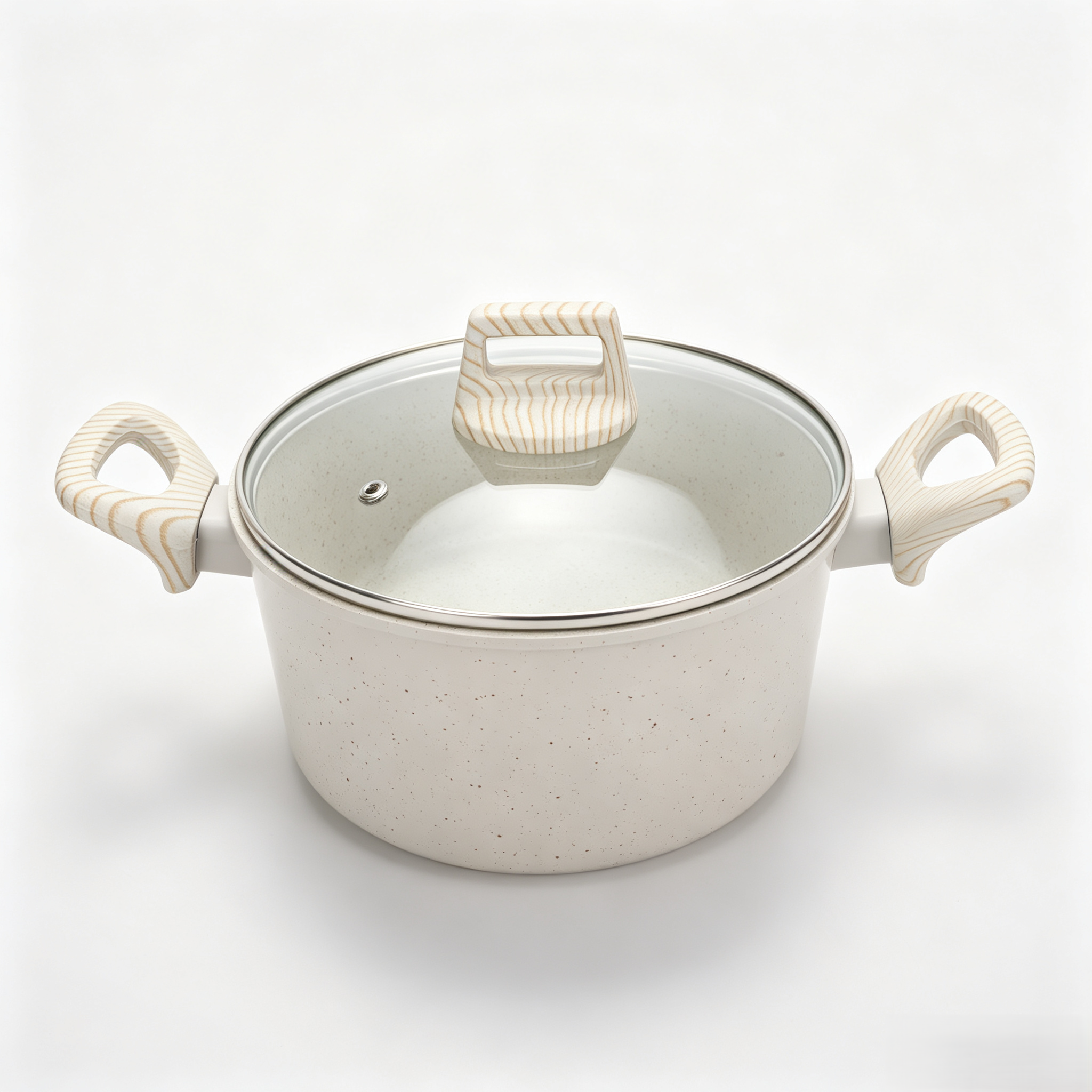
Ideal for slow-simmering Hungarian Goulash and Pörkölt. Full induction base distribution avoids hot spots; oven-safe bakelite side handles.
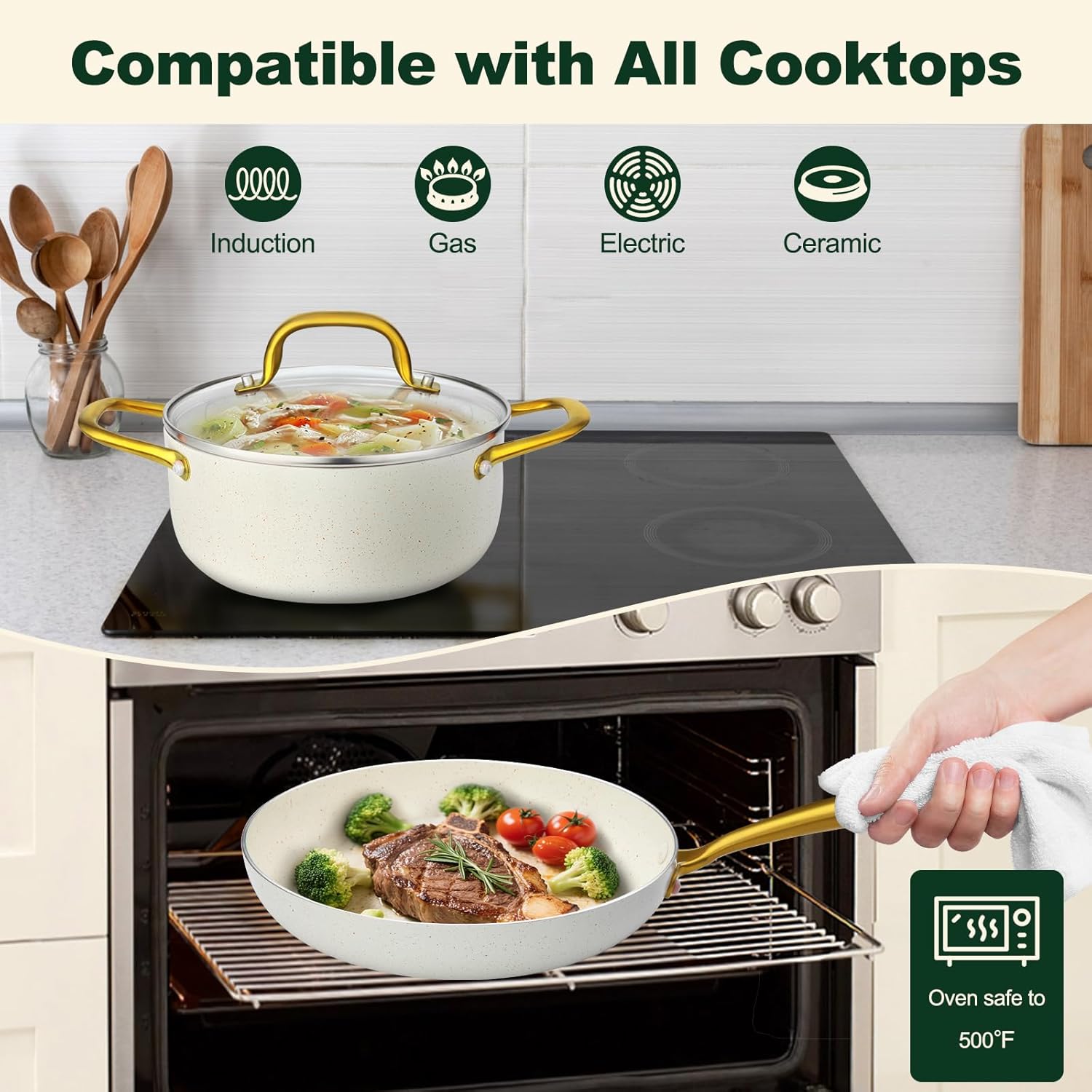
Architectural-grade PVD exterior coating paired with toxic-free interior ceramic matrix. Complete retail package ready for European gift boxes.
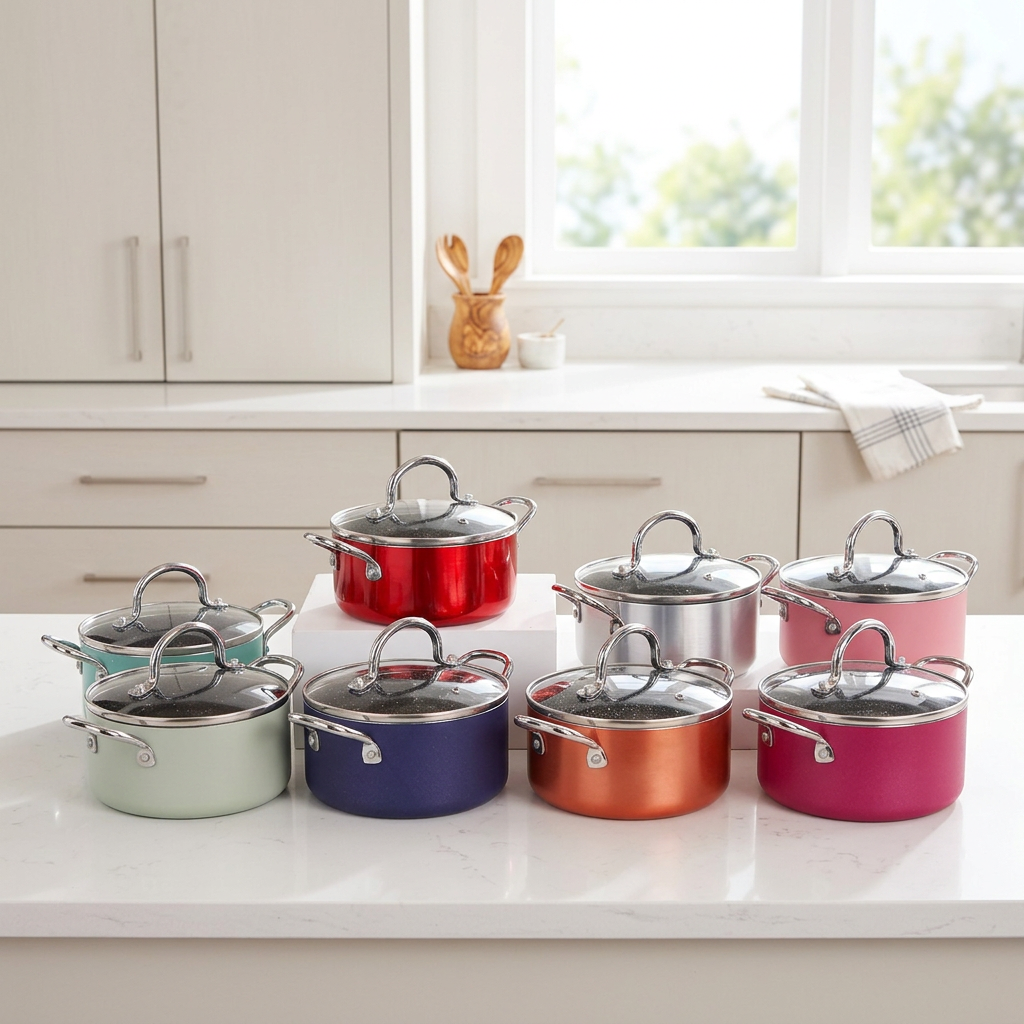
Compact saucepan designed for single-portion cooking, sauce reductions, and melting fats. Features high-clarity tempered glass lid and colorful exterior finish.
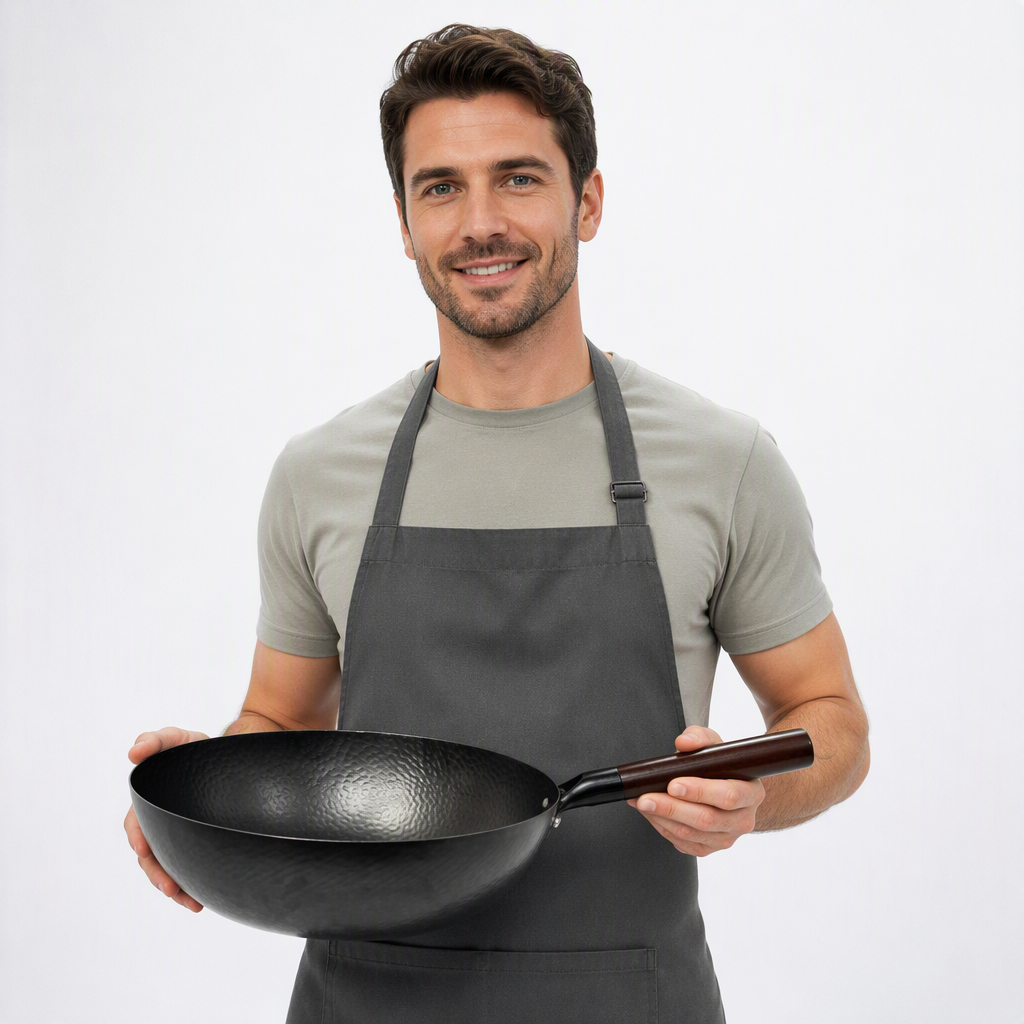
High-temperature gas nitridation surface treatment providing rust protection and non-stick seasoning retention without chemical polymer layers.
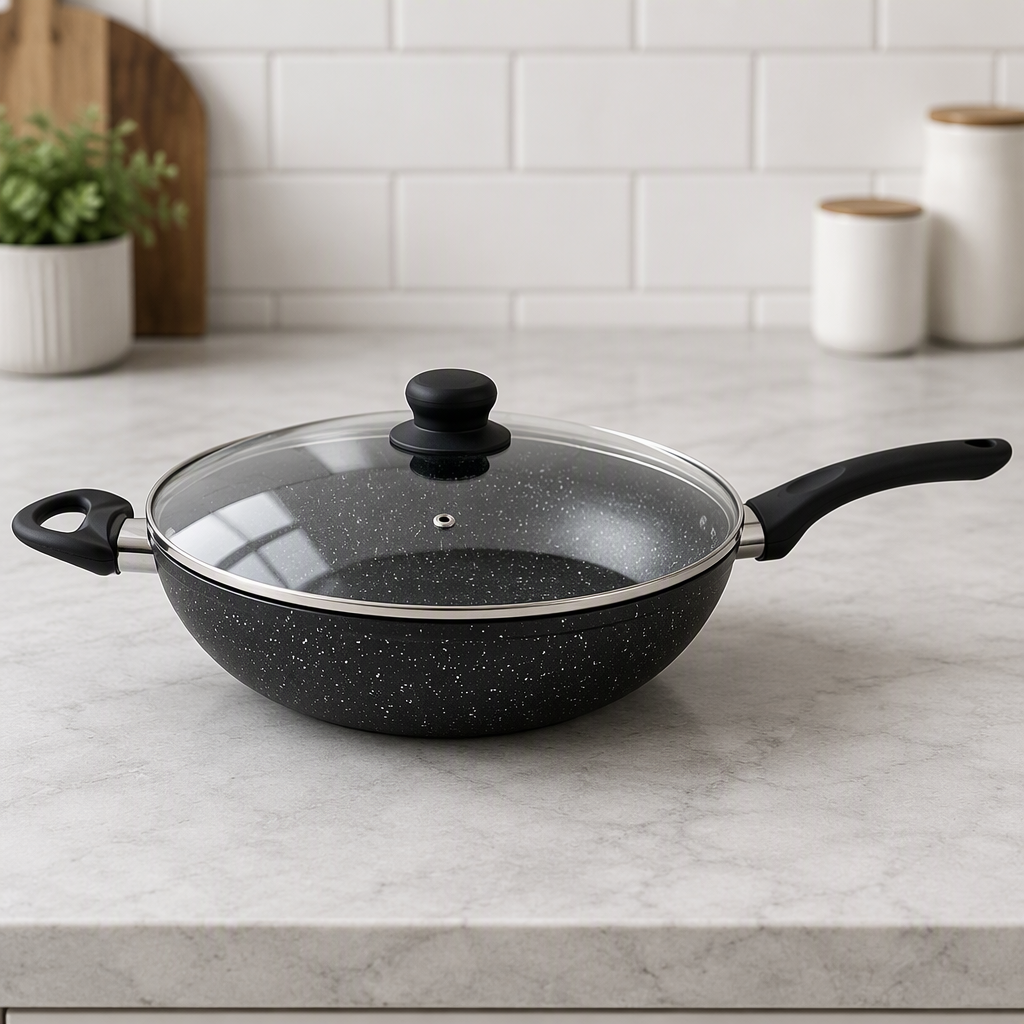
Heavy-duty forged aluminum body with multi-speckle marble layer. Deep sidewalls reduce fat splatters during high-heat frying on induction stoves.
An in-depth market assessment for retail chains, distributors, and kitchenware importers operating across Hungary, Romania, Slovakia, and Austria.
The Budapest nonstick skillet market represents a critical commercial crossroads in Central Eastern Europe (CEE). Driven by rising urban apartment renovations in districts such as Erzsébetváros and Újlipótváros, shifting dietary preferences toward lower-fat skillet frying, and stringent European Union regulatory frameworks regarding fluorinated compounds (PFAS/PFOA), Hungarian buyers require hardware suppliers capable of delivering both extreme physical durability and verifiable chemical compliance.
Importing nonstick cookware into Hungary involves specific supply chain nuances. With Budapest serving as the central logistics hub via the BILK Logistics Center and Csepel Free Port, importers must balance sea freight lead times from Asian manufacturing bases (via Slovenia’s Port of Koper or Germany’s Hamburg Port) with tight retail seasonal display windows. Furthermore, the Hungarian market is characterized by a dual demand structure: price-sensitive retail chains demanding economical pressed aluminum cookware, alongside growing premium segments seeking thick-gauge forged aluminum and nitrided carbon steel skillets.
Hungarian consumers are rapidly shifting away from legacy single-layer PTFE coatings to multi-layer mineral-reinforced ceramic and granite surfaces. Cookware with full-bound magnetic steel induction plates now accounts for over 68% of urban sales in Budapest due to the ubiquity of glass-top induction cooktops in modern housing developments.
Comparative matrix analyzing global OEM manufacturers, European domestic brands, and specialized Asian export hubs serving Hungarian buyers.
| Manufacturer / Brand | Primary Production Base | Core Specialization | EU Compliance Certification | Custom OEM/ODM Flexibility | Budapest Market Suitability |
|---|---|---|---|---|---|
| Zhejiang MEIS Kitchenware Co., Ltd. | Jinhua, Zhejiang, China | Forged/Pressed Alu & Carbon Steel | TÜV Rheinland, LFGB, REACH, FDA | Very High (Full Custom) | Top Choice (High Margin B2B) |
| Tefal (Groupe SEB) | Rumilly, France | PTFE Coated Aluminum Pans | CE, EU 1935/2004 | Low (Standardized Brand) | High Retail Presence (Low Margin) |
| Ballarini (Zwilling Group) | Rivarolo Mantovano, Italy | Heavy-Gauge Granite Pans | EU Standard, Italian Food Grade | Medium (Private Label Select) | Premium Retail / Specialized Stores |
| Sanignacio (Bergner Group) | Zaragoza, Spain / China OEM | Enameled & Coated Cookware | EU Standard, LFGB | Medium (Catalog Program) | Supermarket Campaigns |
| Fissler GmbH | Idar-Oberstein, Germany | Premium Stainless & Coated Pans | DIN EN ISO 9001, LFGB | Low (Brand Focus) | High-End Budapest Department Stores |
| Ningbo Cookware Corp. | Ningbo, Zhejiang, China | Pressed Aluminum Mass Retail | ISO 9001, FDA | High (Standard OEM) | Discount Chains / Hypermarkets |
| Guangdong Master Group | Yunfu, Guangdong, China | Stainless Steel & Nonstick Clad | TÜV, GS, LFGB | High (High MOQs) | Large Retail Importers |
| Moneta Cookware | Pesaro, Italy | Fine Ceramic Coated Aluminum | EU 1935/2004, REACH | Low / Medium | Eco-Specialty Shops in Hungary |
| Korkmaz Kitchenware | Istanbul, Turkey | Granite Coated Alu & Stainless | TSE, EU Standards | Medium (Regional Wholesale) | Middle East / CEE Wholesale Hubs |
| Woll Cookware | Saarbrücken, Germany | Hand-Cast Aluminum Skillets | TÜV GS, LFGB | Low (Strict Proprietary) | Niche Gourmet Kitchenware Shops |
Analytical Summary: While European domestic heritage brands hold strong consumer awareness in high-end Budapest shopping centers (such as Westend or Mammut), global OEM leaders like Zhejiang MEIS Kitchenware Co., Ltd. empower local Hungarian private labels, hypermarket brands, and e-commerce importers to achieve identical structural quality (4.5mm thick forged aluminum bodies, multi-layer granite coatings, full-bound induction discs) at a fraction of the landed procurement cost, yielding significantly elevated gross margins for B2B buyers.
Testing nonstick skillets against the specific thermal and chemical demands of traditional Hungarian cooking methods and local kitchen infrastructure.
Hungarian stew bases demand heavy lard/oil browning of onions and paprika at elevated temperatures. Our thick 4.0mm–4.5mm forged aluminum bases maintain structural flat alignment without warping, preventing localized overheating that burns delicate ground red paprika (fűszerpaprika).
Hungarian thin crepes (Palacsinta) require flawless low-friction surface release across dozens of rapid heating cycles. Our multi-layer ceramic and granite matrices allow ultra-thin batter sliding without butter build-up, ensuring effortless cleaning even under intense domestic usage.
With residential electricity rates influencing household habits in Hungary, cookware energy conversion is vital. Our spray-impacted perforated magnetic base plates maximize electromagnetic induction efficiency on Siemens, Bosch, and Electrolux induction tops popular in Budapest apartments.
In independent laboratory testing simulating 5,000 continuous Hungarian home cooking cycles (involving repeated thermal quenching from 220°C to 20°C tap water), MEIS granite-coated forged aluminum skillets exhibited zero micro-cracking, blistering, or delamination—exceeding European standard EN 12983-1 requirements.
Essential guidance for Hungarian buyers ensuring product safety, environmental compliance, and commercial competitiveness.
How Zhejiang MEIS Kitchenware coordinates end-to-end B2B shipments from factory gates to Central European distribution hubs.
Shipments depart Ningbo or Shanghai Port to the Port of Koper (Slovenia). From Koper, direct block trains haul containers directly to the BILK Terminal in Budapest within 24–28 days total ocean/rail transit time.
Under HS Code 7615.10 (Aluminum table, kitchen or domestic articles), we provide pristine Certificates of Origin (Form A / RCEP), EU Conformity Declarations, and precise packing manifests to ensure zero delays at Hungarian NAV customs points.
All bulk master cartons are master-stacked on standardized Euro-pallets (800 x 1200 mm) with corner protective edge boards and stretch wrapping, ready for immediate unloading at Csepel or suburban Budapest distribution centers.
Located in Dongnan Industrial Zone, Shuxi Street, Jinhua, Zhejiang—operating 20+ years of dedicated nonstick cookware manufacturing under TÜV Rheinland on-site audit certification.
Zhejiang MEIS Kitchenware Co., Ltd. operates an integrated 105-person manufacturing plant housing advanced heavy-tonnage hydraulic drawing presses, CNC base-flattening lathes, automatic ultrasonic degreasing lines, and robotic multi-station spray coating booths.
Every production batch destined for international export undergoes rigorous in-house laboratory validation:
Addressing essential technical, commercial, and regulatory queries for sourcing nonstick skillets from Zhejiang MEIS Kitchenware Co., Ltd.
Connect directly with our engineering and export trade managers to receive custom factory quotations, compliance documentation, and physical sample kits delivered to your headquarters.