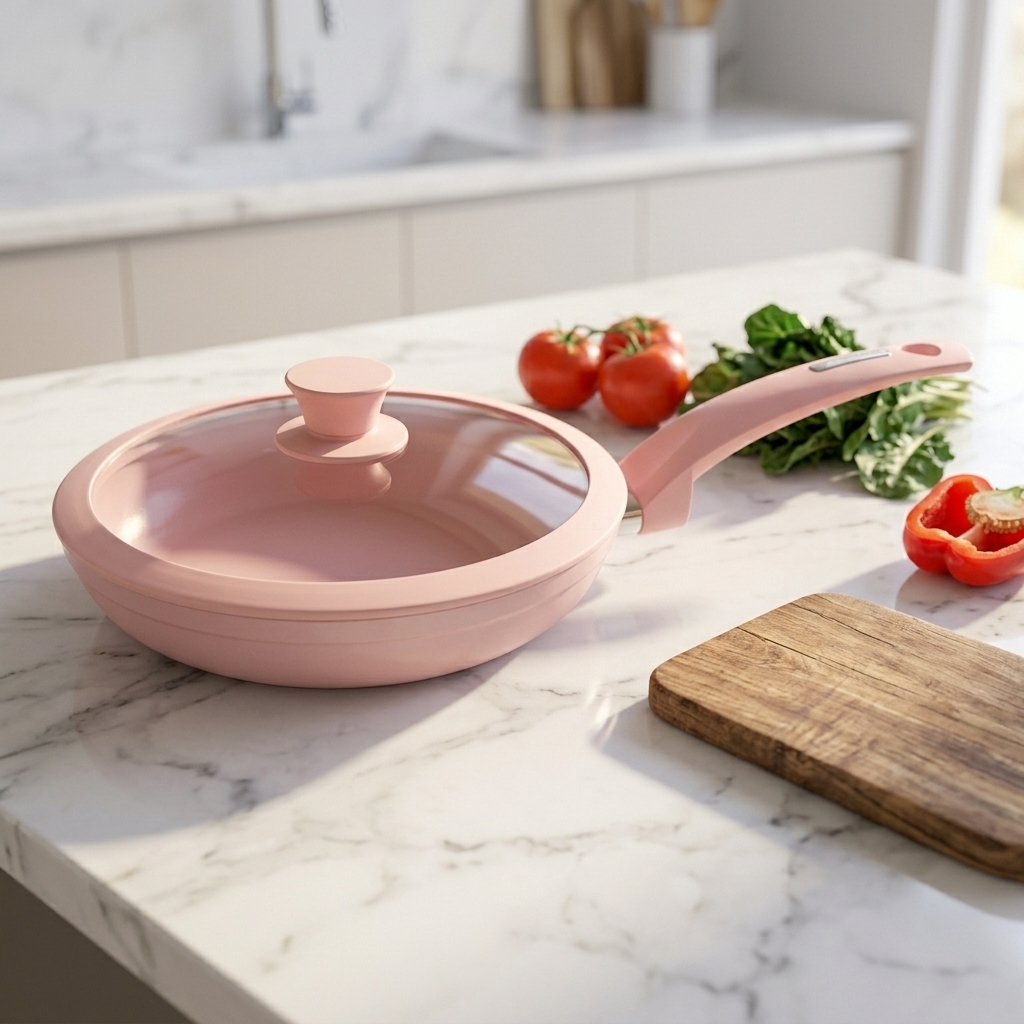
Factory Price Customized Colorful 22 cm Forged Aluminium Non-Stick Fry Pan with Glass Cover Durable for All Heat Sources
View Details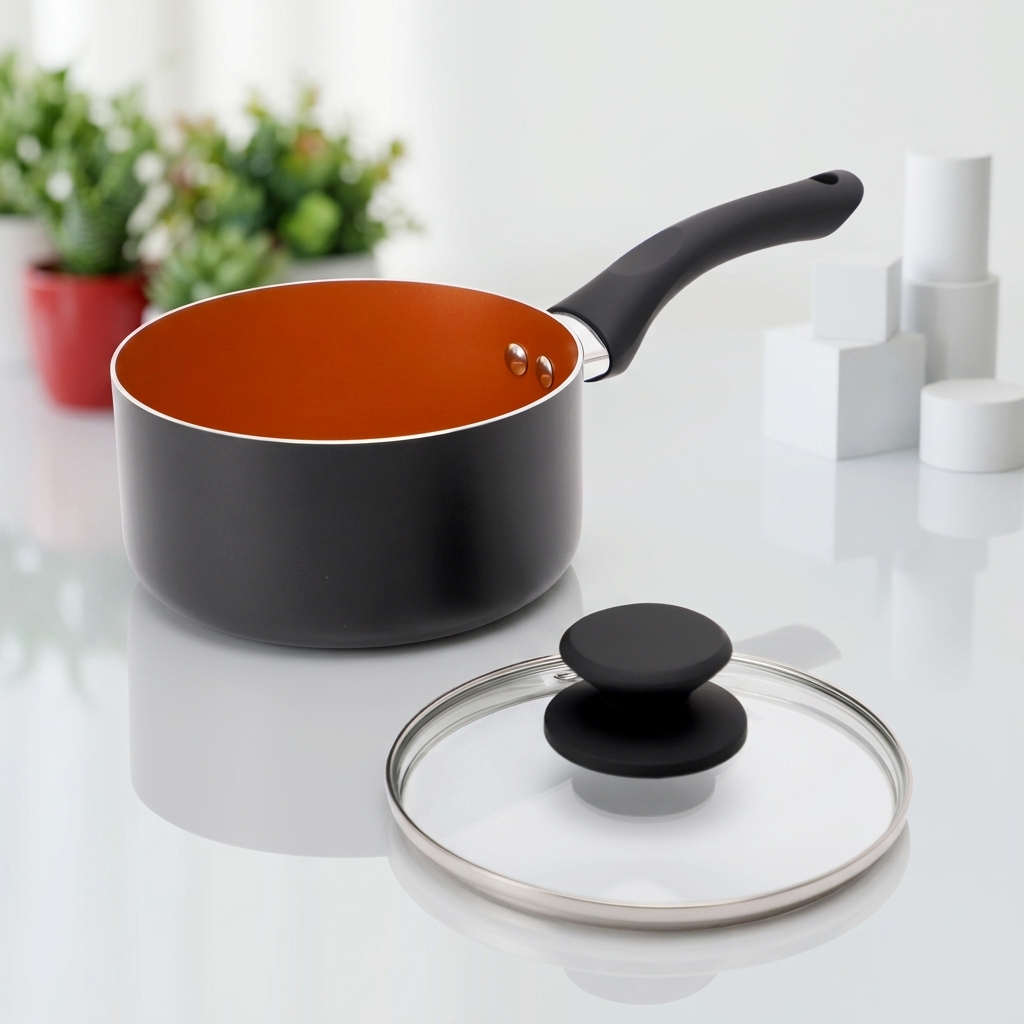
1.5QT Modern Metal Sauce Pan Glass Lid Non-Stick Coating 2-Layer Ceramic Interior Eco-Friendly Black Bakelite Soft Touch Handle
View Details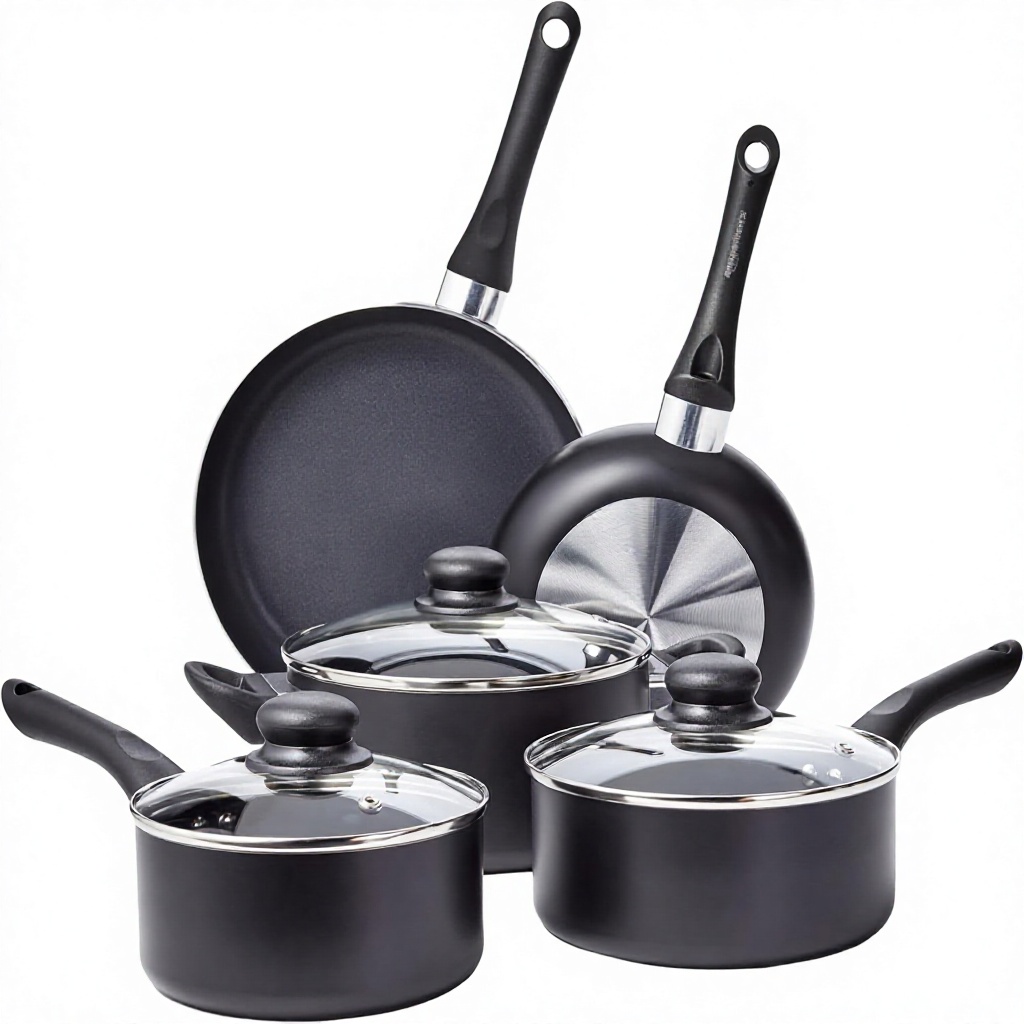
Basics Aluminum Ceramic Non-Stick 8-Piece Cookware Set with Gas & Induction Ready Pots Pans Plastic Hand Grip Pot Cover Black
View Details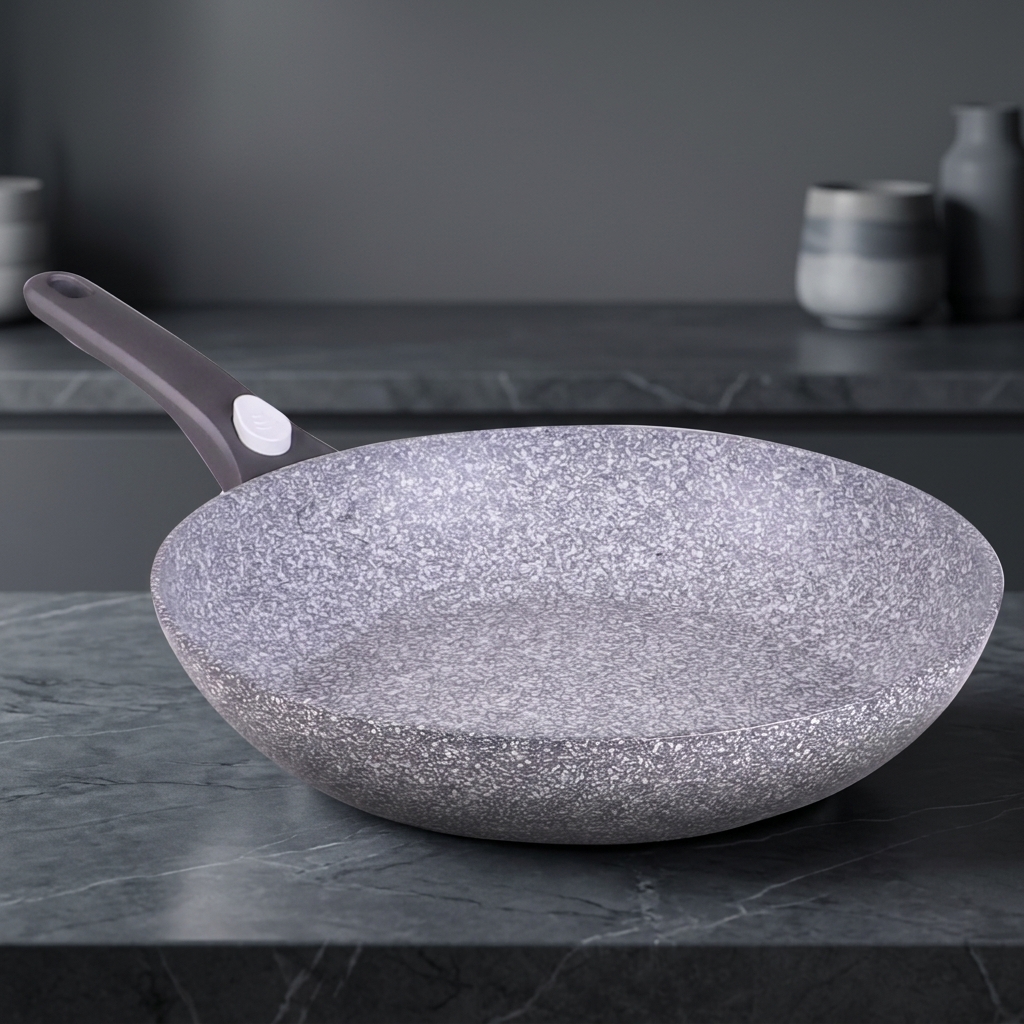
Granite Coating Non-Stick 9 Inch 24cm Forged Aluminum Fry Pan with Detachable Handle Soft Touch Coating Induction Ready
View Details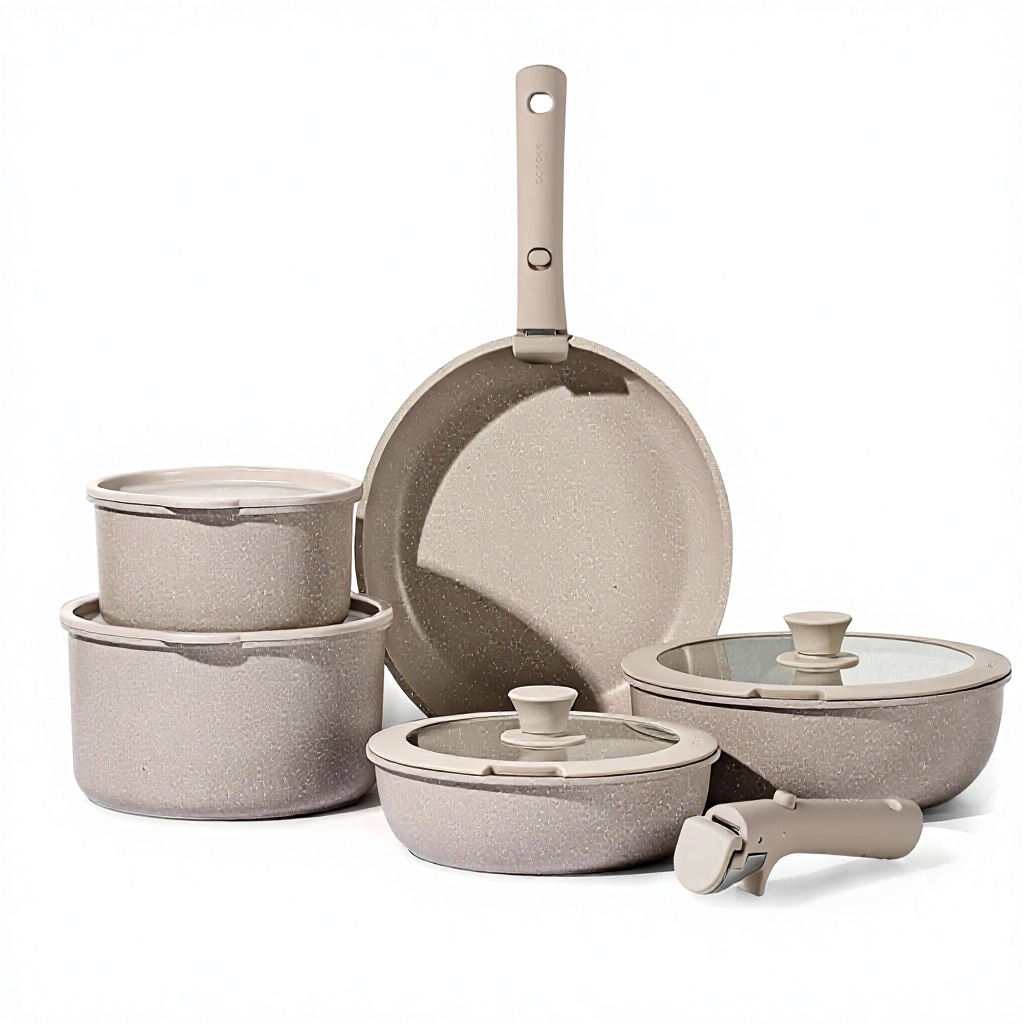
CAROTE 19-Piece Non-Stick Cookware Set Detachable Removable Handles Induction Compatible Oven Safe Dishwasher Safe Gas/Electric
View Details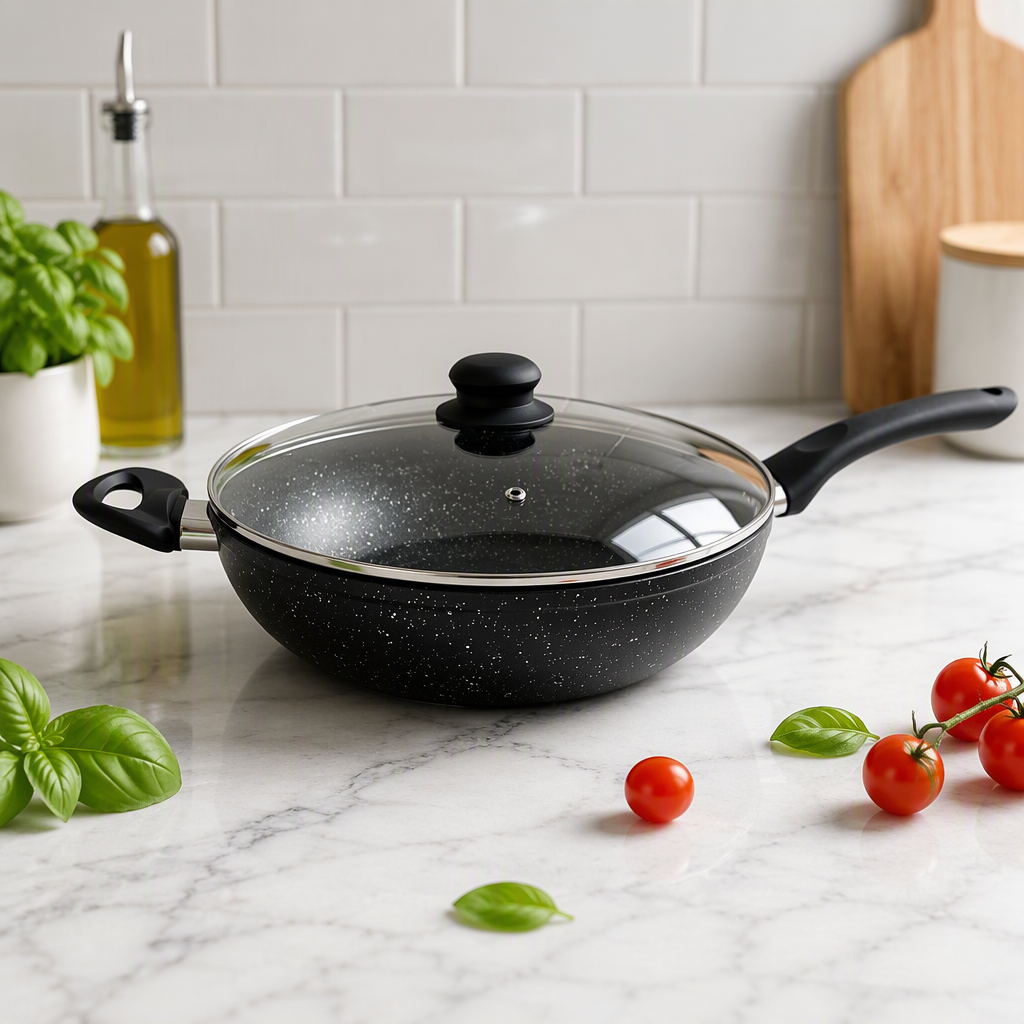
26 cm Non Stick Forged Aluminum Wok Marble Coating Glass Lid Cool Handle 3.5 L for Gas and Induction Cookers
View Details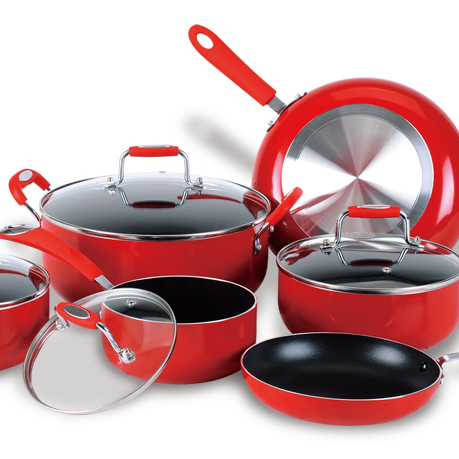
Fashion Kitchen Set of Nonstick Cookware
View Details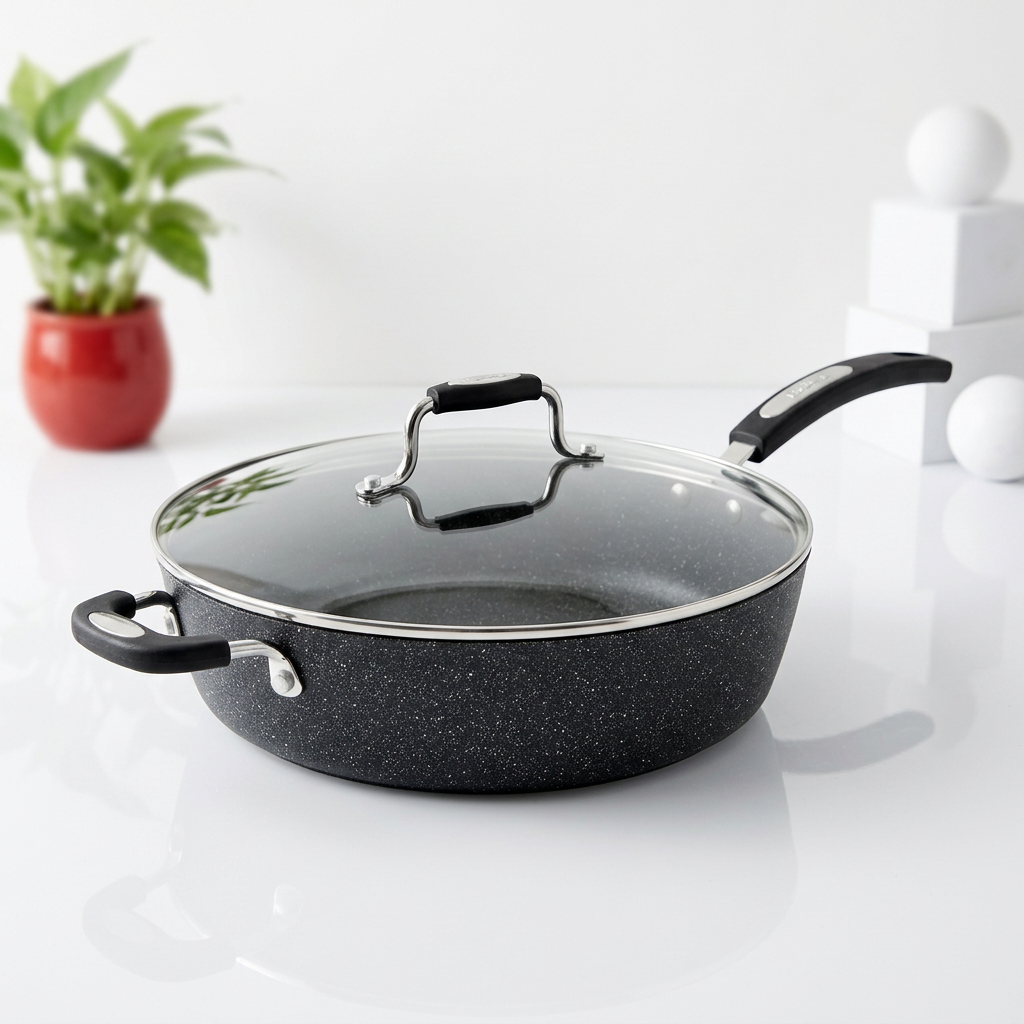
Classic 11 Inch (28cm) Non-Stick Cookware Set Deep Fry Pan Helper Handle Durable Forged Aluminum 4 Quarts Glass Cover Induction
View DetailsExecutive Whitepaper: Sourcing High-Performance Aluminum Dutch Ovens for the Dutch Retail & Wholesale Sector
The Dutch culinary market—anchored by historical gastronomy, dense urban living in metropolitan areas like Amsterdam, Rotterdam, and Utrecht, and ultra-strict EU environmental regulations—is undergoing a structural shift in cookware procurement. For decades, traditional heavy cast iron Dutch ovens (*Sudderpannen*) dominated North European kitchens. However, changing consumer ergonomics, rapid energy-grid shifts toward induction cooking, and intense focus on chemical safety (such as the impending EU-wide ban on PFAS and GenX chemicals) have accelerated the demand for heavy-gauge forged aluminum Dutch ovens with advanced non-stick ceramic and granite coatings.
As a primary manufacturing power-hub based in Jinhua, Zhejiang, Zhejiang MEIS Kitchenware Co., Ltd. stands as an audited OEM/ODM partner for European department stores, supermarket chains, e-commerce brand owners, and cookware importers serving Amsterdam. By leveraging die-forged A3003 aluminum alloy technology, MEIS offers Dutch buyers a product that retains heat as effectively as cast iron while reducing thermal lag time by 45% and total product weight by over 60%—dramatically cutting international freight expenses per cbm into the Port of Rotterdam.
Localized Application Scenarios in Amsterdam & Netherlands Kitchens
Understanding how Dutch end-consumers utilize Dutch ovens daily is critical for category managers when specifying manufacturing parameters. Our market intelligence highlights three core localized usage profiles in the Benelux region:
Slow Simmering: Draadjesvlees & Stamppot
Traditional Dutch recipes like Draadjesvlees (braised beef stew) require 3 to 4 hours of slow, low-heat simmering. MEIS forged aluminum Dutch ovens utilize a 4.5mm thick forged base coupled with a tight-sealing heavy lid that creates a moisture-retaining condensation loop, preventing scorching on low gas or induction heat.
"Van Gas Los" (Gas-Free) Transition
Under the Netherlands' national climate agreement, Amsterdam is aggressively phasing out residential natural gas lines. All modern apartments require cookware compatible with high-output induction cooktops. MEIS installs full-disk steel bases (100% full-bound) ensuring edge-to-edge magnetic conductivity without warping under rapid thermal changes.
Compact Living & Ergonomics
Amsterdam canal houses and inner-city flats feature compact kitchens and vertical cabinet storage. Our Dutch oven designs feature ergonomic die-cast side handles, flat glass lid profiles, and optional detachable handle systems (like our CAROTE series) allowing 50% space saving in Dutch dishwashers and storage shelves.
Netherlands Cookware Market Trends & EU Regulatory Compliance (2025–2030)
B2B importers serving retail leaders in the Netherlands must navigate strict compliance standards enforced by the Dutch Food and Consumer Product Safety Authority (NVWA) and European Chemicals Agency (ECHA). Sourcing from non-compliant suppliers poses severe legal and operational risks.
1. Absolute Transition to PFAS-Free / PTFE-Free Coatings
Dutch consumers are among the most environmentally conscious in Europe. The market demand for PTFE-free, PFOA-free, and PFAS-free solutions has moved from a niche luxury segment to a mainstream requirement. Zhejiang MEIS Kitchenware equips OEM products with high-density Sol-Gel Ceramic coatings and Titanium-reinforced multi-layer marble coatings that pass rigorous EU LFGB (§ 30 & 31) testing standards, guaranteeing zero fluorinated compound leaching even under prolonged high-temperature braising.
2. Superior Thermal Efficiency & Carbon Footprint Reduction
With electricity prices fluctuating across Western Europe, the operational energy footprint of cookware is a selling point on Dutch retail packaging. Aluminum ($k \approx 200 \text{ W/m}\cdot\text{K}$) conducts heat almost four times faster than cast iron ($k \approx 50 \text{ W/m}\cdot\text{K}$). When tested on standard 220V induction plates common in Amsterdam homes, a MEIS 24cm forged aluminum Dutch oven brings water to a boil in 3 minutes 20 seconds, compared to 7 minutes 45 seconds for an enamelled cast iron equivalent of similar volumetric capacity.
Engineering Comparison: Forged Aluminum vs. Cast Iron vs. Stainless Steel
| Performance Metric | MEIS Forged Aluminum | Traditional Cast Iron | Tri-Ply Stainless Steel |
|---|---|---|---|
| Thermal Conductivity | Very High (~200 W/m·K) | Low (~50 W/m·K) | Moderate (~16 W/m·K) |
| Weight (24cm Dutch Oven) | 1.3 kg (Ultra-Light) | 4.8 kg (Heavy) | 2.1 kg (Medium) |
| Heat Up Time to 100°C | ~3.2 Minutes | ~7.8 Minutes | ~5.1 Minutes |
| Induction Efficiency | 98% (Full-Bound Disk) | 100% (Native Magnetic) | 95% (Magnetic Base) |
| Shipping Volume Weight Cost | Optimized (Low Freight Cost) | Extremely High (High Freight) | Moderate |
| Non-Stick Longevity | High (Ceramic / Granite) | Requires Seasoning / Enamel | Prone to Sticking |
Why Choose Zhejiang MEIS Kitchenware: Factory Strength & E-E-A-T Proof
Located in the Dongnan Industrial Zone, Shuxi Street, Jinhua, Zhejiang, Zhejiang MEIS Kitchenware Co., Ltd. is a direct-manufacturing factory operating comprehensive, vertically integrated production lines. Unlike trading middlemen, every core manufacturing stage—from raw aluminum blank pressing to CNC base trimming, surface treatment, non-stick spray coating, handle riveting, and final packaging—occurs strictly inside our TÜV Rheinland-audited premises.
- On-Site Verified Facility: Assessed on-site by TÜV Rheinland for production capacity, worker health/safety, and quality control systems.
- In-House Quality Laboratory: Equipped with Salt Spray Testing machines (corrosion resistance), Coating Abrasion Testers, Handle Fatigue & Torsion Load Testers, and Thermal Shock Chambers.
- Precision Tooling & Custom Molds: In-house CNC lathe equipment enables rapid prototyping for private-label brands within 10 to 15 business days.
- Flexible Customization Options: Minor modifications (logo laser printing, custom color boxes, color pantone matching) to complete ODM designs with detachable handle systems.
- High Production Capacity: Over 105 skilled workers running continuous automated lines to fulfill volume orders with tight delivery windows into Port of Rotterdam or Schiphol cargo hubs.
Frequently Asked Questions by Dutch & European B2B Buyers
Partner with a Verified China Aluminum Dutch Oven Manufacturer
Expand your product catalog in Amsterdam and the Benelux market with premium, LFGB-compliant, PFAS-free forged aluminum Dutch ovens. Contact our engineering and export team today for technical catalogs, pricing matrices, and factory-direct samples.
Inquire Now